


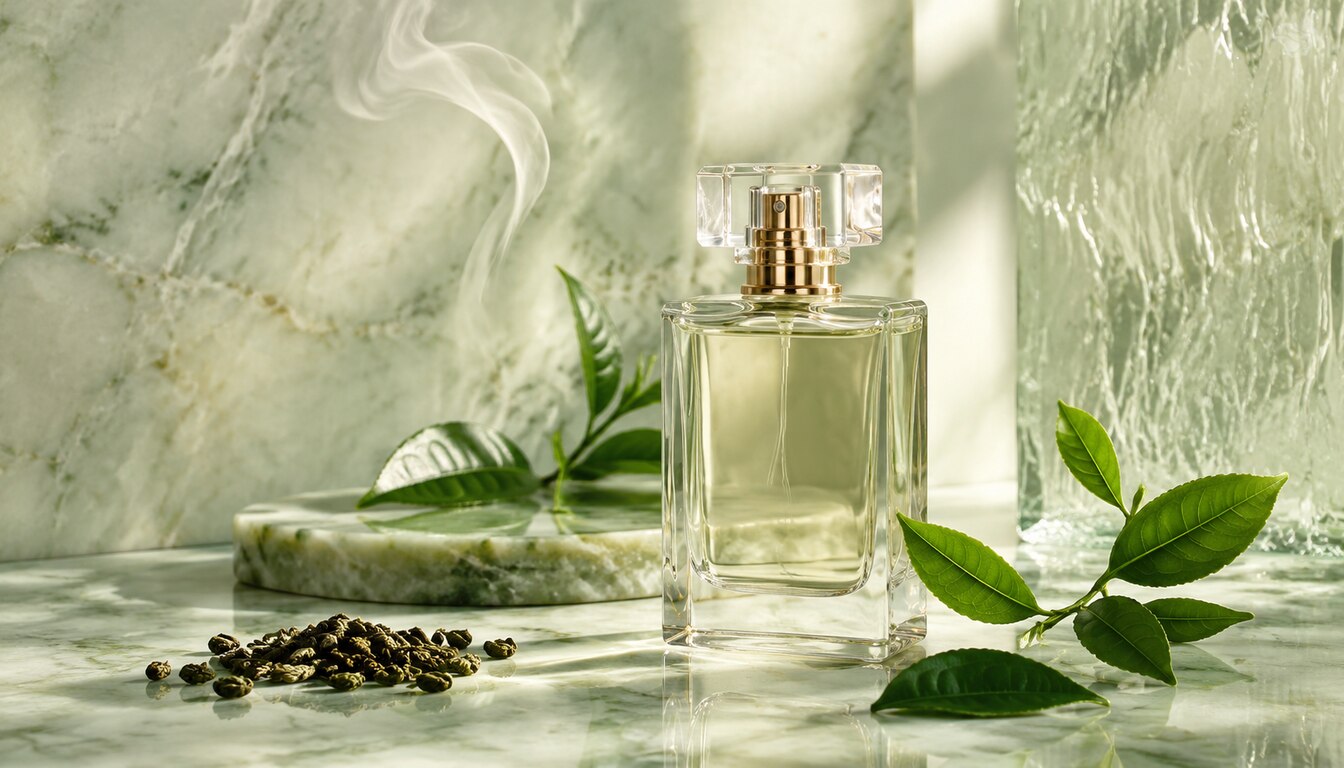
Green tea perfume usually smells crisp, leafy, and lightly bitter rather than sugary or heavy. Depending on the composition, it may also feel grassy, citrusy, floral, watery, or softly musky. The note can suggest fresh tea leaves, a cooled cup of tea, or simply a transparent green effect inside a more complex fragrance.
There is no single formula that defines every green tea scent. Some perfumes place the idea beside lemon or bergamot for a sparkling opening. Others combine it with jasmine, neroli, woods, or musk. Understanding those surrounding notes is more useful than expecting every bottle labeled “green tea” to reproduce the same aroma.
What Does Green Tea Smell Like in Perfume?
In fragrance descriptions, green tea commonly suggests several connected facets:
- Leafy and green: an impression of fresh or gently crushed leaves.
- Grassy: a dry, vegetal quality that can make a composition feel clean and transparent.
- Lightly bitter: a restrained tannic edge rather than obvious sweetness.
- Airy or watery: space and clarity around stronger citrus, floral, or woody notes.
- Softly floral: a delicate effect when the tea accord is paired with jasmine, neroli, or other petals.
These are possible directions, not a checklist. A perfumer may emphasize one facet and leave the others almost invisible.
Is Green Tea a Natural Ingredient or an Accord?
A note pyramid is an olfactory description, not a complete ingredient list. When a perfume lists green tea, it does not necessarily mean that brewed tea was added to the bottle. The effect may be constructed as an accord, made with a disclosed tea-derived material, or created through a combination of natural and synthetic aromatic materials.
dsm-firmenich describes its Smell-The-Taste™ approach as translating tastes into fragrance through molecular volatility, retro-olfaction, and a creator’s interpretation. That distinction is useful when reading perfume descriptions: a recognizable green tea impression can be carefully composed without being a literal cup of tea in alcohol.
Claims should therefore follow the information supplied for the specific fragrance. If a brand says “green tea accord,” that is the accurate term. If it discloses a natural tea material, that can be stated. It is not sound to assume that every green tea perfume contains green tea extract or that natural materials are automatically responsible for the whole effect.
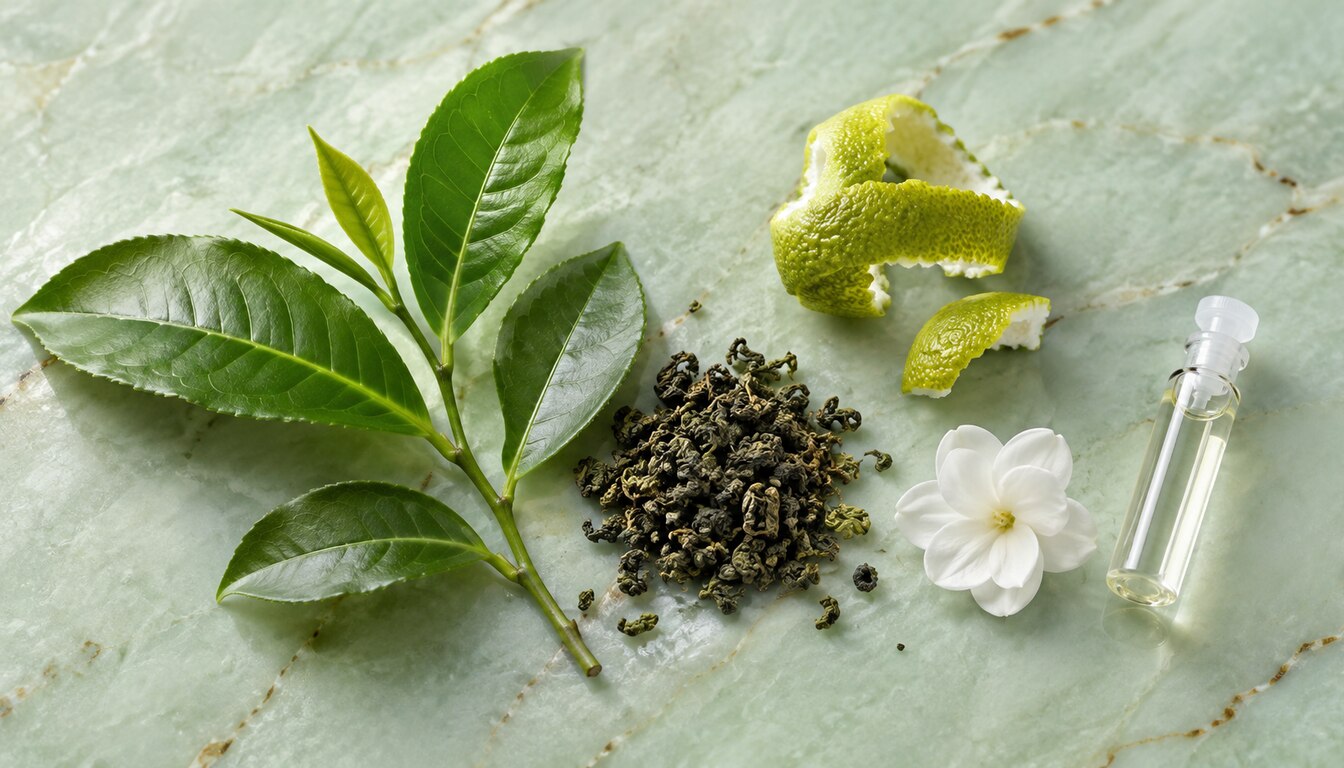
Green Tea, Black Tea, Earl Grey, and Matcha
Green and black tea come from the same tea plant, but they are processed differently. The UK Tea & Infusions Association explains that green tea is not oxidized in the way black tea is: the leaves are heated, then rolled and dried, while black tea is allowed to oxidize fully. Their aromas can therefore inspire different directions in perfumery.
A green tea accord often emphasizes leafy, grassy, and transparent facets. A black tea accord may feel darker, drier, more tannic, or slightly smoky. Earl Grey adds another recognizable idea: black tea flavored with bergamot. Matcha-inspired compositions may move toward powdered, creamy, vegetal, or gourmand effects, but the perfume’s disclosed notes still matter more than the name alone.
For a closer look at the black-tea-and-bergamot direction, see our guide to Earl Grey tea perfume.
Notes That Pair with Green Tea
Citrus notes
Lemon, bergamot, mandarin, and other citrus notes can sharpen the fresh opening of a green tea fragrance. Bergamot brings citrus brightness with floral and gently bitter facets, making it especially compatible with transparent tea effects. Our guide to bergamot in perfume explains how the ingredient works beyond tea-inspired compositions.
Floral notes
Jasmine and neroli can soften a leafy accord without necessarily making it sweet. Jasmine may add floral volume, creaminess, or a greener nuance, while neroli can reinforce a clean citrus-floral direction. The result depends on the complete formula; a note list cannot show the balance or concentration of each material. Learn more about the flower’s range in our jasmine perfume guide.
Woods and musks
Cedarwood, sandalwood, and musk can give a light tea fragrance a more defined drydown. Dry woods may emphasize its leafy or tannic side. Creamier woods and soft musks can round the composition while preserving transparency. These materials do not guarantee longevity, and a fragrance’s concentration label alone cannot predict how it will perform on every wearer.
For a broader view of how perfumers build compositions from citrus, flowers, woods, spices, and accords, explore IRFĒ’s guide to fragrance ingredients.
How Green Tea Changes Through a Fragrance
Green tea is often presented near the opening or heart because its crisp character works well beside citrus and transparent florals. That is not a universal placement rule. Note pyramids describe an intended progression, and the materials responsible for a tea effect may influence more than one stage.
At first spray, citrus can make the tea feel brighter. Later, floral, herbal, woody, mossy, amber, or musky materials may shift the emphasis while retaining part of its dry green texture.
A Documented Green Tea Example
Elizabeth Arden Green Tea Scent Spray provides a useful example of an accord-based structure. The official description lists bergamot and lemon as top notes; Green Tea Accord, Jasmine Accord, and celery seed in the middle; and amber, oakmoss, and musk in the base.
The pyramid shows why “green tea perfume” can describe more than the smell of tea leaves. Citrus defines the opening, the named accord shares the heart with floral and aromatic elements, and a mossy-musky base provides contrast. It is one interpretation, not a universal template.
How to Choose a Green Tea Perfume
Choose the facet you want most
Look for citrus if you want brightness, or green and herbal notes if you prefer a drier leafy effect. Jasmine and neroli may point toward a floral style. Woods, moss, and musk can suggest a more grounded drydown. If the description includes vanilla, milk, rice, or sweet gourmand notes, the tea may feel creamier and less austere.
Read the whole composition
Do not stop at the words “green tea.” Compare the surrounding notes and the fragrance family. Two perfumes can share a tea note yet move in opposite directions because one is built around sparkling citrus and the other around amber, musk, or dessert-like materials.
Test the development
Start with a blotter, then test promising options on skin. Check the opening, the transition after it settles, and the later drydown. This reveals whether the tea remains central or quickly becomes part of a floral, woody, or musky structure. Use separate labeled blotters when comparing several fragrances and avoid judging longevity from the first few minutes.
Does IRFĒ Make a Green Tea Perfume?
The current five-fragrance IRFĒ collection does not list green tea in any of its official note pyramids. IRFĒ Marshmallow Musk Eau de Parfum does contain a tea note, but it is Earl Grey Tea, not green tea.
Marshmallow Musk opens with Earl Grey Tea, Magnolia Petals, and Lavender Petals. Fresh Jasmine, Marshmallow Cotton, and Iris Nectar form the heart, followed by Fluffy Woods, Airy Vanilla, and Powdery Musk. It is relevant as a contrasting tea-inspired fragrance: its bergamot-associated black tea opening moves into a soft floral gourmand-musk structure rather than presenting a leafy green tea accord.
Frequently Asked Questions
Does green tea perfume smell like brewed tea?
Sometimes, but not necessarily. A fragrance may pursue a recognizable leafy tea effect or use green tea as one transparent element within a citrus, floral, woody, or musky composition.
Is green tea perfume always fresh?
Freshness is common, especially with citrus or watery notes, but it is not guaranteed. Woods, amber, vanilla, milk, or musk can make a green tea fragrance warmer, creamier, or sweeter.
Is green tea the same note as Earl Grey?
No. Earl Grey refers to black tea flavored with bergamot. A green tea accord generally emphasizes a different leafy or grassy profile, although both styles may be paired with citrus.
Are green tea perfumes unisex?
The note itself is not limited to a gender. Individual fragrances may still be marketed in different ways, and their overall character depends on the complete composition rather than the tea note alone.
What notes work well with green tea?
Common partners include bergamot, lemon, jasmine, neroli, herbs, cedarwood, sandalwood, moss, amber, and musk. Each combination highlights a different side of the tea effect.
Finding the Right Green Tea Scent
The most useful way to choose a green tea perfume is to decide which interpretation you want: citrus-bright, leafy and dry, softly floral, or smooth and musky. Read the disclosed notes, distinguish an accord from unsupported claims about natural extract, and compare the fragrance through its full development. Green tea may be the subject of the composition or simply the transparent thread that holds its brighter and deeper elements together.
