


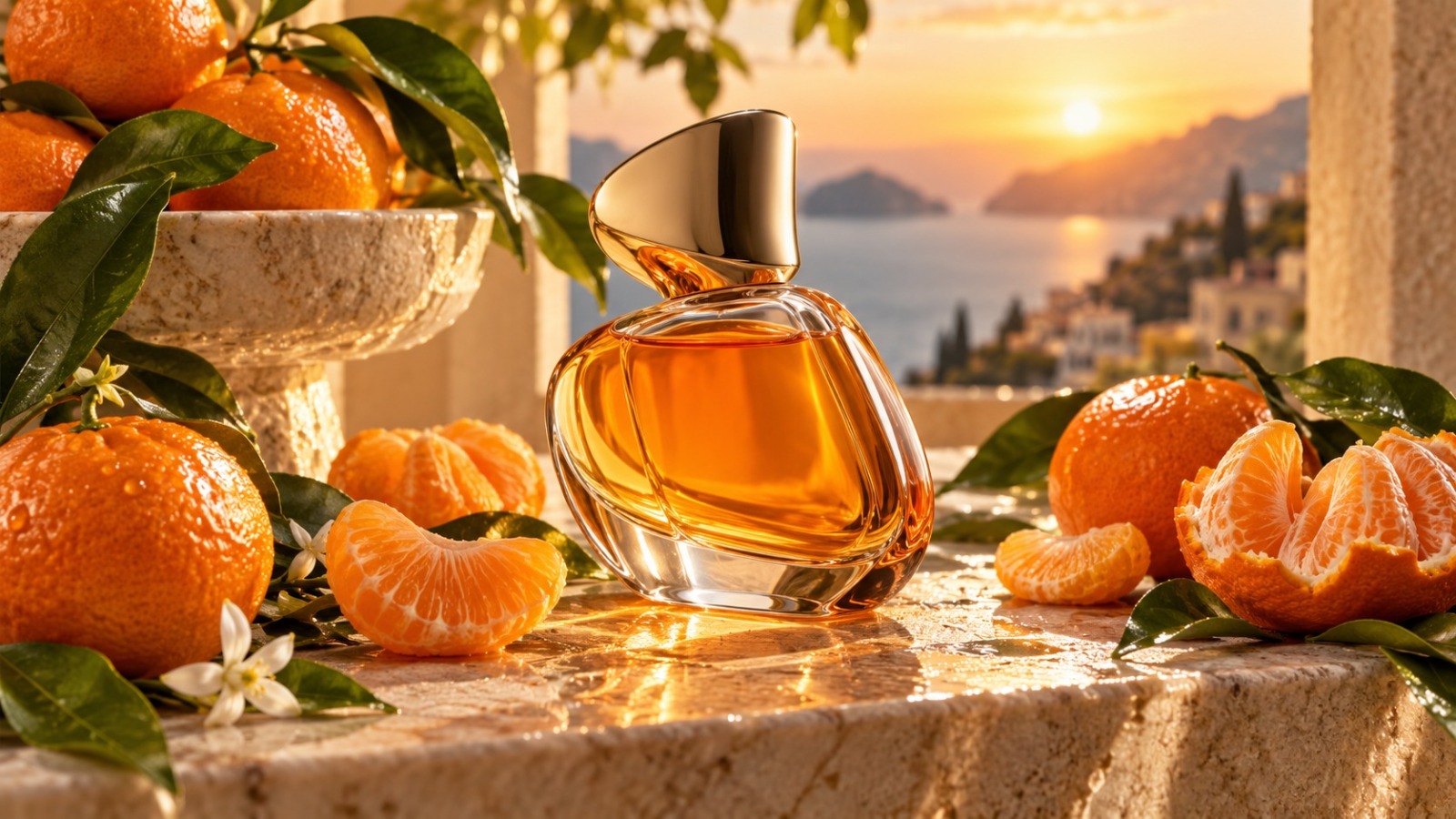
Mandarin is the citrus note with its sleeves rolled back rather than buttoned to the throat. It brings light to a perfume, but the light is rounder than lemon, softer than bergamot, and more polished than a generic orange accord. Depending on the formula, it can smell like green peel snapped between the fingers, chilled juice, the bitter pith beneath the rind, or candied citrus warmed by amber and spice.
That range makes mandarin unusually useful in a fragrance wardrobe. It can sharpen a white shirt of musk and cedar, brighten a floral without turning it girlish, or cut through vanilla and resin like a narrow flash of gold. What matters is not whether mandarin appears in the note list, but what the composition asks it to do after the first sparkling minutes.
This guide explains what mandarin smells like, how it differs from lemon, bergamot, neroli, tangerine, and clementine, which structures keep it from becoming generic, and how to choose a style that belongs naturally to your climate, wardrobe, and way of wearing scent.
What Does Mandarin Smell Like in Perfume?
Mandarin usually feels rounder and sweeter than lemon. Its main facets may include:
- Juicy citrus: soft, bright, and easy to recognize.
- Fresh peel: aromatic, green, and faintly bitter.
- Candied fruit: warm, sweet, and gourmand.
- Green mandarin: brisker, more tart, and less sugary.
- Floral citrus: softened by blossoms, petals, or musk.
Like most citrus notes, mandarin often creates the first impression rather than the entire drydown. What follows it determines whether the fragrance becomes floral, woody, musky, spicy, or sweet.

Why Mandarin Feels Softer Than Lemon
Lemon usually draws a clean, high-contrast line. Mandarin works with a rounder brush. Its sweetness and fruitiness soften the acidity, while peel and pith keep it from becoming flat. That is why mandarin can introduce brightness without making a perfume feel sporty, clinical, or aggressively fresh.
In clothing terms, lemon is a white poplin shirt under direct noon light. Mandarin is ivory silk at the end of the afternoon: still luminous, but warmer, more fluid, and easier to carry into flowers, tea, woods, or amber. A skilled formula preserves some bitterness beneath the juice, because that small shadow is what gives the fruit elegance.
Mandarin Versus Other Citrus Notes
| Note | Typical character | Compared with mandarin |
|---|---|---|
| Lemon | Tart, bright, sharp peel | More acidic and linear |
| Sweet orange | Juicy, familiar, rounded | Often fuller and more obviously orange-like |
| Bergamot | Bitter-green, floral, tea-like | More aromatic and complex, less sweet |
| Neroli | Green, floral, slightly bitter | Blossom-centered rather than fruit-centered |
| Orange blossom | White floral, honeyed, radiant | Richer and more floral |
For direct comparisons, explore our guides to lemon perfume, bergamot perfume, neroli perfume, and orange blossom perfume.
Six Mandarin Perfume Styles
1. Fresh green mandarin
Green notes, herbs, petitgrain, and dry woods emphasize peel and tartness. This style is crisp, modern, and useful in warm weather.
2. Juicy mandarin
Fruit notes and soft musk make the opening succulent and friendly. It is easy to wear but can feel simple if there is no clear heart or base.
3. Mandarin floral
Rose, jasmine, magnolia, violet, or orange blossom turn mandarin into a luminous floral introduction. This is often more polished than a purely fruity citrus.
4. Mandarin tea
Black tea, green tea, mate, or aromatic herbs make the citrus drier and more contemplative. The slight bitterness can keep sweetness under control.
Basil is one useful version of that aromatic contrast. Our Basil Perfume guide compares basil beside citrus, tea, and woods, making it easier to separate a green herbal accent from the fruit itself.
5. Mandarin wood
Cedar, sandalwood, vetiver, and clean musk give the fruit structure. This style can feel minimal, gender-neutral, and suitable for work.
6. Candied mandarin
Vanilla, amber, caramel, or warm spice create a richer gourmand effect. It works well in cool weather but may become syrupy in heat.
Mandarin as Color, Texture, and Movement
Citrus is often discussed as though it exists only to make a perfume fresh. Mandarin can do more. It changes the emotional temperature of a composition and the way other notes appear around it.
- As color: it gives pale florals and musks a warm orange-gold glow without adding literal heaviness.
- As texture: green peel can make a perfume crisp; juicy fruit makes it supple; candied peel gives it a lacquered sweetness.
- As movement: mandarin creates a quick opening gesture and then points toward the heart, especially when tea, rose, magnolia, spice, or woods continue the line.
- As contrast: it can keep vanilla from feeling static, make leather less severe, and give amber a bright upper edge.
The most convincing mandarin perfumes do not preserve the fruit unchanged. They let it leave a trace in the composition, the way the first flash of a lining changes how an entire coat is remembered even after it is closed.
How to Make Mandarin Feel More Lasting
The recognizable mandarin top note may fade relatively quickly, but a well-designed perfume keeps its shape through the heart and base. Look for:
- tea or herbs for aromatic continuity;
- rose, jasmine, or magnolia for floral development;
- cedar, sandalwood, or vetiver for dry structure;
- musk for a clean, soft trail;
- amber, vanilla, or spice for warmth.
Do not ask only, “Can I still smell mandarin after six hours?” Ask whether the fragrance evolves into something you still enjoy.
Three Mandarin Fragrances to Compare
Guerlain Aqua Allegoria Mandarine Basilic: Mandarin with Basil and Green Tea
Guerlain Aqua Allegoria Mandarine Basilic Eau de Toilette puts juicy, tangy mandarin beside aromatic basil, green tea and a woody background. Guerlain describes the mandarin as fruity and zesty, which makes this a useful example of the note in a bright green-aromatic structure rather than a sweet citrus accord.
Hermès Eau de mandarine ambrée: Mandarin with Passion Fruit and Amber
Hermès Eau de mandarine ambrée Eau de Cologne pairs mandarin with passion fruit and velvety amber. The contrast is softer and warmer than Mandarine Basilic: the citrus remains joyful and fresh, but amber gives the composition a smoother, more rounded finish.
Tom Ford Mandarino di Amalfi: Aromatic Mandarin in a Coastal Citrus Style
Tom Ford Mandarino di Amalfi Eau de Parfum treats mandarin inside an aromatic citrus composition inspired by the Amalfi coast. It is useful when you want mandarin to feel more polished and atmospheric rather than juicy or gourmand.
Together, these three show why “mandarin perfume” can move in very different directions: green and herbal, warm and ambery, or airy and aromatic.
How to Choose a Mandarin Perfume
| You want… | Look for… | Possible drawback |
|---|---|---|
| Brisk freshness | Green mandarin, herbs, petitgrain, cedar | May feel too tart or fleeting |
| Juicy ease | Mandarin, pear, peach, soft musk | Can become generic fruit shampoo |
| Floral elegance | Mandarin with rose, magnolia, jasmine, neroli | Flowers may overtake the citrus |
| Dry sophistication | Tea, vetiver, cedar, light spice | Less obviously fruity |
| Warm sweetness | Vanilla, amber, cinnamon, tonka | Can feel heavy in humidity |
Mandarin for Season and Occasion
Fresh and green mandarin is especially comfortable in spring and summer. Floral or woody mandarin can work throughout the year. Candied and ambered versions often feel more convincing in cool weather.
- Office: tea, clean musk, light woods, moderate projection.
- Weekend: juicy mandarin, fruit, herbs, or green notes.
- Evening: mandarin with amber, saffron, leather, or warm woods.
- Hot weather: green mandarin, petitgrain, neroli, vetiver.
- Cold weather: candied peel, vanilla, cinnamon, soft amber.
How Mandarin Changes Other Notes
With florals
Mandarin adds light and motion to rose, jasmine, magnolia, and violet. It can make a dense floral opening feel more approachable.
With tea
Tea emphasizes the bitter-peel side and creates a dry, elegant citrus rather than a sweet fruit scent.
With woods
Cedar and vetiver sharpen the outline; sandalwood softens it. The citrus may fade, but the woody structure preserves the sense of freshness.
With vanilla and amber
Mandarin keeps warm sweet notes from feeling static. In return, vanilla and amber extend the impression into the drydown.
With spice
Cardamom, pepper, cinnamon, and saffron create contrast. The result can move from bright opening to warm, tailored base.
Choosing Mandarin by Personal Style
The same citrus note can belong to very different wardrobes. A green mandarin with petitgrain and cedar feels precise with clean tailoring, cotton, and minimal jewelry. A floral mandarin with rose or magnolia has more movement and works naturally with soft color, fluid dresses, and polished daytime clothes. Tea and vetiver create a quieter, intellectual direction, while saffron, leather, vanilla, and amber move the fruit toward evening.
| Style direction | Mandarin structure | Overall impression |
|---|---|---|
| Clean and tailored | Green mandarin, petitgrain, cedar, white musk | Crisp, dry, restrained |
| Softly romantic | Mandarin, rose, magnolia, jasmine, iris | Luminous, petal-like, graceful |
| Relaxed and modern | Mandarin, tea, herbs, pale woods | Easy, airy, quietly distinctive |
| Warm and sensual | Mandarin, vanilla, amber, sandalwood | Rounded, glowing, enveloping |
| Dark evening contrast | Mandarin, saffron, leather, tobacco, oud | Bright opening over a deeper base |
There is no requirement to coordinate perfume and clothing literally. The useful connection is texture. A dry citrus-wood scent may feel right when you want clean edges; a juicy floral may suit a more relaxed silhouette; a candied amber may work when the evening calls for warmth rather than transparency.
Sampling and Storage
Mandarin is persuasive at first spray, so wear a sample for a complete day. Check the transition after thirty minutes and again after several hours. If the fragrance becomes generic, soapy, or overly sweet, the opening alone should not decide the purchase.
Store citrus-heavy perfume away from heat and direct light. A stable, dark cabinet is safer than a bathroom window or a car.
To compare citrus openings with very different floral, musky, leathery, and oud drydowns, try the Maison IRFĒ Discovery Set.
Common Mandarin Perfume Mistakes
- Assuming mandarin is simply a weaker orange.
- Expecting the top note to remain unchanged all day.
- Buying a sweet version when you wanted green peel.
- Ignoring the base notes that determine the final character.
- Overspraying a light citrus to force projection.
- Testing only in cold air and then wearing heavily in heat.
Mandarin, Tangerine, and Clementine
Perfume descriptions may use mandarin, tangerine, and clementine with overlapping expectations: sweet peel, juicy brightness, and a softer citrus profile than lemon. Botanical and trade distinctions exist, but a note list is not a laboratory report. The brand may be naming a natural oil, a fraction, an accord, or simply the intended impression.
For the wearer, the practical questions are more useful: Does it smell green or candied? Is there bitter peel? Does the fruit remain recognizable after the opening? What notes carry the fragrance forward?
How to Avoid a Generic Fruity Effect
Mandarin can disappear into a broad “fruit shampoo” impression when paired with many sweet fruits and clean musk without contrast. Tea, petitgrain, herbs, pepper, cedar, iris, or a slightly bitter floral note can give the citrus a clearer identity. If you want sophistication, look for tension rather than more sweetness.
Concentration Does Not Preserve the Top Note
An eau de parfum may last longer than an eau de toilette as a complete composition, but its mandarin opening can still change quickly. A higher concentration often means a richer heart and base, not a citrus top frozen in time. Test the whole evolution and decide whether the later woods, musk, florals, or amber are worth wearing.
A Quick Three-Step Test
- Smell the opening and identify juice, peel, or candied fruit.
- After thirty minutes, note whether the perfume becomes floral, woody, musky, or sweet.
- After several hours, decide whether the remaining base still relates naturally to the bright opening.
How to Judge Whether the Formula Has Enough Depth
A mandarin perfume should offer more than an attractive first spray. After the opening, look for one of three things: a clear continuation, an interesting contrast, or a deliberate disappearance.
A continuation carries the fruit into tea, flowers, musk, or woods so the freshness remains legible. A contrast allows mandarin to vanish into leather, spice, amber, or smoke while preserving the memory of brightness. A deliberate disappearance can also be beautiful when the opening functions as a brief flash before a completely different heart. What feels weak is not change itself, but a drydown with no character once the citrus is gone.
Mandarin Without the Holiday-Candle Effect
Mandarin with cinnamon, vanilla, and amber can be elegant, but the proportions decide whether the result feels like perfume or seasonal room fragrance. Look for a dry counterweight such as tea, cedar, vetiver, leather, saffron, or bitter peel. Those notes give the sweetness an outline and keep the composition from becoming a single warm orange blur.
Likewise, a floral mandarin needs enough structure beneath the petals. Musk and sandalwood can make it smooth; cedar and iris make it more tailored; patchouli or leather give it shadow. The goal is not maximum complexity. It is a composition in which every note changes the fruit rather than merely sitting beside it.
Frequently Asked Questions
Is mandarin sweeter than lemon?
Usually yes. Mandarin often feels rounder, juicier, and less sharply acidic.
Is mandarin the same as orange?
No. They are related citrus profiles, but mandarin often feels softer, brighter, and more delicate than a full sweet-orange effect.
Does mandarin perfume last?
The bright top note may change quickly. Longevity depends on the florals, woods, musks, amber, and other materials supporting it.
Can mandarin perfume be sophisticated?
Yes. Tea, petitgrain, rose, woods, musk, spice, and restrained amber can make it polished rather than merely fruity.
Is mandarin perfume only for women?
No. Mandarin is widely used across fragrances marketed to all genders.
Final Takeaway
Mandarin brings brightness with less severity than lemon and sweetness without the full weight of a dense orange accord. Its elegance lies in the narrow line between juice and peel, pleasure and bitterness, immediacy and disappearance.
Choose the version that fits your own style. Green mandarin with herbs and woods feels crisp; florals make it luminous; tea gives it quiet dryness; vanilla and amber create warmth; saffron or leather add evening contrast. Then judge the perfume after the sparkle has moved on. The right mandarin fragrance leaves the composition more alive, even when the fruit itself is no longer the loudest note.
