

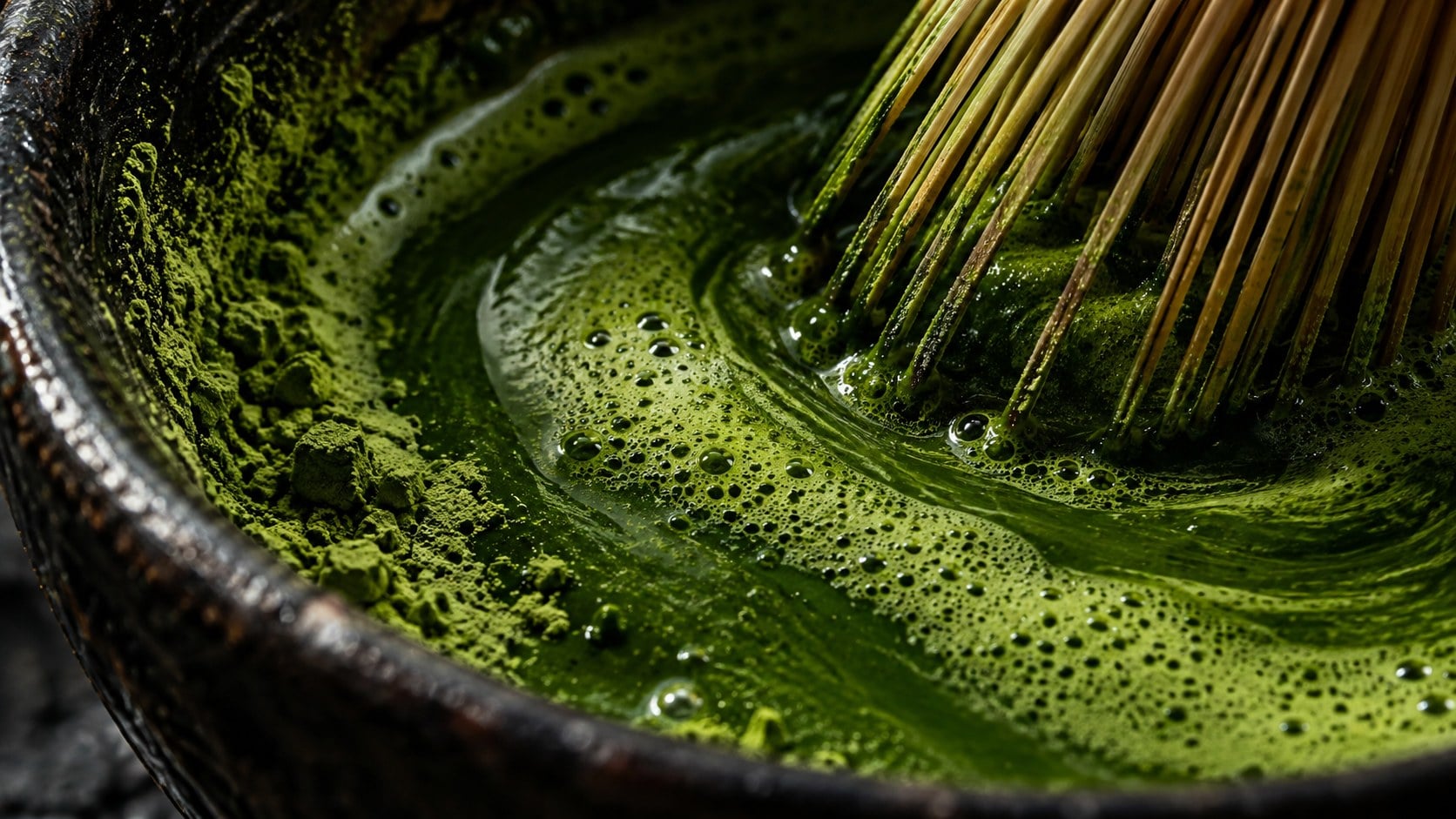
Matcha is an ambitious word to put on a perfume label. It suggests a very particular green: powdered leaf, a little bitterness, something dense and finely textured. Then milk arrives. Then, in one fragrance, a waffle cone.
I enjoy how quickly a seemingly precise subject becomes unruly. Matcha perfumes can lean towards dry woods and fig, a spiced rice-milk drink, a citrus-floral latte or outright soft serve. The shared name gives you a starting point. The rest of the composition decides where it goes.
Six current Eau de Parfum examples make those differences unusually clear: Le Labo Thé Matcha 26, Arielle Shoshana Sunday, Obvious Milk & Matcha, d’Annam Matcha Soft Serve, Le Monde Gourmand Thé Matcha and Nette Thé Vanille. Each explicitly names matcha in its product identity or house description. This is a smaller, more specific subject than every fragrance with a green-tea note.
First, decide what the word brings to mind
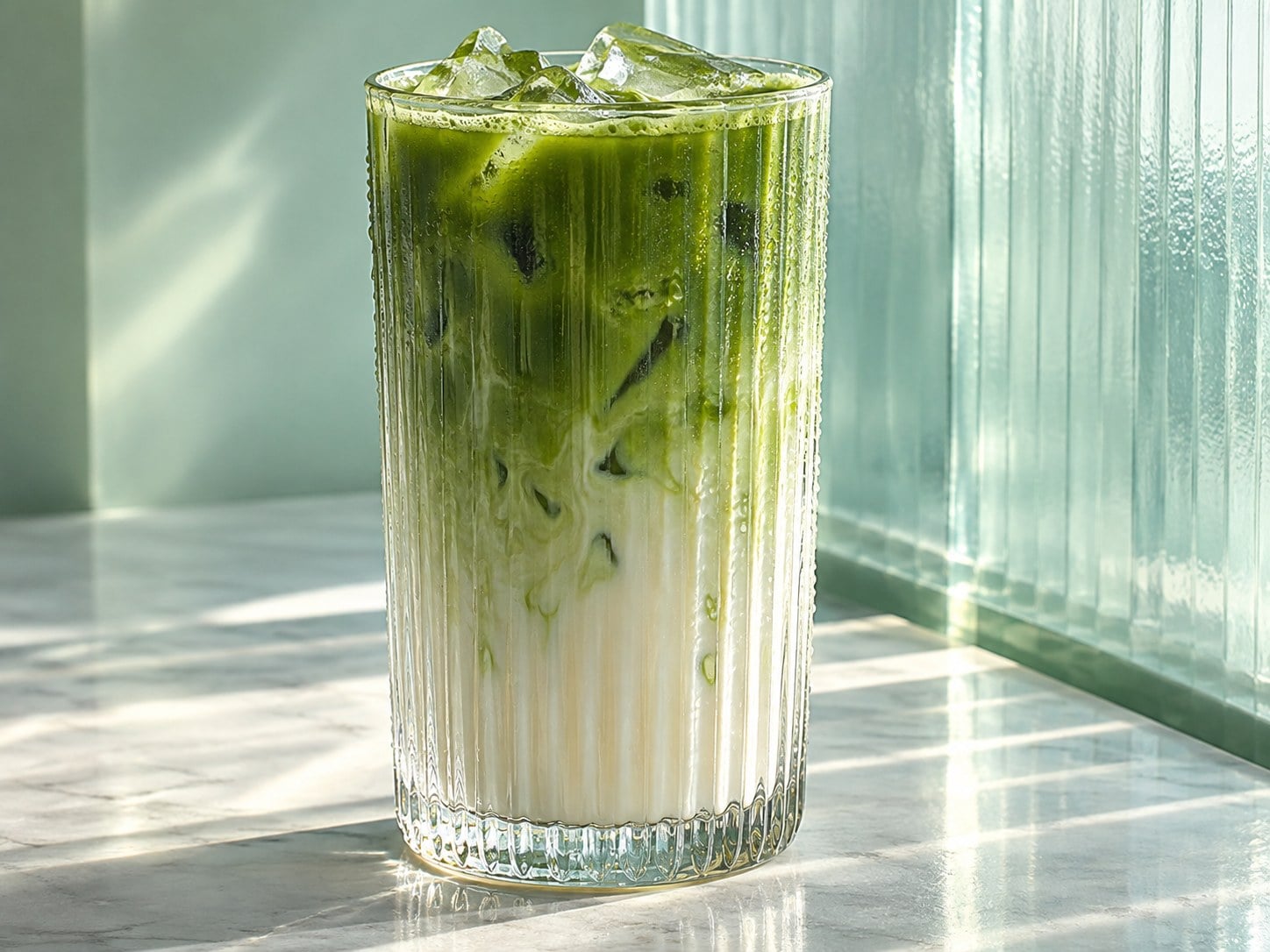
There is the powder before water touches it: intensely green, dry, almost stern. There is whisked tea, with its fine foam and bitter vegetal character. And there is the drink made with milk, whose softer surface changes the emphasis before any extra sweetness is considered.
Those are references for the imagination. A house can construct a matcha accord around the aspect it wants to suggest. Obvious explicitly describes its accord as a perfumer’s creation; a tea note on a fragrance page is not, by itself, proof that powdered tea has been tipped into the formula.
It is worth keeping texture and sweetness apart. A fragrance can feel creamy because of the way its notes fit together without smelling like a heavily sweetened drink. Conversely, a recognizable tea reference may sit inside a very gourmand composition. “Matcha” settles neither question.
The broader green tea perfume family includes citrus-bright and leafy styles that do not identify themselves specifically as matcha. Earl Grey fragrances take a different route through bergamot and black-tea associations. A green bottle or a tea name does not make those ideas interchangeable.
Thé Matcha 26 takes a detour through fig
In Le Labo Thé Matcha 26 Eau de Parfum, the matcha accord meets creamy fig, bitter orange, vetiver and cedar. The supporting notes are the important news. This is not a list built around vanilla ice cream and a pastry counter.
The fig gives the idea a rounded, almost pulpy softness, while the woods make a drier frame. Bitter orange introduces a sharper point of interest. I find that arrangement more intriguing than a promise to reproduce a particular café order.
Le Labo describes it as a skin scent, intended to be appreciated close to the wearer. That is the house’s intended character, not a measured guarantee of projection on every person. In choosing it, I would be interested in the relationship between fig and woods as much as in how literally the tea announces itself.
This is a good candidate when your attraction to matcha is bound up with its restrained, vegetal side, and you are open to fig becoming an important part of the conversation. Someone seeking a very direct sweet latte may be asking the name to do a different job.
Rice milk, or the unexpected orange flower
Arielle Shoshana Sunday Eau de Parfum combines matcha with rice milk and cinnamon. Its published notes also include maté, cardamom, coconut, amber, sandalwood and vanilla.
The cinnamon is what changes the direction for me here. Rice milk and tea might suggest a very spare composition; the spice gives it a warmer, more edible context, while maté provides a second aromatic tea-like interest. Coconut and vanilla keep it firmly within reach of gourmand tastes.
Sunday is therefore worth approaching as a complete spiced, milky composition rather than a neutral matcha reference. If rice milk is the feature you love, our milky perfume guide follows that texture through a wider range of fragrances. Here the question is narrower: how much of the pleasure comes from tea, and how much from the fragrant company it keeps?
The other latte takes a floral turn.
Obvious Milk & Matcha Eau de Parfum opens its published pyramid with ginger, tangerine and mandarin. Matcha accord, orange flower and maté follow; vanilla, tonka and Peru balsam form the base.
The name might send your attention straight to creaminess. The orange flower gives me another reason to pause. A floral heart with citrus and ginger around it can make the latte idea feel considerably less literal.
There is warmth in the vanilla-tonka foundation, too. I would put this beside Sunday for a specific reason: the former’s orange-flower and citrus direction, against the latter’s rice milk and cinnamon. That is a meaningful comparison between two compositions, not a competition to decide which brand has made the most accurate beverage.
Without the milk order
Sometimes the tea is enough of a starting point. Le Monde Gourmand Thé Matcha Eau de Parfum lists green tea, freesia and amber. Despite the house name, its note presentation does not build a dessert around milk, vanilla and pastry.
The freesia is the interesting interruption: a floral freshness rather than the orange-flower latte at Obvious or the spicy rice milk at Arielle Shoshana. I would consider it when a comparatively uncomplicated green-and-floral direction is the attraction. It also shows why the word gourmand on a brand name cannot decide the character of every bottle.
A little salt beside the vanilla
Nette Thé Vanille Eau de Parfum is a much less spare arrangement. Salt accord, cardamom, turmeric root and maté lead to narcissus, magnolia and matcha, with orris and vanilla below.
Salt and turmeric change the question from how sweet the tea will be to how its sweetness is held in place. The flowers and orris complicate the vanilla, too. It is a useful possibility for someone who wants warmth and creaminess but would like an aromatic or savory edge around them. D’Annam’s waffle cone, by contrast, makes the dessert itself the subject.
Then the cone appears
d’Annam Matcha Soft Serve Eau de Parfum lists matcha, milk, waffle cone and vanilla. The dessert is in the concept from the beginning. I find that directness rather charming.
A waffle cone is more specific than sweetness alone. It suggests the dry, baked part around something cold and creamy. Even before considering the perfume on skin, that detail distinguishes the intended composition from Sunday’s spice and from the fig-and-wood structure at Le Labo.
It belongs among the first candidates for someone who actually wants the ice-cream interpretation of matcha. There is no reason to choose an austere-sounding fragrance and then wish away all the woods when the dessert idea was the attraction.
Six ways to follow the same green
The supporting notes show why six matcha fragrances can answer quite different desires.
| Fragrance | Published companions to matcha | Direction to explore |
|---|---|---|
| Le Labo Thé Matcha 26 EDP | Fig, bitter orange, vetiver, cedar | Creamy fruit and dry woods |
| Arielle Shoshana Sunday EDP | Rice milk, cinnamon, maté, cardamom, coconut | Spiced, milky tea |
| Obvious Milk & Matcha EDP | Citrus, ginger, orange flower, maté, vanilla, tonka | A creamy citrus-floral latte idea |
| d’Annam Matcha Soft Serve EDP | Milk, waffle cone, vanilla | An explicit frozen-dessert interpretation |
| Le Monde Gourmand Thé Matcha EDP | Green tea, freesia, amber | A simpler green-floral direction |
| Nette Thé Vanille EDP | Salt, cardamom, turmeric, maté, flowers, orris, vanilla | Aromatic, salty warmth around matcha |
If you dislike sweet perfumes, begin with the complete descriptions rather than the color of the packaging. Fig can be creamy; vanilla may be part of a larger composition; a drink-inspired name can conceal a substantial floral element. None of those observations replaces trying the exact product.
When testing, notice what remains after the first green impression: wood, spice, flower, creamy sweetness, or still a clearly tea-centered effect. Try a restrained amount, follow the product’s directions and give each candidate its own space. Layering several at once makes that particular question harder to answer.
The tea can change its mind
The most appealing matcha perfumes are often the ones that let the subject move. A fig takes up more room than expected. An orange flower makes a creamy idea brighter. A cone turns tea into a pleasure that is quite openly frivolous.
Among these, I am especially drawn to that odd little choice between a cedarwood background and a waffle cone. The same green has led to two entirely different afternoons.
