


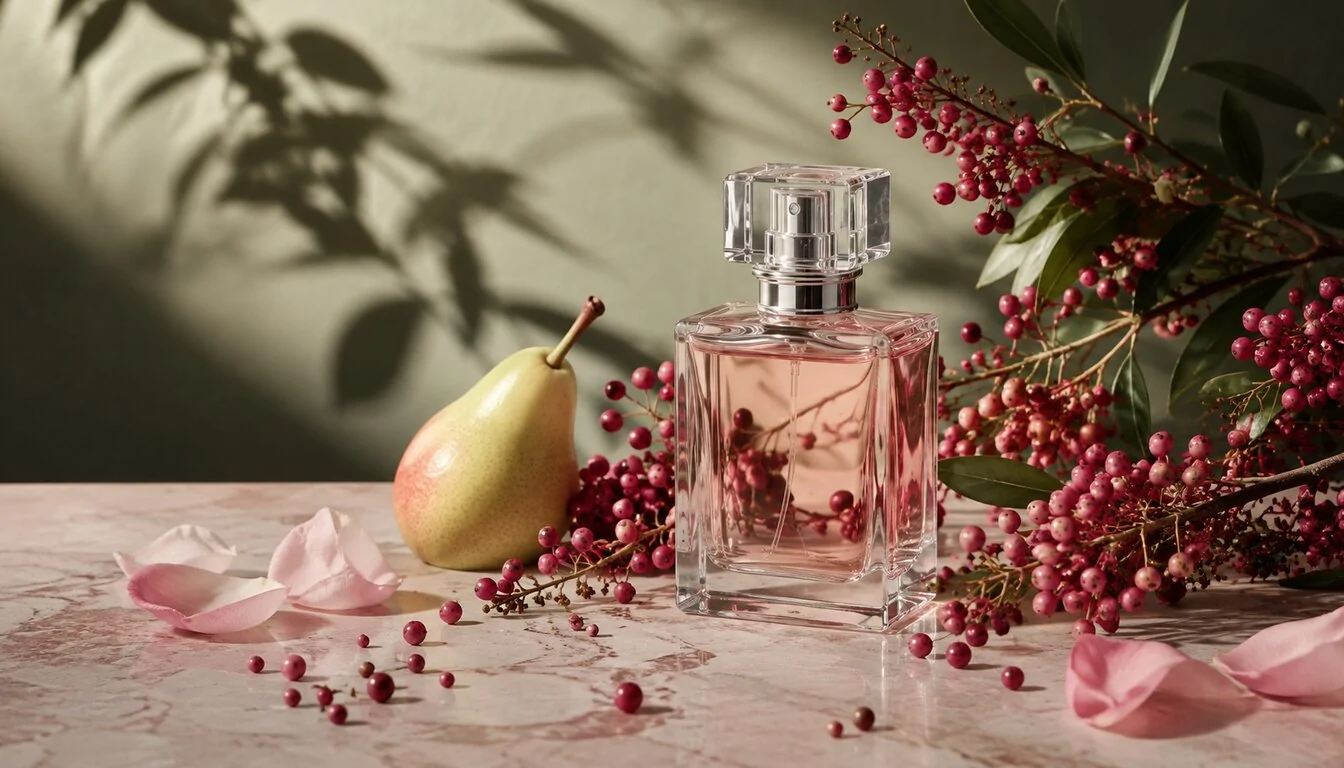
Pink pepper is the sparkle that keeps a perfume from sitting too politely. It smells fresh, rosy, spicy, and slightly fruity, with green, woody, or resinous facets depending on the material. Unlike black pepper, it rarely feels culinary or severe. Its effect is closer to a flash of color across a composition: bright enough to wake the opening, sheer enough to let the flowers and woods remain visible.
That makes pink pepper especially useful in modern perfume. It can sharpen rose, make pear feel less innocent, add lift to musk, or lead smoothly into cedarwood and amber. The note often appears in the opening, but its real value is not a quick peppery burst. It is the tension it creates between brightness and warmth.
This guide explains what pink pepper smells like, how it differs from black pepper, how perfumers use different extracts, the main styles it creates, and how Maison IRFĒ uses it in Centifolia Rose.
What Does Pink Pepper Smell Like in Perfume?
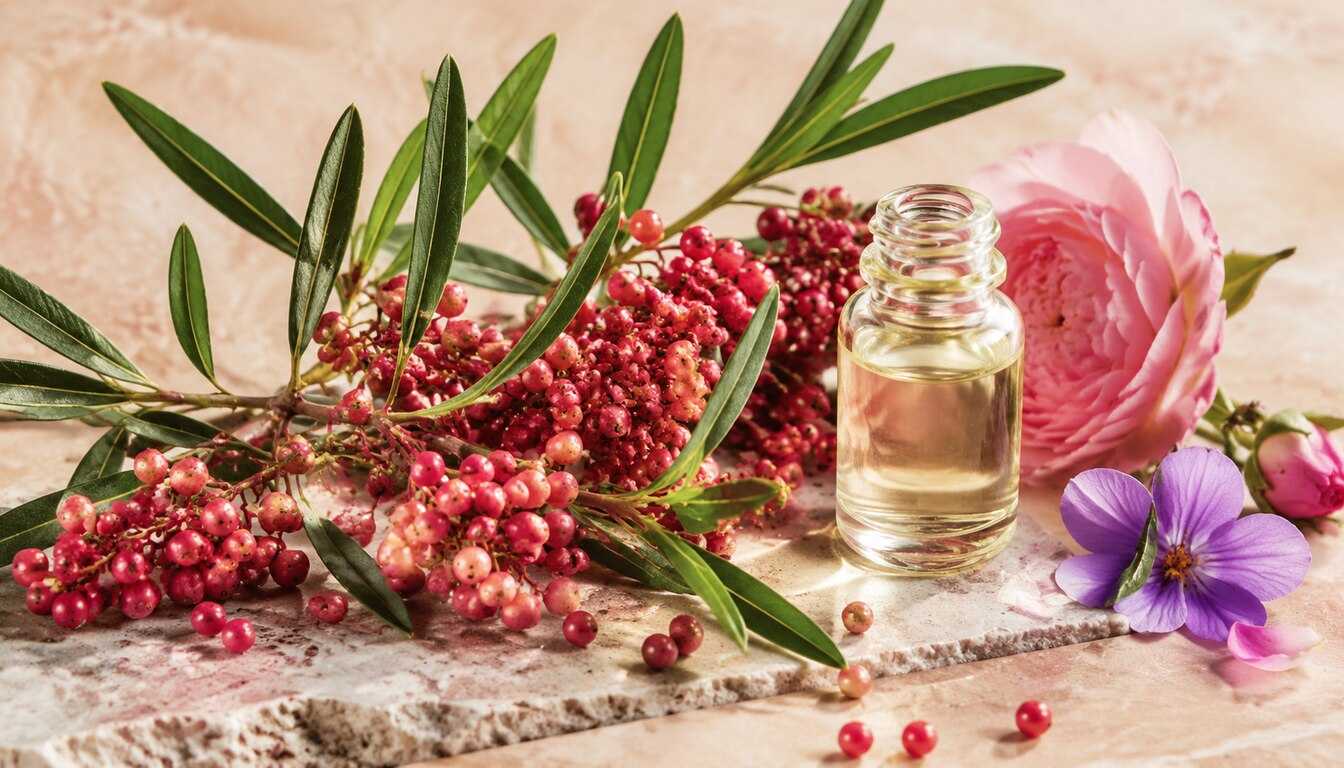
Pink pepper has a layered aroma rather than a single peppery effect. Two professional materials show the range clearly. Givaudan’s Pink Peppercorn Oil Peru, produced from Schinus molle, combines spicy and fruity facets with a zesty lime-like opening, coniferous character, and a balsamic undertone. IFF’s Pink Pepper CO₂ extract, made from Schinus terebinthifolius, is described as spicy and aromatic, with a sparkling citrus-green opening followed by woody, pine, and resinous nuances.
Depending on the composition, pink pepper may suggest:
- Sparkling spice: an immediate lift that gives the opening movement.
- Citrus and green facets: a fresh quality that can reinforce bergamot or other bright notes.
- Fruity or rosy nuances: a useful connection to pear, rose, violet, and other florals.
- Coniferous and woody facets: a drier direction that can lead naturally into woods.
- Balsamic or resinous depth: a subtle darker edge beneath the initial brightness.
Not every fragrance displays all of these effects. A note pyramid identifies the intended structure, but it does not reveal the full formula or the exact balance of materials.
What Pink Pepper Does to the Silhouette of a Perfume
Pink pepper is a small note with structural influence. It can lift a floral heart the way a sharp seam gives shape to a soft fabric. Rose becomes brighter, fruit becomes less syrupy, and musk gains a faint vibration. Even when the note fades quickly, the perfume may continue to feel more animated because of the contrast established at the beginning.
The effect is particularly elegant when the rest of the fragrance has texture. Pink pepper against orris feels cool and polished; against leather, dry and provocative; against vanilla, less sugary; against cedarwood, more vertical. It is often used where a perfumer wants energy without the obviousness of lemon or the darkness of black pepper.
Because pink pepper has a rosy facet, it can also blur the line between spice and flower. In a rose perfume, the transition may feel seamless. In a woody perfume, that same rosy quality creates surprise, preventing the opening from becoming too stern.
Is Pink Pepper the Same as Black Pepper?
No. Black pepper comes from Piper nigrum. Pink pepper materials used in perfumery can come from species in the Schinus genus, including Schinus molle and Schinus terebinthifolius. The familiar term “pink peppercorn” describes the appearance and pepper-like character of the fruit, not a botanical relationship to black pepper.
Their olfactory roles also differ. Black pepper is commonly used for a drier, sharper, more forceful spice effect. Pink pepper often feels brighter, fruitier, greener, or rosier, with a sparkling quality that works especially well near the top of a fragrance. Either note can lead into woods and resins, but they should not be treated as interchangeable.
This distinction matters within the IRFĒ collection. Centifolia Rose lists pink pepper among its top notes. Smoldering Pepper, despite the tempting name, lists black pepper with saffron and olibanum. They belong to different ingredient stories, and a guide to pink pepper should not quietly turn one into the other.
How Is Pink Pepper Prepared for Perfumery?
Different processes capture different parts of the material’s aromatic profile. Givaudan states that its Peruvian Schinus molle berries are air-dried and steam distilled to produce an essential oil. IFF uses supercritical CO₂ extraction for its Schinus terebinthifolius material.
These are two documented professional methods, not a reason to assume that every pink pepper note uses the same species or process. A finished perfume may use a natural extract, other aromatic materials that emphasize selected facets, or a combination. As with the other materials in the Maison’s fragrance ingredients library, the note name communicates an olfactory idea rather than a complete ingredient declaration.
How Perfumers Use Pink Pepper
Pink pepper is frequently presented as a top note because its sparkling facets can make the first impression feel vivid and dimensional. Citrus may seem more energetic beside it, while fruit can gain a crisp spicy outline. In a floral structure, pink pepper can provide contrast before the composition moves toward softer petals.
Its function is not limited to the first few minutes. Pine-like, balsamic, and resinous facets can help connect the opening to cedarwood, sandalwood, incense, or other deeper materials. The result depends on proportion: pink pepper may be clearly identifiable, or it may work quietly as lift, texture, and transition.
What Notes Pair Well with Pink Pepper?
The most useful pairings are those that develop a facet already present in the material or create deliberate contrast:
- Bergamot and other citrus notes emphasize sparkle and freshness. Read more about the citrus material in our bergamot perfume guide.
- Rose and violet draw attention to pink pepper’s floral and rosy nuances. Our rose perfume guide explains how different rose styles can shape a composition.
- Pear and other fruits can make the spicy opening feel juicier and softer.
- Orris and neroli can build a more textured floral transition.
- Cedarwood, sandalwood, and resins continue its woody or balsamic facets.
- White musk can soften the contrast and create a smoother drydown.
These combinations are guides, not formulas. Two perfumes can list pink pepper and rose yet smell markedly different because the materials, balance, and rest of the composition are different.
Five Pink Pepper Perfume Styles
1. Pink pepper and rose
This is the most natural pairing. The spice echoes the flower’s rosy facets while adding brightness and a faint green edge. The result can be transparent and modern or rich and velvety, depending on the rose, musk, and woods beneath it.
2. Pink pepper and fruit
Pear, blackcurrant, lychee, apple, or red berries become livelier beside pink pepper. The spice prevents fruit from feeling like syrup and introduces a more adult tension. This style often suits daytime and social occasions because it is expressive without being heavy.
3. Pink pepper and clean musk
White musk, ambrette-style materials, and pale woods turn pink pepper into a soft electrical pulse around the skin. The fragrance feels clean but not anonymous. It is an excellent office direction when projection is controlled.
4. Pink pepper with leather or dark woods
Leather, cedarwood, patchouli, incense, or oud pull the note into evening. Pink pepper supplies the first flash before the composition settles into darker texture. This contrast can feel very tailored: polished hardware against black leather.
5. Pink pepper gourmand
Vanilla, tonka, amber, or soft caramel become less dense when pink pepper cuts through the sweetness. The note should remain a spark rather than a seasoning rack. In the best versions, it gives a gourmand movement and air.
| You want… | Look for… | Likely effect |
|---|---|---|
| Modern floral | Rose, peony, violet, orris | Rosy, bright, polished |
| Juicy freshness | Pear, cassis, lychee, citrus | Fruity, lively, less sweet |
| Quiet skin scent | White musk, ambrette, pale woods | Clean, intimate, gently spicy |
| Dark contrast | Leather, cedar, patchouli, incense | Dry, elegant, evening-ready |
| Warm sweetness | Vanilla, amber, tonka | Soft, sparkling, balanced |
Three Pink Pepper Fragrances to Compare
1. Glossier You: Pink Pepper with Iris, Ambrette and Ambrox
Glossier You Eau de Parfum opens with sparkling pink pepper before moving into earthy iris and a warm base of ambrette and ambrox. It is a useful reference for the clean, skin-scent side of pink pepper: the spice adds brightness and lift without turning the fragrance into an obviously spicy perfume.
2. Byredo Rose of No Man’s Land: Pink Pepper with Rose and Raspberry Blossom
Byredo Rose of No Man’s Land Eau de Parfum places pink pepper beside Turkish rose petals, raspberry blossom and Turkish rose absolute, with amber and papyrus underneath. Compare it when you want to hear how naturally pink pepper can blur the line between spice and flower.
The third example is Maison IRFĒ Centifolia Rose, explored next. Together, the three show pink pepper in a skin-scent musk structure, a modern rose fragrance and a pear-and-rose composition.
3. Pink Pepper in IRFĒ Centifolia Rose
IRFĒ Centifolia Rose Eau de Parfum, composed by Honorine Blanc of DSM-Firmenich, places pink pepper in the top with bergamot and pear. The published heart contains Rose Damascena, orris, and neroli; the base combines cedarwood, Sandalwood Spicatum, and white musk.
The structure gives pink pepper a clear purpose. Bergamot and pink pepper create a bright aromatic opening, while pear brings a softer fruit facet. Pink pepper’s rosy and woody dimensions also provide a logical transition toward the floral heart and the cedarwood-sandalwood base. Although the fragrance is named Centifolia Rose, the current official note pyramid specifically identifies Rose Damascena in the heart.
Centifolia Rose is the only fragrance in IRFĒ’s core five-scent collection whose published pyramid lists pink pepper. The IRFĒ Discovery Set offers a practical way to compare it with the collection’s other spice, floral, musk, leather, and woody structures before choosing a full bottle.
How to Choose a Pink Pepper Perfume
Choose the facet you want to emphasize
For a bright style, look for pink pepper with bergamot, lemon, grapefruit, or crisp fruit. For a floral direction, consider rose, violet, neroli, or orris. Woods, incense, leather, and resins will usually create a drier or darker framework. Vanilla and soft musk can make the transition warmer and more rounded.
Read beyond the featured note
A fragrance titled around pink pepper may use it as an opening accent rather than the dominant impression. Check the complete published pyramid and the fragrance family. The heart and base usually tell you more about the long development than one top note alone.
Test the transition
Start on a blotter, then wear the most promising option on skin. Check the opening, return after the floral or aromatic transition, and assess the drydown later. This reveals whether the pink pepper remains distinct or becomes part of a broader rose, woody, musky, or resinous effect.
Is Pink Pepper Perfume Unisex?
Pink pepper is not inherently masculine or feminine. Citrus, pear, rose, and white musk may make it feel bright or floral; black pepper, leather, woods, and resins may give a composition a drier or darker profile. Those associations come from the complete formula and its presentation, not from pink pepper itself.
Pink Pepper, Wardrobe, and Occasion
Pink pepper works best when the fragrance needs movement. With rose and pear, it suits silk, light tailoring, and daytime dresses. With musk, it feels crisp beside cotton and minimal layers. With leather or cedarwood, it belongs to evening black, suede, and a more defined silhouette.
In warm weather, pink pepper can replace heavier spice, giving freshness without becoming aquatic. In cold weather, it cuts through amber and vanilla and keeps the perfume from feeling padded. For the office, choose a musky or floral formula with moderate projection. For dinner, saffron, leather, patchouli, or dark rose provide more weight.
The note is easy to oversimplify as “fun” or “sparkling.” A sophisticated pink pepper perfume should also have a destination. Ask where the opening goes: into petals, clean skin, fruit, or wood. If it simply flashes and disappears, the composition may be pleasant but not memorable.
How to Recognize Pink Pepper in the Drydown
Pink pepper is often clearest in the first minutes, yet traces can remain as a rosy, woody, or slightly resinous brightness. Do not look only for literal pepper. Notice whether the floral heart feels more vibrant or the woody base retains a faint lift.
Test against black pepper if possible. Black pepper usually feels drier, sharper, and more obviously spicy. Pink pepper tends to be softer, fruitier, and closer to rose. The comparison makes both materials easier to recognize.
Frequently Asked Questions
What does pink pepper smell like in perfume?
Pink pepper can smell sparkling, spicy, citrusy, green, fruity, rosy, woody, or gently resinous. The exact balance depends on the species, extraction, dosage, and surrounding notes.
Does pink pepper smell like black pepper?
They share a spicy character, but pink pepper often feels brighter, fruitier, greener, and more floral. Black pepper generally creates a drier and sharper spice effect. They also come from different botanical genera.
Is pink pepper always a top note?
It is often used near the top for sparkle and lift, but its woody, pine-like, or resinous facets can help connect the opening to later stages. The formula determines how long it remains noticeable.
Which IRFĒ perfume contains pink pepper?
IRFĒ Centifolia Rose lists pink pepper with bergamot and pear in its top notes. The other four fragrances in the core collection do not list pink pepper in their official pyramids.
Finding the Right Pink Pepper Perfume
Pink pepper is most interesting as contrast: spice with a rosy face, brightness with a woody shadow, energy without citrus sharpness. Choose the structure around it. Rose and pear make it luminous; musk makes it intimate; leather and cedar make it darker; vanilla turns the spark warm.
The right pink pepper perfume should feel animated rather than merely peppery. It gives the composition posture and movement, then allows the main character to emerge. In Centifolia Rose, that means a bright opening that prepares the way for rose, orris, neroli, and soft woods.
