


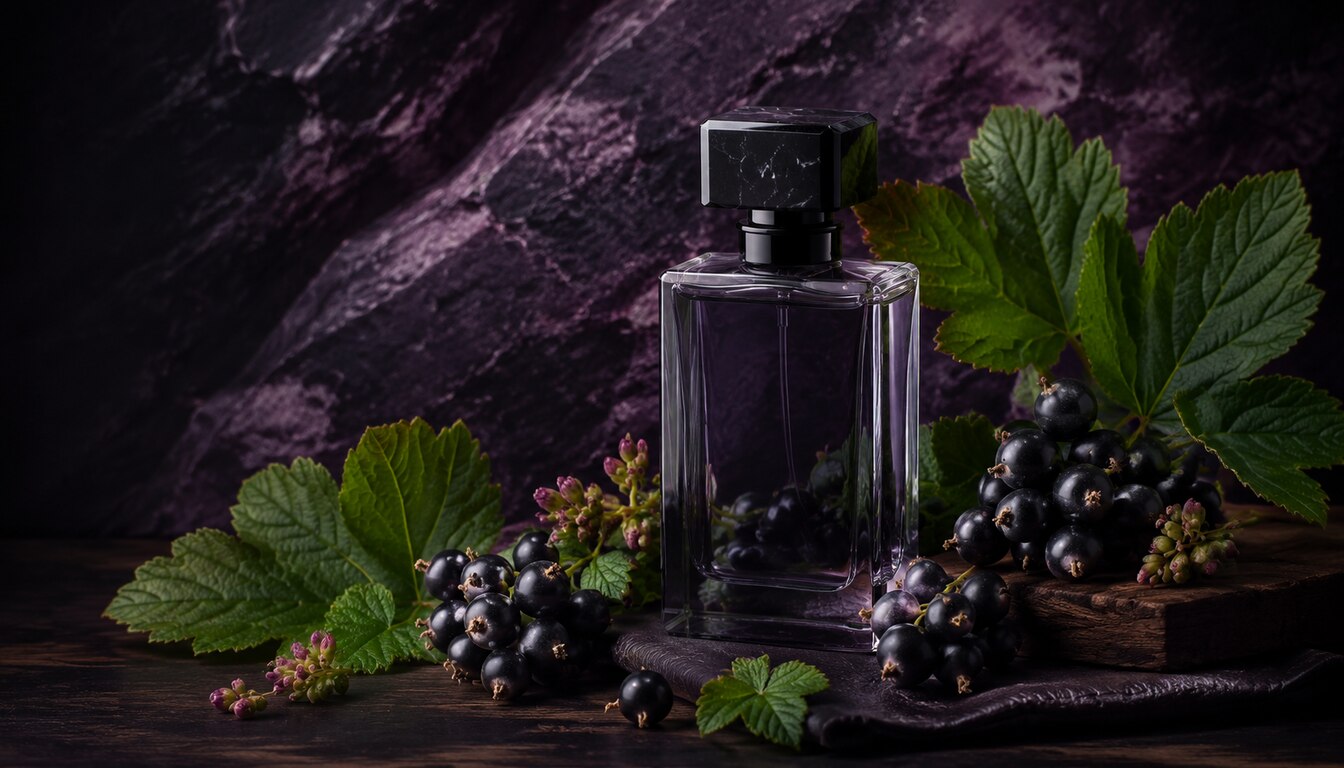
Blackcurrant is the dark fruit note that can look polished in one perfume and almost feral in another. It may smell juicy, tart, wine-like, green, woody, or faintly sulfurous. The berry itself brings color; the bud and leaf materials bring shadow. That contrast is what makes cassis so useful in modern perfumery and so difficult to reduce to a simple “fruity” label.
In the right composition, blackcurrant behaves like a deep burgundy accent against a clean silhouette. It can sharpen rose, give leather a stained-fruit darkness, make musk more vivid, or add tartness to vanilla. In the wrong balance, it can turn syrupy, shampoo-like, or aggressively green.
This guide explains what blackcurrant smells like, how fruit accords differ from bud and leaf materials, the main styles the note creates, four perfumes that show its range, and how to choose cassis by texture rather than sweetness alone.
What Does Blackcurrant Smell Like in Perfume?
Blackcurrant has a recognizable sweet-tart character, yet its full perfume profile is more complex. Depending on the material and the surrounding notes, it can suggest:
- Ripe berries: juicy, dark and gently jammy
- Tart fruit: bright acidity that keeps sweetness in check
- Crushed leaves: green, herbal and slightly woody
- Sparkling freshness: an effect that can lift citrus and floral openings
- Sulfurous contrast: a sharp, distinctive facet that prevents the note from smelling generic
The balance matters. A soft berry accord surrounded by vanilla and musk may feel smooth and gourmand. Blackcurrant with rose can be dewy, tart or leafy. With cinnamon, saffron, leather or dark woods, it becomes drier and more dramatic.
Blackcurrant should not be confused with blackberry. Both can contribute dark-fruit effects, but they are different plants and different perfume references. The name on an official fragrance pyramid is the safest guide to what the perfumer intended.
Blackcurrant Has Two Wardrobes: Fruit and Foliage
The fruity side of blackcurrant is ripe, tart, dark, and slightly wine-like. It can suggest crushed berries, jam, or the brightness of cassis liqueur without becoming literally edible. This side works naturally with rose, violet, vanilla, pear, and soft musk.
The green side comes from the olfactory idea of buds and leaves. It can feel leafy, bitter, woody, and distinctly sulfurous. That sharpness is not a defect when used well. It gives floral and fruity perfumes a shadow, the way a dark lining changes the character of a pale coat.
Many interesting blackcurrant perfumes move between both. A juicy opening may reveal green stems in the heart, or a leafy rose may soften into musk and fruit. The note becomes elegant when the perfumer controls the transition instead of polishing away every strange edge.
Blackcurrant, Cassis, Buds and Leaves
Cassis is the French word for blackcurrant. In perfume descriptions, it may refer broadly to the blackcurrant effect or more specifically to materials associated with the plant’s buds.
IFF’s LMR Naturals compendium identifies blackcurrant bud absolute as a material made from the buds of Ribes nigrum. The buds undergo solvent extraction, followed by purification with ethyl alcohol. IFF describes the result as fruity and sparkling, with green and sulfurous nuances and a juicy character reminiscent of fresh berries.
This is an absolute, not an essential oil distilled from a “blackcurrant tree.” Blackcurrant grows as a shrub, and the processed part in this material is the bud. A perfume’s blackcurrant note can also be an interpreted accord shaped from several materials. A note list communicates the intended smell; it does not disclose the complete formula or prove that a particular natural extract was used.
Leaves bring a more herbaceous impression. Buds can combine fruitiness with green, tart and sulfurous facets. A berry-centered accord usually emphasizes juice and sweetness. Perfumers can move between these effects, which explains why one blackcurrant fragrance smells fresh and leafy while another feels plush, spicy or gourmand.

How Perfumers Use Blackcurrant
Blackcurrant often appears in the opening or heart, where its contrast is easy to recognize. Citrus can sharpen its brightness, while raspberry, pear or apple makes the fruit effect more generous. Rose and jasmine soften it without erasing the tartness.
Spices and woods take the note in another direction. Cinnamon draws out warmth, saffron adds a dry leathery tension, and cedarwood gives the fruit a firmer structure. Musk, vanilla or praline can smooth the sharper facets and extend the impression into a softer drydown.
The note itself does not determine whether a perfume will be sweet, powerful or long-lasting. Those qualities depend on the complete formula. Blackcurrant is one element within a composition, just like the other materials explored in IRFĒ’s guide to fragrance ingredients.
Six Blackcurrant Perfume Styles
1. Juicy cassis
Pear, apple, raspberry, or soft citrus emphasizes the berry. This style is bright and easy to understand, but it needs acidity or green texture to avoid smelling like syrup. A dry musk or cedar base usually gives it a cleaner finish.
2. Blackcurrant and rose
Rose is one of cassis’s most elegant partners. The fruit deepens the petals, while green bud facets make the flower feel freshly cut rather than confectionery. The result can move from transparent garden rose to dark velvet depending on the woods and musk beneath it.
3. Leafy cassis
Green notes, tomato leaf, galbanum, moss, or aromatic herbs amplify the bud effect. This is the most distinctive style and the least universally flattering. It suits people who enjoy bitterness, stems, and the smell of a garden after rain.
4. Blackcurrant floral
Jasmine, violet, peony, or magnolia softens cassis without erasing its color. The berry gives the bouquet modernity and movement. This direction often feels polished enough for daytime while retaining more character than a conventional fruity floral.
5. Spiced blackcurrant and leather
Saffron, cinnamon, pepper, leather, and cedarwood turn cassis darker. The fruit becomes less juicy and more stained, almost like red light on polished leather. This is an evening style that rewards restraint and a well-defined base.
6. Blackcurrant gourmand
Vanilla, cocoa, honey, caramel, or amber can make the berry lush and edible. The best versions retain tartness. Without it, blackcurrant loses its elegant bite and becomes a generic sweet-purple accord.
| If you want… | Look for… | Likely effect |
|---|---|---|
| Fresh dark fruit | Citrus, pear, apple, musk | Juicy, tart, wearable |
| Modern rose | Rose, violet, orris, cedar | Floral, vivid, polished |
| Green character | Bud, leaf, moss, herbs | Sharp, botanical, distinctive |
| Evening depth | Saffron, leather, spice, woods | Dark, tactile, confident |
| Sweet comfort | Vanilla, cocoa, amber, honey | Rich, fruity, gourmand |
Four Blackcurrant Perfumes to Try
These four fragrances show how differently blackcurrant can behave. Each example is based on the notes published by the fragrance house rather than retailer descriptions or crowd-sourced pyramids.
IRFĒ Saffron Leather: Dark Fruit, Spice and Leather
IRFĒ Saffron Leather Eau de Parfum, composed by Ilias Ermenidis of dsm-firmenich, lists Cassis with Bergamot, Cinnamon and Petitgrain in the top notes. Saffron, Cistus Leaves, Burnt Rose and Violet form the heart, followed by Raw Leather, Sandalwood Album and Cedarwood Atlas.
Here blackcurrant is not presented as a sugary berry dessert. It adds a dark fruity accent between the fresh opening and the warmer spice. The tartness of cassis and the green side of petitgrain create contrast before saffron, leather and woods become more prominent. Readers interested in the citrus side of this opening can compare it with IRFĒ’s guide to bergamot perfume.
Diptyque L’Ombre dans l’Eau: Buds, Leaves and Rose
Diptyque L’Ombre dans l’Eau Eau de Toilette lists Rose, Blackcurrant Buds, Petitgrain and Blackcurrant Leaves. Diptyque describes green leaves, tart fruity buds and the floral intensity of rose.
This is a useful reference for the leafy side of cassis. The composition is not built around a smooth berry syrup. Rose sits against green foliage and acidulated fruit, creating a floral fragrance with a naturalistic, slightly shadowed character.
Parfums de Marly Meliora: Juicy Fruit and Soft Florals
Parfums de Marly Meliora Eau de Parfum places Blackcurrant with Raspberry and Lemon in the top notes. Rose, Ylang-Ylang and Jasmine Tea form the heart, while Vanilla, Musks and Praline provide the base.
Meliora emphasizes a brighter and more generous fruit effect. Lemon keeps the opening lively, raspberry reinforces the berry character, and the floral heart leads into a softer vanilla-musky base. It suits someone who wants blackcurrant to feel polished and fruity rather than sharply green or leathery.
Creed Aventus: Blackcurrant with Citrus and Woods
In its official guide to Aventus, Creed describes an opening of Apple, Calabrian Bergamot, Lemon, Blackcurrant and Pink Pepper. Pineapple, Jasmine and Patchouli follow, with Oakmoss, Cedarwood and Ambroxan in the base.
Blackcurrant contributes to a crisp fruity-citrus opening that later meets woods and moss. Compared with Meliora, the surrounding structure is drier and more woody. Compared with Saffron Leather, it is less spicy and leathery, with pineapple and apple reinforcing the fresh fruit direction.
Comparing the Four Styles
| Fragrance | Blackcurrant Setting | Overall Direction |
|---|---|---|
| IRFĒ Saffron Leather | Cinnamon, petitgrain, saffron and leather | Spicy, dark, leathery and woody |
| Diptyque L’Ombre dans l’Eau | Blackcurrant buds, leaves, petitgrain and rose | Green, tart and floral |
| Parfums de Marly Meliora | Raspberry, lemon, florals, vanilla and musk | Juicy, soft and fruity-floral |
| Creed Aventus | Apple, citrus, pineapple, moss and cedarwood | Fresh, fruity and woody |
How to Choose a Blackcurrant Perfume
Start with the part of blackcurrant you want to emphasize.
- Choose buds, leaves, petitgrain or rose for a greener, more botanical effect.
- Look for raspberry, pear, apple or vanilla if you prefer a rounder and juicier fruit profile.
- Choose pepper, cinnamon or saffron for a drier, spicier contrast.
- Look for leather, moss or woods when you want blackcurrant to lead into a darker base.
Test beyond the opening. Blackcurrant can be vivid during the first minutes and then become part of a floral, musky or woody structure. Smell the fragrance again after the heart and base have developed, preferably on skin as well as blotter paper.
For Saffron Leather, pay attention to the movement from cassis and spice into leather, sandalwood and Atlas cedar. IRFĒ’s guide to cedarwood perfume explains how that dry woody material behaves in different compositions. Saffron Leather is also included in the IRFĒ Discovery Set for comparison with the other fragrances in the Maison’s collection.
How to Wear Blackcurrant with Style
Blackcurrant has enough color to function almost like an accessory. A transparent cassis-and-rose perfume can sharpen pale tailoring or a simple dress. A green blackcurrant composition works with cotton, denim, and clothing that feels relaxed but intentional. Leather and saffron turn it into an evening note, especially beside black, burgundy, or deep brown.
In warm weather, choose tart fruit, rose, citrus, or musk and keep sweetness controlled. In cool weather, woods, amber, leather, and vanilla can carry the note with more weight. For the office, a leafy or musky cassis often feels more composed than a jammy fruity floral. For dinner, the darker styles create a richer trail.
Because cassis can project sharply, test the scent in motion. What smells beautifully tart with the wrist close to the nose may become much greener in a room. One spray less often reveals more of the composition.
How to Avoid the Shampoo or Syrup Effect
Blackcurrant becomes generic when the fruit is too smooth. Look for contrast: a green bud, bitter citrus peel, dry woods, moss, pepper, or rose. These notes restore the tart edge that makes cassis recognizable.
Also watch the base. A large dose of sweet musk and vanilla can turn every berry into the same purple cloud. Cedarwood, leather, vetiver, patchouli, or restrained amber create a clearer outline. If you enjoy sweetness, choose a perfume where the fruit remains acidic enough to cut through it.
Finally, do not assume that a darker color in the bottle or dramatic marketing means a stronger cassis effect. Read the whole structure and wait for the heart. Blackcurrant may be a brief top note, a green bridge into florals, or a persistent accent in the base.
Judging Blackcurrant Quality on Skin
At thirty minutes, ask whether the fruit still has dimension. Does it retain tartness, greenery, or a floral connection? At two hours, see whether the base supports the cassis or replaces it completely. A good transition can move far from the opening while preserving the note’s dark color and tension.
Comparing a rose-cassis perfume with a leather-cassis perfume is especially instructive. The first reveals the note’s floral affinity; the second shows how spice and wood can make it more severe. This is more useful than testing several sugary fruity florals side by side.
Frequently Asked Questions
Is cassis the same as blackcurrant?
Yes. Cassis is the French word for blackcurrant. On a fragrance pyramid, it may describe a general blackcurrant effect or point toward the tart, green character associated with blackcurrant buds.
Is blackcurrant perfume always sweet?
No. Blackcurrant can be juicy and sweet, but it can also smell tart, green, leafy or slightly sulfurous. Vanilla, praline and soft musk make it smoother; petitgrain, rose, woods, spice or leather can make it drier and sharper.
Why can blackcurrant smell green or sharp?
The buds and leaves of the plant have green and sulfurous facets in addition to fruitiness. Those characteristics give cassis its distinctive tension and separate it from a generic berry accord.
Is blackcurrant perfume unisex?
Blackcurrant is used across fragrance categories. The surrounding composition matters more than the note itself: flowers and vanilla can soften it, while spice, leather, moss and woods can make it darker or drier.
Which IRFĒ perfume contains blackcurrant?
IRFĒ Saffron Leather lists Cassis among its top notes. It appears with bergamot, cinnamon and petitgrain before the fragrance develops through saffron, cistus, burnt rose, violet, leather, sandalwood and Atlas cedarwood.
Final Thoughts
Blackcurrant perfume lives in contrast. It can be ripe and tart, green and sulfurous, floral, woody, leathery, or gourmand. The fruit gives color; the bud and leaf effects give character. When both sides are balanced, cassis feels vivid rather than simply sweet.
Choose by context. Rose and musk make it polished, green notes make it botanical, leather and saffron make it dark, and vanilla makes it warmer. The right blackcurrant perfume should keep a trace of acidity and shadow through the drydown, the qualities that turn a berry accord into something worth remembering.
