


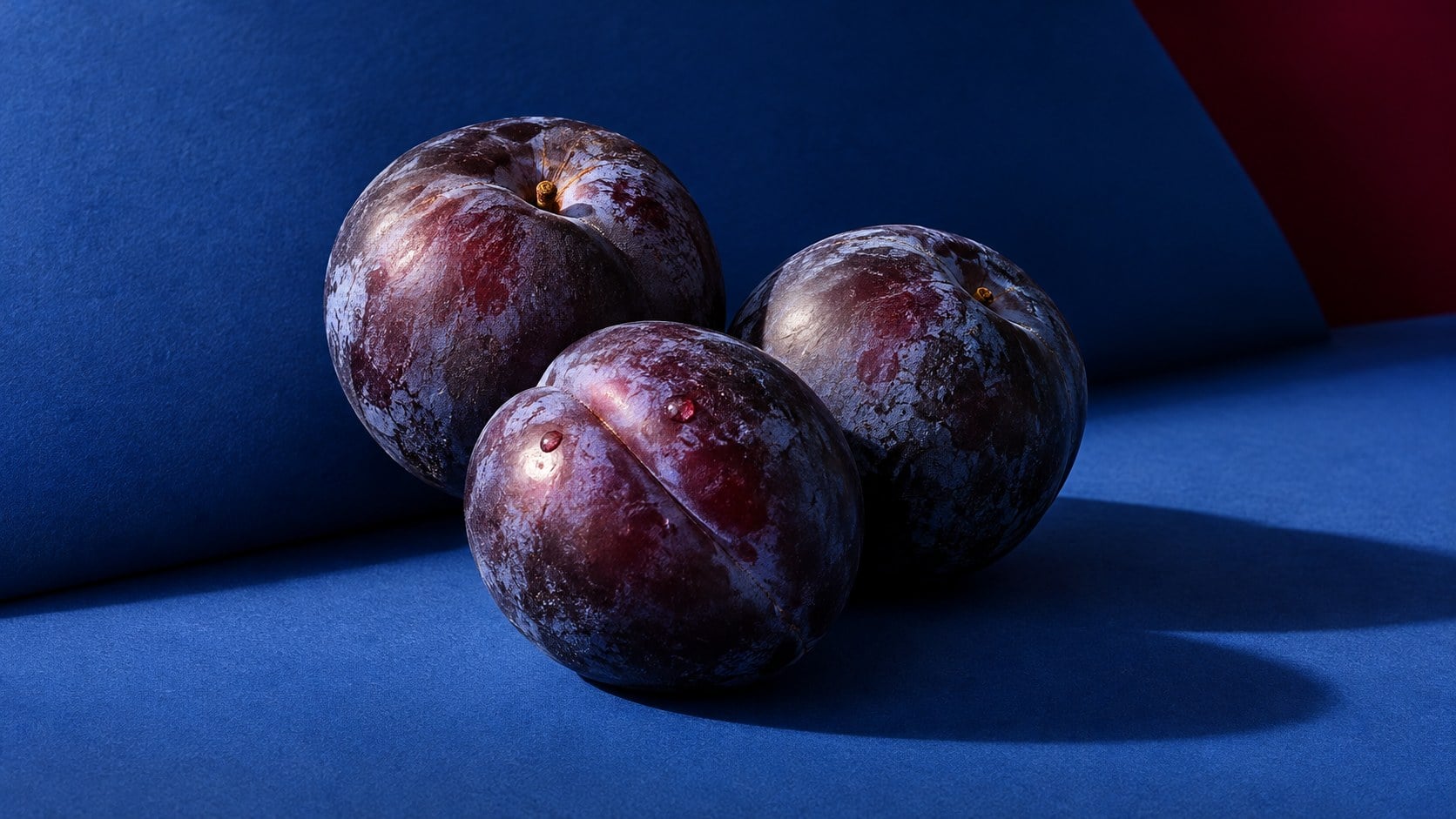
A plum can look almost blue before you open it. There is the pale bloom on the skin, the deeper purple beneath it, and then a completely different color inside. It is a very small object to contain so many changes of mood.
Perfume gives the fruit even more possibilities. Plum can be fresh and golden, soft beside flowers, dry against cedar, salted, or deepened with a boozy warmth. “Dark fruit” is only one part of the story, however often it appears in a description.
I like plum most when something interrupts its easy sweetness. That might be moss, a woody edge or an unexpected savory suggestion. The ten fragrances here travel through those possibilities without turning every purple note into the same evening perfume.
Start with a golden plum
Chloé Nomade Eau de Parfum places Mirabelle plum above freesia and oakmoss. It is a useful opening to this subject because the plum arrives in a fresh floral-woody context, rather than a glass of dark liqueur.
The moss is the important companion. Sweetness has something less yielding beside it. Freesia gives the fruit a floral brightness; the combination can interest someone who likes fruity perfume but wants a drier structure around it.
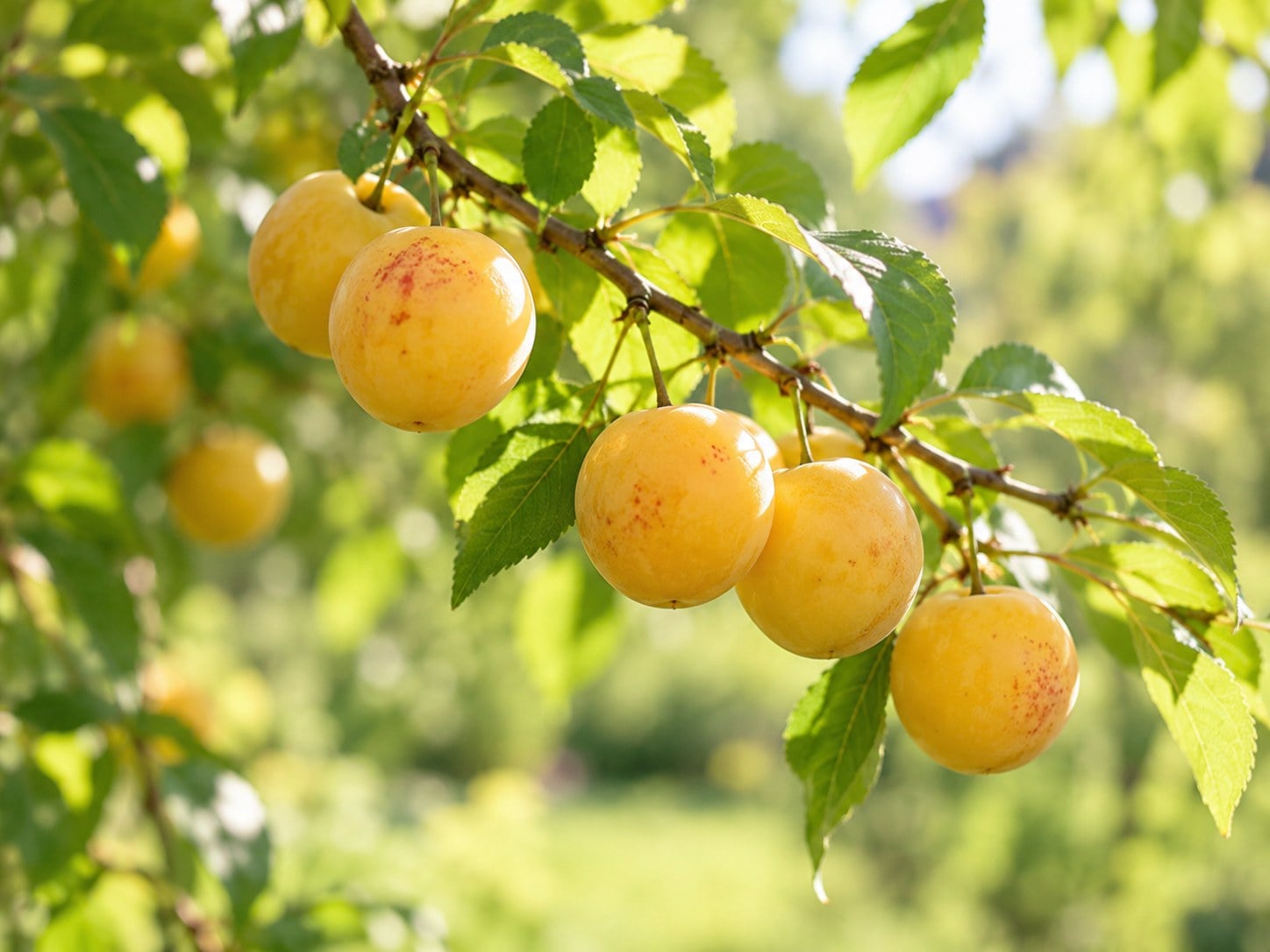
I enjoy how much the golden-fruit reference changes the expectation. There is no need for the fragrance to start in a shadowed room. Plum is quite capable of meeting daylight.
Keep the exact version in mind: Nomade Eau de Parfum. The Nomade family has other compositions, and their note lists should not be folded into this one.
Cassili lets the fruit become more generous
Parfums de Marly Cassili Eau de Parfum offers a fuller fruity-floral possibility. Its current house notes place currant, plum and peach above rose, mimosa and white flowers, with sandalwood, tonka and vanilla in the base.
The peach is worth noticing beside Nomade’s Mirabelle and moss. Cassili gives the plum a rounder fruit setting and a creamy foundation; Nomade introduces a drier, mossy counterpoint. Someone who likes plum but finds a restrained woody description rather severe may be much more interested in this arrangement.
Mimosa also brings a different floral association from the tuberose later in the shortlist. Fruity-floral is a large category. It helps to ask which fruit and which flower are doing the talking.
A little melon changes everything
Frédéric Malle Le Parfum de Thérèse Eau de Parfum brings plum together with melon and cucumber, a floral heart of rose and jasmine, and a leathery character. Its detailed note list also names vetiver and patchouli.
Melon and cucumber are such a surprising company for plum that I would stay with them for a moment. They suggest a cooler, more watery freshness before the deeper floral and leathery elements come into view. A fruity perfume does not have to choose between confectionery and a dark, dense mood.
The house tells the story of Edmond Roudnitska creating the fragrance for his wife, Thérèse, before it was later entrusted to Frédéric Malle. A composition begun for one person has become something many people can discover, with its unusual fruit pairing intact.
What moves me in the composition is the breadth of it: ordinary-sounding fruits, flowers with their own presence, a deeper base. The plum is part of that whole, not an isolated flavor asked to remain unchanged from beginning to end.
Tuberose changes the company the plum keeps
Narciso Rodriguez For Her Musc Noir Rose Eau de Parfum is not simply a rose perfume with a dark name. Narciso Rodriguez describes tuberose and its signature musk with a plum facet, a bergamot-and-pink-pepper opening, and vanilla, suede and patchouli in the deeper setting.
The plum has a different role from the greenish fruit pairing in Le Parfum de Thérèse. Here it enriches a creamy floral-musk idea. I would put it on the list for someone whose real attraction is the flower and its softer surroundings, rather than a desire to recognise ripe plum in isolation.
The full name matters: For Her Musc Noir and For Her Musc Noir Rose are distinct products. The addition of Rose does not mean that every note in the second bottle can be inferred from the first.
Féminité du Bois keeps the cedar
Serge Lutens Féminité du Bois Eau de Parfum brings plum and floral notes into a cedar-centered idea. Serge Lutens emphasizes the wood in its own description; the plum is also named in the retailer’s product notes linked in the sources.
That pairing offers a different way to enjoy the fruit. Wood can give plum a dry frame, so the attraction does not depend on making the sweetness larger and larger. The cedar is allowed to be a subject in its own right.
I find this a particularly appealing direction for someone who likes woody perfume and is uncertain about fruit. It makes room for softness without requiring the composition to turn into a dessert. For a plum lover, the same arrangement can shift attention towards the drier surroundings.
Bibliothèque brings leather to the fruit
Byredo Bibliothèque Eau de Parfum gives plum a more textured set of surroundings. The current Eau de Parfum page names plum and cinnamon, then a leather accord and violet, with birch woods, patchouli and vanilla below.
The leather and violet make the difference from Féminité du Bois’s cedar-centered idea. Both interest me as alternatives to treating fruit mainly as sweetness, but the materials suggest quite different surfaces. A reader drawn to a softly cosmetic floral detail beside a deeper woody base has a reason to look here.
This is the skin fragrance. Bibliothèque also names candles and a room spray, whose descriptions should not be used as a substitute for checking the Eau de Parfum’s notes.
Floriental puts incense in the picture
Comme des Garçons Floriental Eau de Parfum arranges a plum-liqueur note with labdanum, sandalwood, vetiver, incense and pink pepper. There is no need for a conventional floral bouquet to carry the fruit.
The resin and incense are the attraction for me. Plum can give that darker, drier company a rounded point of contrast without turning the whole idea into a glass of fruit cordial. For someone already fond of incense perfumes, this is a particularly useful way into plum; for someone seeking fresh Mirabelle and freesia, it is a substantial change of direction.
A liqueur note is an olfactory reference. It does not establish that the perfume’s alcohol has undergone the barrel-ageing process described separately by Scents of Wood.
Plum Cream is an unexpectedly savory name
The name of Obvious Plum Cream Eau de Parfum could suggest a soft fruit dessert. Its published direction is rather different: a salted-prune accord, inspired by Japanese umeboshi, with davana and rum, immortelle and cistus, then cypriol, a Saffiano leather accord and oakwood.
There is no milk note in that pyramid. The salted fruit is the turn worth noticing. Obvious describes the accord through sweet, tangy and savory facets; the Japanese food reference makes the word umami relevant to the inspiration, without turning the perfume into something edible.
I am drawn to the friction between the name and the notes. You arrive expecting cream and find rum, leather and a salted preserve. It is a much stranger proposal than another generous helping of vanilla around a purple fruit.
The accord is an aromatic construction. It should not be read as a declaration that a condiment or a spoonful of salt has been added to the bottle. The interest lies in the impression the perfumer wants to build.
This is the candidate I would reserve for someone curious about a savory, leathery interpretation of plum. It is not an obvious substitute for the bright Mirabelle-freesia direction of Nomade, even though both belong in a plum discussion.
You Rêve makes the butter part of the idea
Glossier You Rêve Eau de Parfum offers a much more deliberately gourmand plum. Glossier’s current description places buttercream around plum butter, toasted almond, iris and creamy sandalwood, with an Ambrox-led musky base.
That is a useful distinction from the salted-prune and leather idea at Plum Cream. One name invites you towards dessert and follows through with a creamy, nutty composition; the other uses its inviting name to lead somewhere more savory. They need not be judged by which one smells most accurately like a fresh plum.
Iris and musk also give You Rêve a different softness from a purely syrupy fruit accord. I would begin here if plum’s warmer, sweeter side is the point, but an overt rum-and-spice setting is not what you want. You Rêve is separate from the original Glossier You and You Doux.
Plum in Cognac makes indulgence quite explicit
Scents of Wood Plum in Cognac Eau de Parfum, by Pascal Gaurin, takes the subject towards spice, fruit and a boozy warmth. The house describes plum with cinnamon, tobacco and nutmeg, followed by vanilla and vetiver. Its published materials also include rum absolute.
That last detail is worth keeping beside the name. Cognac refers to the brand’s barrel-ageing process for its alcohol; rum also appears in the aromatic description. The two references are doing different jobs, rather than cancelling one another out.
The plum now has a richer setting. Spice and vanilla can make the fruit feel more generous, while tobacco and vetiver introduce drier interests around it. This is where I would turn when the deep, sweet-spiced side of plum is the point of the purchase.
Plum, cherry and blackcurrant are separate conversations
Perfumery can make fruits overlap, but their names still suggest different starting points. Plum often invites a fleshy, skin-like or preserved-fruit interpretation. Cherry may bring tartness, almond or a darker liqueur association; blackcurrant can pull sharply towards tart berries and greener foliage.
Those are descriptive tendencies, not formula rules. Our cherry perfume guide and blackcurrant guide follow their own subjects. Their shared dark color does not make their smells interchangeable.
Plum blossom is another distinction. A fragrance named for the blossom does not automatically promise ripe plum fruit. Read what the house actually describes before expecting the fleshy or jam-like character that brought you to a plum search.
Likewise, a floral note with fruity facets is not necessarily an explicit plum note. It may be interesting in its own right, but calling every apricot-like osmanthus or dark-fruit impression plum makes the category less useful.
Find the setting you want around the fruit
If you want brightness, begin with Nomade’s Mirabelle, freesia and moss. For a rounder fruit-and-flower idea, Cassili puts peach and mimosa beside the plum. Le Parfum de Thérèse moves through cooler fruit, flowers and leather; Musc Noir Rose takes a creamier tuberose-and-musk route.
The wood and resin choices divide further. Féminité du Bois gives cedar a central role; Bibliothèque brings leather and violet into its woody setting; Floriental introduces incense and labdanum. For sweetness, You Rêve’s plum butter and almond are a different proposition from Plum in Cognac’s spice and boozy warmth. Plum Cream remains the savory turn.
During a trial, ask whether the surrounding notes are part of what you love. A delicious opening is a small consolation if you spend the rest of the day wishing the woods or sweetness would leave.
There is no need to keep plum for evenings or cold weather as a rule. The particular fragrance and amount matter more than the color you associate with the fruit.
Before evening
The Mirabelle is a lovely last image: a small golden fruit growing among green leaves, with plenty of daylight around it. Nomade gives that brighter idea a mossy background.
For all the darker possibilities, I would quite like a plum perfume at breakfast.
