


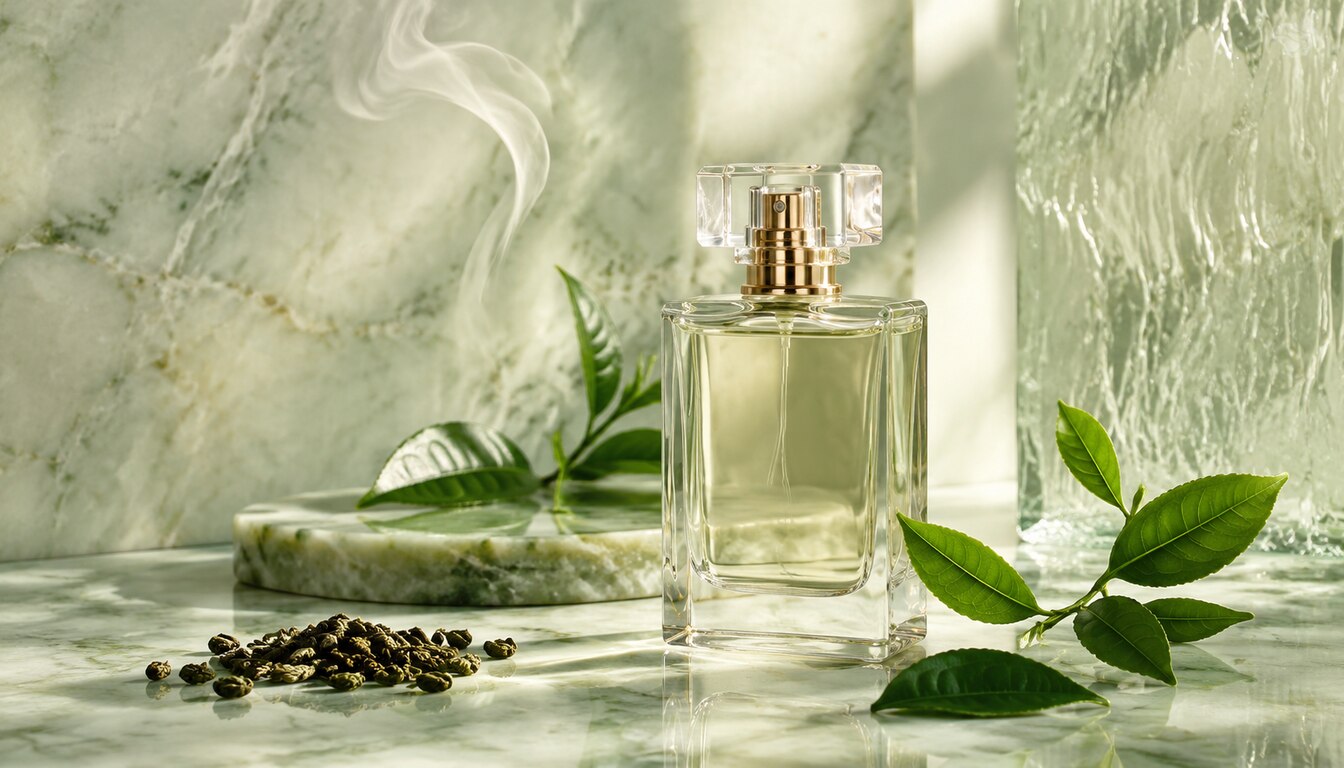
Green tea perfume is less about reproducing a cup and more about capturing a particular kind of air: cool, slightly bitter, leafy, transparent, and quietly restorative. It can smell citrus-bright, grassy, floral, musky, or softly woody. The best versions retain the tension between freshness and tannic dryness instead of dissolving into generic spa cleanliness.
That tension gives green tea unusual elegance. It can behave like a crisp layer beneath a fragrance, making jasmine less lush, citrus less obvious, and musk more composed. In a wardrobe of scent, green tea is the unlined jacket or fine cotton shirt: light enough for heat, but structured enough not to feel unfinished.
This guide explains what green tea smells like, how the effect is created, how it differs from black tea, Earl Grey, and matcha, which notes change its character, and how to choose a tea fragrance that remains interesting after the first clean impression.
What Does Green Tea Smell Like in Perfume?
In fragrance descriptions, green tea commonly suggests several connected facets:
- Leafy and green: an impression of fresh or gently crushed leaves.
- Grassy: a dry, vegetal quality that can make a composition feel clean and transparent.
- Lightly bitter: a restrained tannic edge rather than obvious sweetness.
- Airy or watery: space and clarity around stronger citrus, floral, or woody notes.
- Softly floral: a delicate effect when the tea accord is paired with jasmine, neroli, or other petals.
These are possible directions, not a checklist. A perfumer may emphasize one facet and leave the others almost invisible.
Green Tea Is a Texture, Not a Beverage Replica
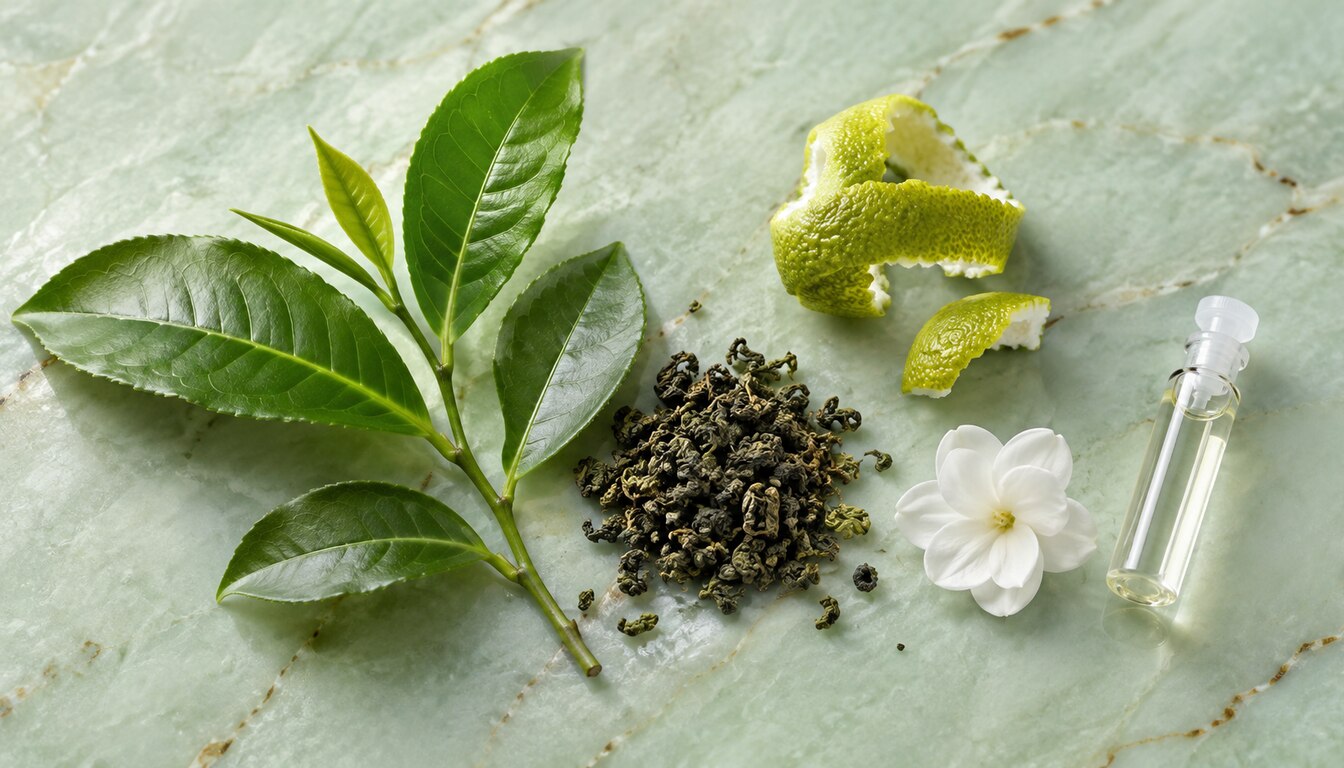
A literal brewed-tea smell is difficult to preserve in perfume. What we recognize as green tea is usually built through an accord: dry leafy materials, citrus, herbs, floral notes, soft woods, musks, or specialty extracts arranged to suggest infusion, steam, bitterness, and freshness.
This freedom is why green tea can feel so different from bottle to bottle. One perfume evokes crushed leaves and lemon peel; another suggests jasmine tea; another uses the idea only as a transparent green veil over musk. The name describes an atmosphere, not a recipe.
The most convincing versions include a little friction. A faint bitterness, a tannic dryness, a cool herb, or a woody shadow prevents the composition from becoming air freshener. Green tea should feel clear, but not empty. It needs enough texture to remain on the skin after the bright opening has passed.
Is Green Tea a Natural Ingredient or an Accord?
A note pyramid is an olfactory description, not a complete ingredient list. When a perfume lists green tea, it does not necessarily mean that brewed tea was added to the bottle. The effect may be constructed as an accord, made with a disclosed tea-derived material, or created through a combination of natural and synthetic aromatic materials.
dsm-firmenich describes its Smell-The-Taste™ approach as translating tastes into fragrance through molecular volatility, retro-olfaction, and a creator’s interpretation. That distinction is useful when reading perfume descriptions: a recognizable green tea impression can be carefully composed without being a literal cup of tea in alcohol.
Claims should therefore follow the information supplied for the specific fragrance. If a brand says “green tea accord,” that is the accurate term. If it discloses a natural tea material, that can be stated. It is not sound to assume that every green tea perfume contains green tea extract or that natural materials are automatically responsible for the whole effect.
Green Tea, Black Tea, Earl Grey, and Matcha
Green and black tea come from the same tea plant, but they are processed differently. The UK Tea & Infusions Association explains that green tea is not oxidized in the way black tea is: the leaves are heated, then rolled and dried, while black tea is allowed to oxidize fully. Their aromas can therefore inspire different directions in perfumery.
A green tea accord often emphasizes leafy, grassy, and transparent facets. A black tea accord may feel darker, drier, more tannic, or slightly smoky. Earl Grey adds another recognizable idea: black tea flavored with bergamot. Matcha-inspired compositions may move toward powdered, creamy, vegetal, or gourmand effects, but the perfume’s disclosed notes still matter more than the name alone.
For a closer look at the black-tea-and-bergamot direction, see our guide to Earl Grey tea perfume.
Six Green Tea Perfume Styles
1. Citrus green tea
Bergamot, lemon, mandarin, petitgrain, or yuzu gives green tea a sparkling opening. This is the most immediate and heat-friendly style. The danger is brevity: without musk, woods, or a floral heart, the perfume can feel like a beautiful first page with no second chapter.
2. Jasmine green tea
Jasmine turns tea more floral without necessarily making it sweet. The combination can feel serene, polished, and slightly sensual, especially when the jasmine remains transparent. It is well suited to daytime, travel, and anyone who wants a floral that does not arrive as a bouquet.
3. Herbal green tea
Mint, basil, shiso, rosemary, mate, or aromatic grasses emphasize the cool green side. This style is crisp and contemporary, but sharpness needs control. A soft musk or pale wood can make the herbs feel tailored rather than medicinal.
4. Musky green tea
White musk, ambrette-style materials, iris, and clean woods create a quiet skin scent. The tea becomes less like leaves and more like the memory of steam on fabric. This is an elegant choice for shared spaces, though it may feel too discreet outdoors.
5. Woody or smoky tea
Cedarwood, vetiver, birch, incense, or black-tea facets add shadow. The fragrance can move from bright citrus into a drier, more contemplative base. This is green tea after sunset: still clear, but no longer innocent.
6. Soft gourmand tea
Vanilla, honey, rice, fig, milk, or marshmallow can round the bitterness. The best versions preserve a recognizable tea line through the sweetness. Without that contrast, the composition becomes a gourmand that happened to read a tea menu.
| If you want… | Look for… | Likely effect |
|---|---|---|
| Summer brightness | Bergamot, lemon, mandarin, petitgrain | Sparkling, light, crisp |
| Floral calm | Jasmine, neroli, magnolia, iris | Airy, polished, graceful |
| Green energy | Mint, basil, mate, herbs | Cool, aromatic, modern |
| Skin-close softness | White musk, ambrette, pale woods | Quiet, clean, intimate |
| Autumn depth | Cedar, vetiver, smoke, amber | Dry, woody, contemplative |
| Comforting sweetness | Vanilla, honey, rice, soft florals | Warm, gentle, gourmand |
Notes That Pair with Green Tea
Citrus notes
Lemon, bergamot, mandarin, and other citrus notes can sharpen the fresh opening of a green tea fragrance. Bergamot brings citrus brightness with floral and gently bitter facets, making it especially compatible with transparent tea effects. Our guide to bergamot in perfume explains how the ingredient works beyond tea-inspired compositions.
Floral notes
Jasmine and neroli can soften a leafy accord without necessarily making it sweet. Jasmine may add floral volume, creaminess, or a greener nuance, while neroli can reinforce a clean citrus-floral direction. The result depends on the complete formula; a note list cannot show the balance or concentration of each material. Learn more about the flower’s range in our jasmine perfume guide.
Green tea and fig
Fig can move green tea away from a purely citrus-clean direction and toward something more botanical and textured. Fig leaf is especially useful here because it can extend the leafy green impression without turning the composition into a simple sweet-fruit perfume. A current documented example is Fascent I FIG YOU: the house lists green tea, sage and citruses; fig leaf and carrot seeds; then vetiver and cedarwood. The structure keeps the tea bright while the fig leaf broadens the green character and the woods give the drydown a drier frame.
Woods and musks
Cedarwood, sandalwood, and musk can give a light tea fragrance a more defined, lingering drydown. Dry woods may emphasize its leafy or tannic side, while creamier woods and soft musks can help the transparent tea accord stay present without making it feel heavy. That can give a green-tea perfume more staying power, although the complete formula and the wearer still decide how long the effect lasts.
For a broader view of how perfumers build compositions from citrus, flowers, woods, spices, and accords, explore IRFĒ’s guide to fragrance ingredients.
How Green Tea Changes Through a Fragrance
Green tea is often presented near the opening or heart because its crisp character works well beside citrus and transparent florals. That is not a universal placement rule. Note pyramids describe an intended progression, and the materials responsible for a tea effect may influence more than one stage.
At first spray, citrus can make the tea feel brighter. Later, floral, herbal, woody, mossy, amber, or musky materials may shift the emphasis while retaining part of its dry green texture.
Three Green Tea Fragrances to Compare
Elizabeth Arden Green Tea Scent Spray
Elizabeth Arden Green Tea Scent Spray is the clearest reference point for a bright, easy-to-read green-tea structure. The official description lists bergamot and lemon on top, Green Tea Accord, Jasmine Accord and celery seed in the heart, then amber, oakmoss and musk in the base. The tea stays connected to citrus freshness while the mossy-musky base keeps it from feeling like scented water.
Bvlgari Eau Parfumée Thé Vert
Bvlgari Eau Parfumée Thé Vert Eau de Toilette takes a more botanical direction. Bvlgari describes natural green tea through vegetal, grassy and refreshing facets, paired with neroli and a fizzy bergamot effect. Compare it when you want green tea to feel more polished and citrus-floral than musky.
Nishane WŪLÓNG CHÁ X
Nishane WŪLÓNG CHÁ X places green tea in the heart with magnolia and thyme oil after a vivid citrus opening of bergamot, orange, mandarin and yuzu. Musk and fig ground the base. It is useful when you want the tea idea to feel more expansive, floral and textured rather than purely transparent.
These three fragrances show why “green tea perfume” is a family of effects rather than one fixed smell. Elizabeth Arden emphasizes citrus, tea accord and mossy musk; Bvlgari pushes the leafier, botanical side; Nishane builds a fuller citrus-floral tea structure. Compare the relationship around the tea, not only the note name.
How to Choose a Green Tea Perfume
Choose the facet you want most
Look for citrus if you want brightness, or green and herbal notes if you prefer a drier leafy effect. Jasmine and neroli may point toward a floral style. Woods, moss, and musk can suggest a more grounded drydown. If the description includes vanilla, milk, rice, or sweet gourmand notes, the tea may feel creamier and less austere.
Read the whole composition
Do not stop at the words “green tea.” Compare the surrounding notes and the fragrance family. Two perfumes can share a tea note yet move in opposite directions because one is built around sparkling citrus and the other around amber, musk, or dessert-like materials.
Test the development
Start with a blotter, then test promising options on skin. Check the opening, the transition after it settles, and the later drydown. This reveals whether the tea remains central or quickly becomes part of a floral, woody, or musky structure. Use separate labeled blotters when comparing several fragrances and avoid judging longevity from the first few minutes.
Does IRFĒ Make a Green Tea Perfume?
The current five-fragrance IRFĒ collection does not list green tea in any of its official note pyramids. IRFĒ Marshmallow Musk Eau de Parfum does contain a tea note, but it is Earl Grey Tea, not green tea.
Marshmallow Musk opens with Earl Grey Tea, Magnolia Petals, and Lavender Petals. Fresh Jasmine, Marshmallow Cotton, and Iris Nectar form the heart, followed by Fluffy Woods, Airy Vanilla, and Powdery Musk. It is relevant as a contrasting tea-inspired fragrance: its bergamot-associated black tea opening moves into a soft floral gourmand-musk structure rather than presenting a leafy green tea accord.
How to Wear Green Tea Without Smelling Generic
Green tea is often marketed through words such as clean, calm, and fresh. Those words are pleasant but not very discriminating. Look instead for a clear contrast. Citrus against moss, jasmine against dry tea, herbs against musk, or soft sweetness against tannic leaves gives the perfume an identity.
Wardrobe offers a useful test. A very clean tea musk fits white cotton, soft tailoring, and minimal layers. A jasmine tea can sit beside silk or a light dress without becoming ornate. A woody tea works with denim, suede, and knitwear. If the fragrance seems compatible only with a spa robe, it may not have enough character for repeated wear.
Application also matters. Light tea fragrances are easy to overspray because they do not feel dense up close. Yet a large cloud of citrus, musk, and aromatics can become sharp in an office. Begin with two sprays, move through the day, and judge the scent from normal distance rather than with the wrist pressed to the nose.
Green Tea Through the Seasons
Spring and summer are natural territory for tea, especially with citrus, mint, or neroli. In humidity, green tea can feel almost weightless, which is useful when amber and heavy florals become tiring. The best warm-weather formulas still leave a clean woody or musky trace after the opening.
For autumn, look for mate, black tea, cedarwood, fig, cardamom, or soft amber. These notes give the transparency more substance without burying it. In winter, green tea can work as contrast inside a warmer fragrance, much as a pale blouse sharpens a dark suit.
Evening tea perfumes are usually less literal. Smoke, leather, jasmine, amber, or woods turn the note into atmosphere. The tea may no longer smell like a cup, but its dryness keeps the composition poised.
How to Evaluate a Green Tea Drydown
After the citrus fades, ask whether the perfume still has a tea-shaped idea. Does it retain leaf, tannin, aromatic coolness, or a calm transparency? If everything becomes generic white musk, the opening may have been more marketing than structure.
Compare the perfume at thirty minutes and three hours. A successful formula may change dramatically, but the transition should feel intentional. Jasmine should soften the tea, not erase it. Woods should add depth, not turn it into a different fragrance. Sweetness should round the bitterness while leaving a clean edge.
Frequently Asked Questions
Does green tea perfume smell like brewed tea?
Sometimes, but not necessarily. A fragrance may pursue a recognizable leafy tea effect or use green tea as one transparent element within a citrus, floral, woody, or musky composition.
Is green tea perfume always fresh?
Freshness is common, especially with citrus or watery notes, but it is not guaranteed. Woods, amber, vanilla, milk, or musk can make a green tea fragrance warmer, creamier, or sweeter.
Is green tea the same note as Earl Grey?
No. Earl Grey refers to black tea flavored with bergamot. A green tea accord generally emphasizes a different leafy or grassy profile, although both styles may be paired with citrus.
Are green tea perfumes unisex?
The note itself is not limited to a gender. Individual fragrances may still be marketed in different ways, and their overall character depends on the complete composition rather than the tea note alone.
What notes work well with green tea?
Common partners include bergamot, lemon, jasmine, neroli, herbs, cedarwood, sandalwood, moss, amber, and musk. Each combination highlights a different side of the tea effect.
Finding the Right Green Tea Scent
The best green tea perfume is not necessarily the one that smells most literally brewed. It is the one that uses tea’s clarity, bitterness, and quiet texture to create a complete composition. Decide whether you want citrus brightness, jasmine, herbs, musk, wood, or a soft gourmand contrast.
Then follow the fragrance past its opening. Green tea should leave more than cleanliness behind. At its most elegant, it gives perfume the same quality as a well-cut light garment: air, movement, and enough structure to hold a silhouette.
