


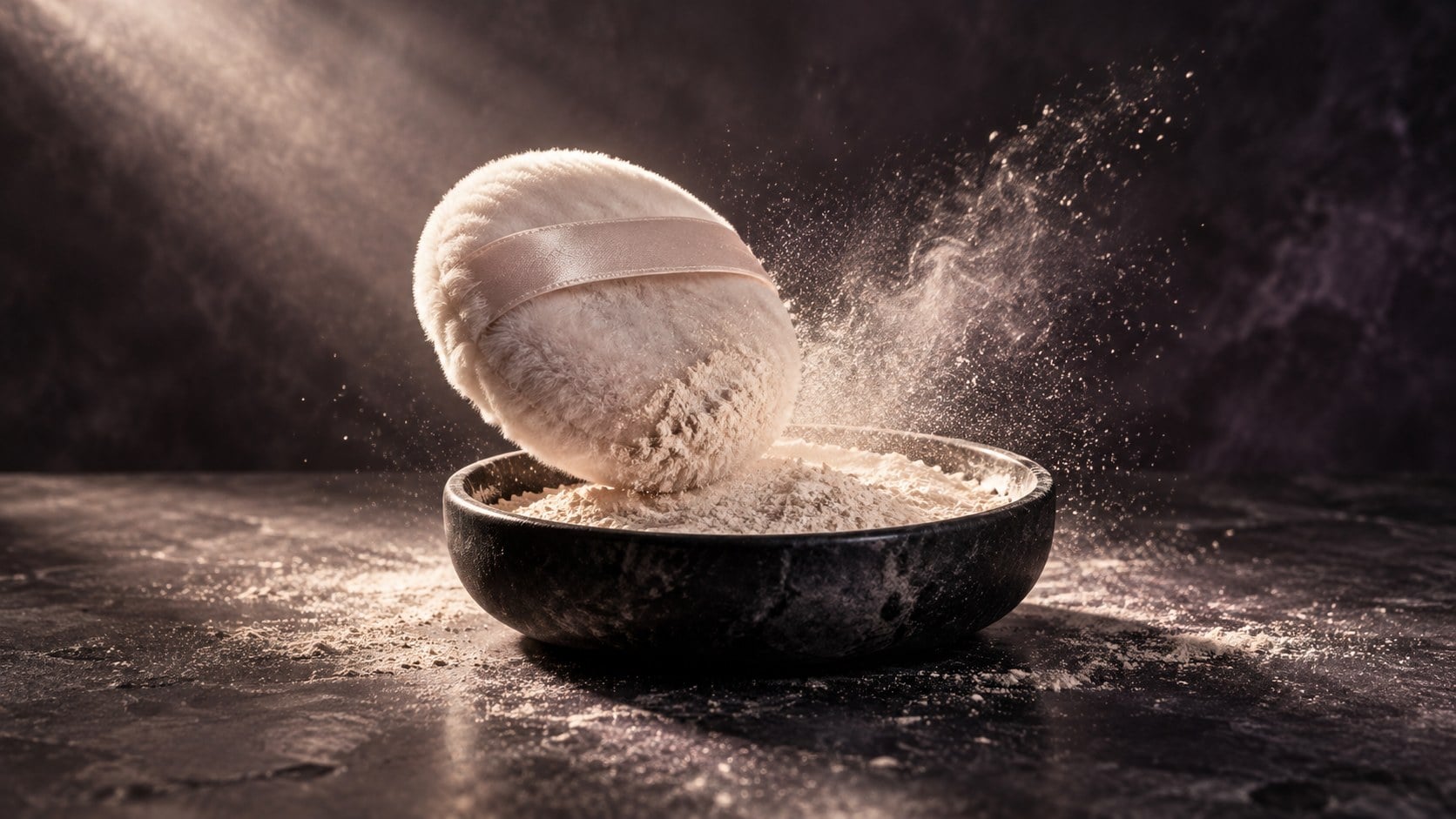
The word “powdery” seems to give a perfume an age before anybody has smelled it. Somebody imagines an old dressing table. Somebody else wants the clean softness of a new cosmetic compact. They may be talking about quite different fragrances.
I like powder when it has some definition: the coolness around iris, the intimate cosmetic character of violet and rose, or a musk that feels rounded without becoming vague. A little sweetness can be lovely. It is not compulsory.
Powdery perfumes are connected by an effect rather than one required ingredient. Iris, violet, heliotrope, musk and warm supporting notes can lead towards different versions of that effect. The thirteen fragrances below make the differences more interesting than the label.
Which powder do you mean?
Face powder is dry and fine. A lipstick has a denser cosmetic character. A freshly washed musky softness suggests something else again. In perfume, all three can attract the word powdery, even when they have very little in common beyond a softened surface.
That is why I would begin with a description rather than an age category. Do you want something cool and matte, something floral with a cosmetic association, or something sweeter and enveloping? A request for “a soft perfume” is charmingly open to misunderstanding.
Powderiness also does not tell you how quietly a perfume behaves. Texture and presence are different questions. An elaborate floral can have powdery facets and still feel quite substantial; a relatively transparent iris can share the adjective without sharing the effect in a room.
Nor is a powdery note an instruction to look for talc in the ingredient list. Notes describe an intended smell. The materials and their balance create that impression; the final formula is not a cosmetics recipe read aloud.
The compact, then the dressing room
Begin with Lorenzo Villoresi Teint de Neige Eau de Toilette. The house is direct about perfumed face powder. Rose, jasmine and ylang-ylang lead into tonka, with heliotrope and musk among the base notes.
After all the qualifications around the word, I rather enjoy a perfume that is willing to name the object. Here the cosmetic association is the attraction, not something to explain away.
Heliotrope and tonka move the idea towards a sweet, enveloping powder. The floral material gives it more dimension than the phrase baby powder would suggest. I would start here if your imagined powder has warmth and a deliberately nostalgic character, rather than the cool green quality of some iris perfumes.
This recommendation refers to the Eau de Toilette. Teint de Neige also exists as an Eau de Parfum and in other scented products. Keep the version in view when comparing a sample with a full bottle.
Move from the powder itself to the world around it, and Misia becomes a different proposition.
In Chanel Misia Eau de Parfum, rose and violet meet iris pallida, benzoin and tonka. Chanel connects the fragrance with opera-house dressing rooms, flowers, powder boxes and lipstick, in its tribute to Misia Sert.
The lipstick is the detail I would keep. It gives the powder a human setting: something applied, handled, closed and put away. A violet-rose accord can suggest that intimate cosmetic world without having to reproduce the whole dressing room.
Benzoin and tonka lend warmth to the idea. The result described by the house belongs to a floral, powdery, ambery direction rather than a sharp green iris. That distinction matters more than asking whether the perfume is modern or vintage.
There is also a rather enjoyable tension between the grand scale of an opera house and the small scale of a lipstick. One is public, the other private. A perfume can carry both associations without making a speech about either.
Lipstick Rose makes the cosmetic idea brighter
Frédéric Malle Lipstick Rose Eau de Parfum, by Ralf Schwieger, gives rose and violet a different stage. Grapefruit appears at the top, while the detailed house notes also include iris, raspberry, vanilla and white musk.
That citrus is a small but useful distinction from Misia’s warmer benzoin-and-tonka setting. The cosmetic association need not be dim or sepia-colored. A rose-violet powder can have a bright edge, and the fruity detail gives it another kind of immediacy. This is where I would turn if the lipstick idea appealed more than a general request for something soft.
Iris Poudre gives the flower a larger frame
Frédéric Malle Iris Poudre Eau de Parfum, by Pierre Bourdon, places iris among aldehydes, rose, violet, tonka and white musk. The house explicitly presents it as a floral-aldehydic composition.
The aldehydic part is worth your attention. Powder can suggest a surface that absorbs light; this arrangement allows for brightness around it. That gives the iris more space than a purely cuddly description would suggest.
I find the floral architecture appealing here. Rose and violet belong to the same refined idea as the iris, while tonka and musk offer a warmer, softer foundation.
This is one way into the category for someone who enjoys a composed floral with a pronounced powdery identity. It is not the only way to smell iris. Our iris perfume guide follows the flower’s green, woody, creamy and musky expressions more widely.
N°5 puts light around the powder
Chanel N°5 Eau de Parfum is another reason not to confuse powder with a small, muted effect. Chanel places May rose and jasmine around a floral-aldehydic signature, with citrus at the opening and vanilla in the composition.
The aldehydes matter as part of the whole arrangement. They are not a universal synonym for talc, and an aldehydic perfume need not be a powder perfume in the same way as Teint de Neige. Here, the bright floral presence gives the softer facets something to stand against.
The Eau de Parfum is the reference. N°5 L’Eau, Eau Première and the Parfum are distinct interpretations; buying by the large numeral alone loses the very distinction that makes this comparison useful.
Cool iris is not sugar
The purple flower is such a persuasive image that it is easy to forget the earthier part of the subject. In perfumery, orris refers to the processed iris rhizome. Its associations can be powdery and woody rather than simply the scent one expects from a bouquet. Our orris guide explains that material in detail.
For choosing a perfume, the useful distinction is simpler: powder and sweetness can separate. Green notes, woods and citrus may leave a powdery composition feeling cool or relatively dry. Vanilla and tonka can move it towards a warmer, sweeter impression. The shared texture does not erase the difference.
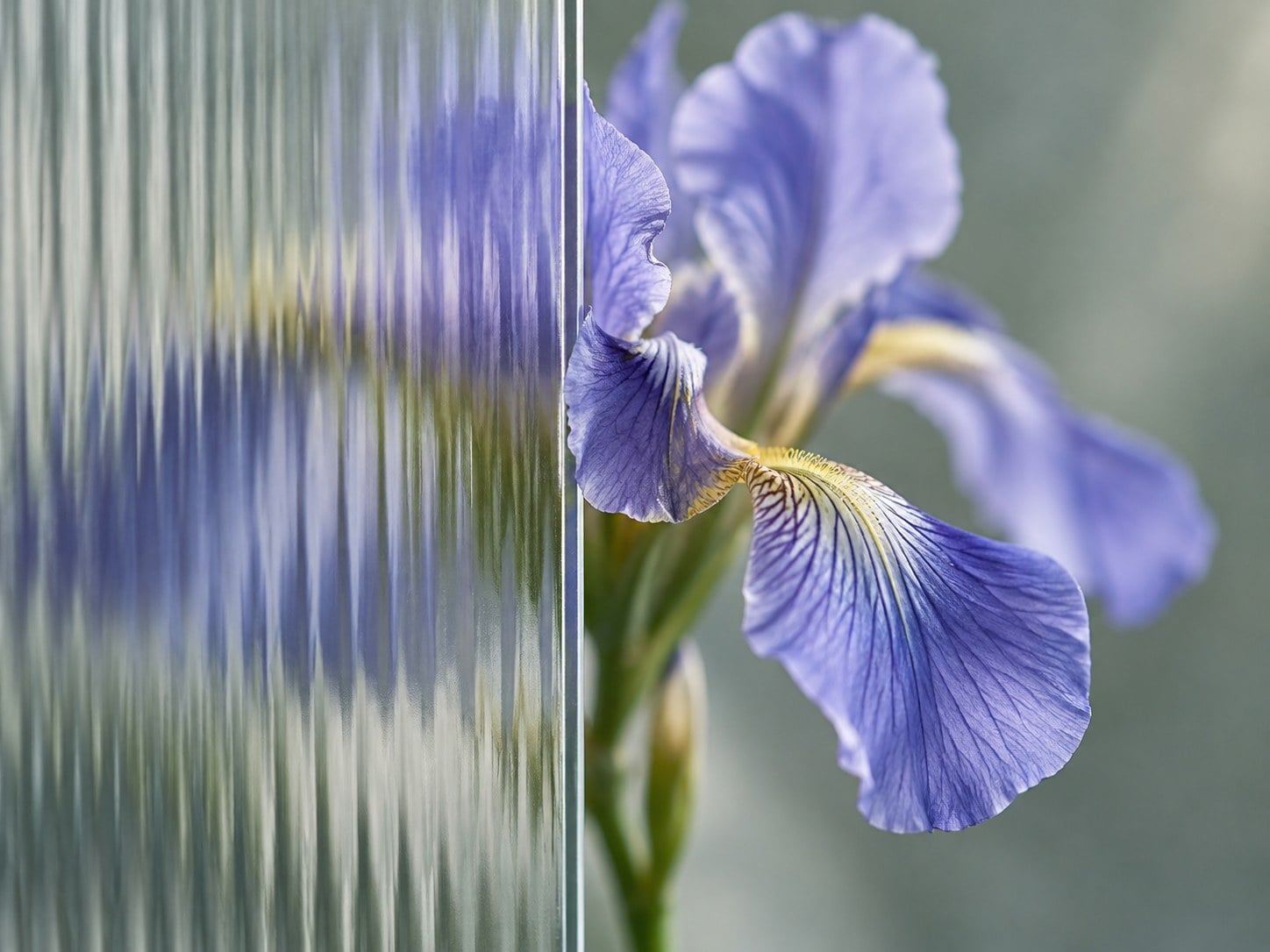
Chanel N°19 Poudré is a useful green-iris reference, explored in the iris guide. The wider powdery family also includes compositions centered on musk, a cosmetic floral accord, or heliotrope.
Infusion d’Iris keeps the air moving
Prada Infusion d’Iris Eau de Parfum brings iris pallida together with neroli, mandarin and benzoin in its current note description. Citrus and orange-flower freshness give the iris a more open setting than the warm cosmetic powder at the beginning of this article.
I like that possibility: an iris that does not require the whole room to become a dressing room. Benzoin supplies a warmer background, but the floral-woody idea remains distinct from a sweet blanket of vanilla. It is a useful reference when the word powdery describes the texture you want, while fresh describes the mood.
Two different ways to warm the iris
Guerlain L’Heure Bleue Eau de Parfum deserves an exact-version check. The house’s current presentation lists an ozonic accord, pear and neroli, then an iris tincture, iris butter and jasmine, with vanilla, ambroxan and musks in the base.
The pear and airy opening make this an interesting contemporary iris-and-amber possibility. Someone approaching it through a memory or an old review should compare the actual current product rather than carry an older note pyramid across unchanged. A familiar name can conceal the point on which a purchase depends.
Shalimar brings a more pronounced amber idea
In Guerlain Shalimar Eau de Parfum, bergamot meets iris, jasmine and rose, with vanilla central to the house description. Its powdery interest belongs within that richer amber setting.
This is quite a different answer to the question of softness from a clean musk. The contrast between a lively citrus opening and a warmer vanilla background is part of the attraction, rather than a distraction from the powder. I would keep it on the list for someone who wants those deeper surroundings. A request for something barely noticeable would be a different brief.
When musk does the softening
Narciso Rodriguez Narciso Poudrée Eau de Parfum makes powdery musk its center. White jasmine and Bulgarian rose open the floral description; vetiver and black and white cedars give the base a woody dimension.
That changes the question. You may be looking for the rounded closeness of musk rather than a recognizable iris or a lipstick association. Poudrée lets the powdery effect gather around that musky center, with flowers and woods providing shape.
I am glad the woods have a place in this description. Softness becomes more interesting when something gives it a boundary. Otherwise, a succession of words such as tender, delicate and smooth can make very different perfumes sound like the same pale blur.
Order Poudrée deliberately. The NARCISO collection contains other fragrances, and a shared bottle shape does not make their compositions interchangeable. For a broader look at musky textures, the white musk guide is the adjoining subject, not another name for every powdery perfume.
Orphéon leaves the dressing table for the bar
Diptyque Orphéon Eau de Parfum names juniper berry, cedar, tonka bean and jasmine. Diptyque’s nightclub story brings powdery blusher and polished wood into the same room; the note structure gives that association a woody, aromatic direction.
The juniper is the detail that keeps me interested. Powder can suggest stillness, but there is something more alert in this company. Cedar and tonka also make the comparison with Poudrée useful: both leave room for softness and wood, yet Orphéon gives the aromatic side a more explicit role. This is the Eau de Parfum; Orphéon Eau de Toilette has a separate composition.
L’Eau Papier starts with rice steam
Diptyque L’Eau Papier Eau de Toilette uses a rice-steam accord alongside white musks, mimosa and blonde woods. The image is a sheet of paper, but the distinction for the wearer is the grainy, lightly milky suggestion within the musk.
There is no need to turn that into either a bowl of pudding or a powder puff. It offers a softer, less cosmetic reference for someone who finds violet lipstick too specific. Beside Teint de Neige, the whole meaning of powder has shifted: from a scented object to a texture that is harder to name.
Kenzo Amour lets vanilla do some of the work
Kenzo Amour Eau de Parfum is described by Kenzo through frangipani, white tea, thanaka wood and vanilla, in a musky woody floral composition. That is a warmer, more enveloping route than the transparent citrus-and-iris idea at Prada.
The soft floral-vanilla direction is the attraction. Frangipani makes a different floral suggestion from the rose and violet of Lipstick Rose. The vanilla then gives a reader who enjoys sweetness a reason to linger. Powder need not always be cool, green or crisply dressed.
Flower by Kenzo invents its own flower
Flower by Kenzo Eau de Parfum gives an imagined fragrance to the poppy. Its current house description puts pink pepper around Damascena rose, vanilla and white musk, calling the result a powdery floral.
The poppy is a lovely visual misdirection. Look at the flower and you might expect a literal botanical portrait; the perfume’s story gives us a created floral effect instead. The rose, musk and vanilla are more useful clues to what is being proposed than the red on the bottle.
Against Misia’s rose-violet and ambery warmth, this is a different way to approach cosmetic softness. Against Poudrée’s musky center and woods, the rose-and-vanilla description draws attention back towards the flower. Those distinctions are small enough to get lost in a list of merely “elegant” perfumes, and large enough to change which one you want.
The pink pepper, rose, vanilla and musk above belong to the Eau de Parfum; Flower by Kenzo Eau de Toilette has a separate note description.
Powder, soap and sweetness are separate questions
The useful comparison is not simply old versus new. Teint de Neige makes perfumed face powder part of its identity; Infusion d’Iris places a cool iris among citrus; L’Eau Papier lets rice steam shade a white musk. A person can love one and dislike the others without being inconsistent about powder.
During a trial, notice what creates the impression for you. Is it a dry, matte floral surface, a cosmetic violet, creamy musk, or vanilla warmth? Then notice what surrounds it. Soapy brightness is not the same as powder, and sweetness is not proof of it. That second observation is often what separates a perfume you admire briefly from one you want to keep wearing.
Three questions behind the adjective
Can powdery perfume be fresh?
Yes. Cool iris, green notes, citrus or a relatively transparent musky setting can give powderiness a fresher character. The texture alone does not establish sweetness or warmth. Look at the surrounding composition.
Does powdery always mean feminine or old-fashioned?
No. Those are cultural associations, not a formula requirement. A dry, woody iris and a sweet cosmetic floral may appeal to different people while sharing the word. The particular fragrance is more revealing than the demographic imagined for it.
How do I describe the powder I want?
Use a second adjective: green, cosmetic, musky, floral, sweet, cool. If you have a familiar reference, name it. “Powdery, but with the green character left in” gives a conversation somewhere to go; “something soft” leaves almost everything open.
A more precise kind of softness
Next time someone calls a perfume powdery, ask which powder they mean. The little cosmetic compact, the cool iris and the warm musky cloud are not the same pleasure.
That question is much more interesting than asking how old the perfume is supposed to make you.
