


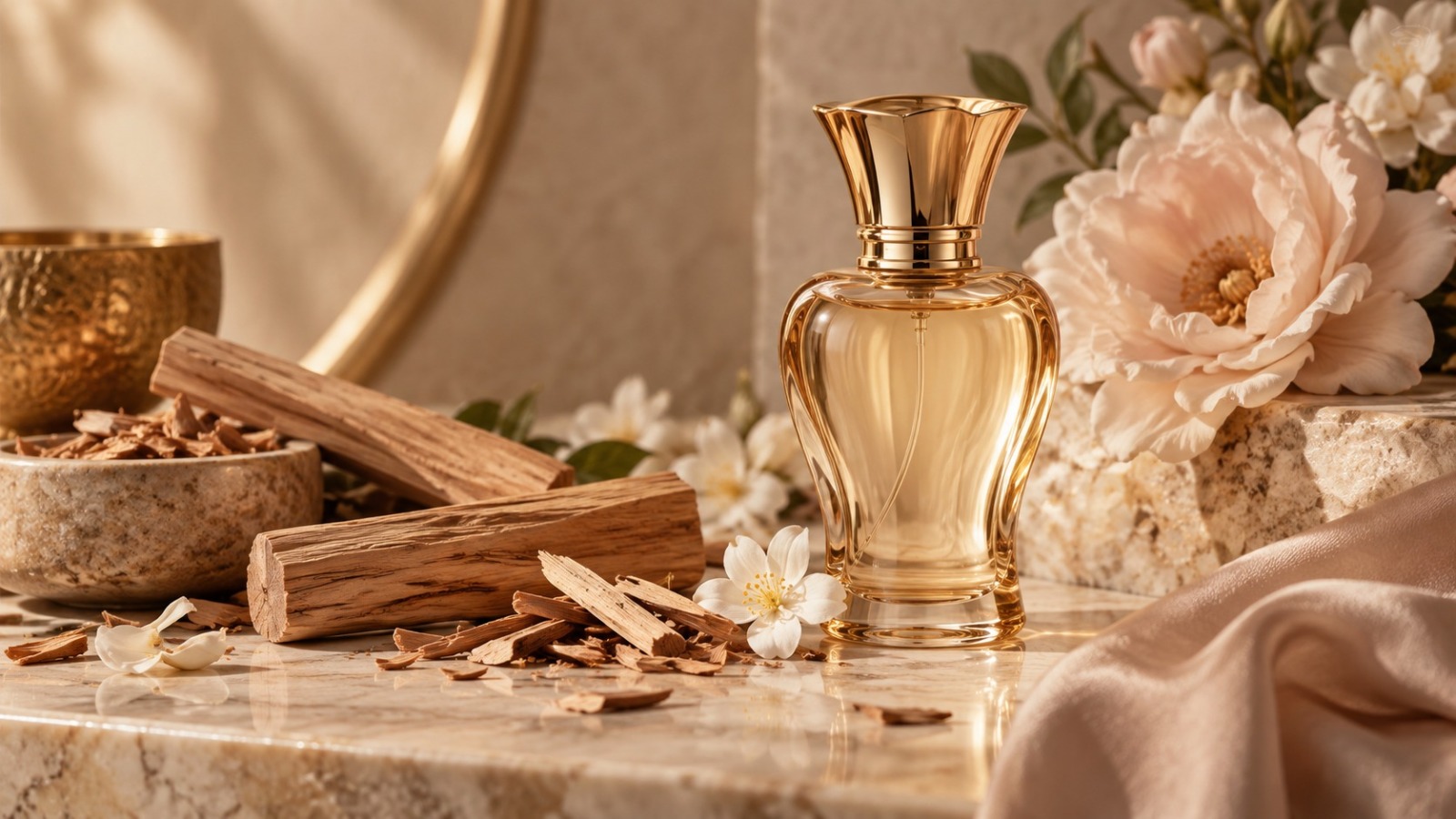
Sandalwood perfume for women can be creamy, polished, floral, musky, spicy, dry, or gourmand. The ingredient is often described simply as “warm and woody,” but that phrase hides the choices that matter most: how sweet the perfume is, whether the wood feels smooth or dry, how strongly it projects, and which notes shape the drydown.
This guide focuses on choosing a sandalwood fragrance by texture, wardrobe, season, and comfort level. For a broader explanation of the raw material and its role across fragrance styles, see our general sandalwood perfume guide.
What Does Sandalwood Smell Like?
Sandalwood is prized for fragrant heartwood whose oil can bring roundness and persistence to perfume. Depending on species, quality, treatment, and the rest of the formula, sandalwood may suggest:
- creamy wood and warm skin;
- soft milkiness without literal dairy sweetness;
- dry, polished timber;
- subtle spice or incense;
- a smooth base that blends floral, musky, leathery, or amber notes.
Many modern perfumes also use aroma materials to extend or reinterpret sandalwood’s profile. That is why two “sandalwood” fragrances can smell very different even when both feel woody.
Six Sandalwood Styles for Women
1. Creamy sandalwood
This is the style many people expect: smooth, warm, softly rounded wood with musk, amber, or gentle vanilla. It feels intimate and versatile. Choose it if you want sandalwood to soften the composition rather than create a dry woody edge.
2. Floral sandalwood
Rose, jasmine, iris, violet, magnolia, or orange blossom can lift the wood. Sandalwood keeps florals from feeling thin and gives them a tactile base. Powdery flowers create a more dressed-up effect; transparent petals feel lighter and easier for daytime.
3. Musky sandalwood
White musk and sandalwood can create a clean, skin-like fragrance. This style often sits closer to the body than an amber or oud composition. It is a strong choice for shared spaces, travel, and people who prefer a perfume discovered at conversational distance.
4. Spicy or leathery sandalwood
Saffron, cinnamon, pepper, cardamom, leather, and cedar sharpen sandalwood’s creaminess. The result feels tailored and confident rather than sweet. It often suits evening wear, cooler weather, and structured clothing.
5. Dry woody sandalwood
Paired with cedar, vetiver, incense, or modern woody materials, sandalwood can feel clean, austere, and architectural. This style is useful for anyone who wants warmth without gourmand sweetness.
6. Gourmand sandalwood
Vanilla, tonka, caramel, honey, or soft fruit can make sandalwood cozy and edible. The wood prevents sweetness from floating away, while spice or musk can keep the formula balanced. Test carefully if vanilla becomes dense on your skin.
Sandalwood Album and Sandalwood Spicatum
Perfume descriptions sometimes identify a sandalwood species. Santalum album is commonly associated with a creamy, rounded profile, while Australian sandalwood materials, including Santalum spicatum, may be presented as drier or more textured. These are useful clues, not guarantees. Extraction, quality, dosage, and the rest of the formula still shape the final scent.
Maison IRFĒ provides a useful comparison. Saffron Leather lists sandalwood album with raw leather and Atlas cedar, creating a structured, leathery base. Centifolia Rose uses sandalwood spicatum alongside cedarwood and white musk beneath rose, orris, neroli, pear, bergamot, and pink pepper.

How to Choose by Sweetness and Texture
| You want… | Look for… | Be cautious with… |
|---|---|---|
| Soft and creamy | Sandalwood, musk, gentle vanilla, iris | Very dry cedar or sharp woody ambers |
| Floral elegance | Rose, jasmine, violet, magnolia, orris | Dense bouquets if you dislike powder |
| Clean skin scent | White musk, ambrette-style effects, pale woods | Heavy amber, oud, and strong spice |
| Tailored confidence | Leather, saffron, cedar, pepper, violet | Sweet gourmands |
| Cozy warmth | Vanilla, tonka, amber, soft spice | High sweetness in warm weather |
| Dry modern wood | Cedar, vetiver, incense, mineral woods | Very creamy or milky accords |
Choosing Sandalwood for Your Wardrobe
Fragrance does not need to “match” clothing literally, but texture creates useful harmony.
- Minimal tailoring: dry sandalwood, cedar, musk, or iris.
- Soft knits and relaxed layers: creamy sandalwood, vanilla, or amber.
- Evening black: sandalwood with saffron, leather, smoke, or rose.
- Romantic dresses: floral sandalwood with rose, jasmine, or magnolia.
- White shirts and clean lines: musky sandalwood with citrus or tea.
The goal is not a costume. Choose a sandalwood texture that supports the way you already like to present yourself.
Season and Occasion
| Season or setting | Recommended style |
|---|---|
| Warm weather | Pale woods, citrus, clean musk, airy florals |
| Cool weather | Creamy sandalwood, amber, vanilla, spice |
| Office | Musky or dry sandalwood with moderate projection |
| Date or dinner | Floral, creamy, or softly spicy sandalwood |
| Formal evening | Leather, saffron, rose, incense, or polished woods |
| Everyday signature | A balanced sandalwood with a comfortable drydown |
How Sandalwood Interacts with Other Notes
With vanilla
Vanilla emphasizes creaminess and comfort. If the result becomes too sweet, look for cedar, pepper, tea, or musk to add contrast. The vanilla perfume guide explains the main sweet and dry styles.
With white musk
Musk can make sandalwood feel clean and close to skin. This pairing is often easier for daytime than a heavy amber. Compare the main textures in our white musk guide.
With florals
Rose and jasmine add volume; iris and violet add powder and polish; magnolia and orange blossom can create a brighter effect.
With leather and saffron
These notes create tension against sandalwood’s roundness. The perfume feels more tailored, less sweet, and often more gender-neutral.
With oud or incense
Sandalwood smooths darker materials. It can make oud more wearable and incense less austere, but the result may still project strongly.
Performance: Longevity Is Not the Same as Loudness
Sandalwood often contributes to the lasting base of a perfume, but longevity and projection are separate. A creamy musk-sandalwood scent may last quietly for hours, while a modern woody composition may project strongly but feel drier. For a broader framework, see our guide to long-lasting perfumes for women.
Test three things:
- How far the scent travels after one hour.
- Whether the drydown remains pleasant after the brighter notes disappear.
- Whether the perfume becomes sweeter, sharper, or more powdery on your skin.
Common Buying Mistakes
- Assuming all sandalwood is creamy. Some formulas are dry, smoky, or sharply woody.
- Buying only from the opening. Sandalwood often becomes clearer later.
- Confusing strength with quality. A quieter composition may have more nuance.
- Ignoring sweetness. Vanilla and amber can dominate the wood.
- Following gender labels too closely. Sandalwood itself is highly adaptable.
- Skipping a full wear test. Woody aroma materials can expand differently on skin than on paper.
How to Test a Sandalwood Perfume
- Begin with a blotter and identify whether the scent is creamy, dry, sweet, or smoky.
- Apply one spray to skin and wait at least thirty minutes.
- Check the perfume again after two to four hours.
- Wear it once in the season and setting where you plan to use it.
- Compare no more than two sandalwood perfumes on skin at the same time.
To compare sandalwood in different structures, the Maison IRFĒ Discovery Set includes floral-woody, saffron-leather, spicy oud, powdery musk, and patchouli-centered fragrances.
Concentration and Format
Eau de toilette, eau de parfum, extrait, and perfume oil can all feature sandalwood, but concentration labels do not predict the exact experience. A transparent eau de parfum may project more than a dense oil; an extrait may feel quiet but persistent. Compare the formula on skin instead of assuming that the highest concentration is automatically the richest or longest-lasting.
Sourcing and Sustainability Questions
Sandalwood has a valuable heartwood and a long history of pressure on wild resources, so sourcing matters. A responsible brand should be able to identify the sandalwood material or supplier program when making specific sustainability claims. Do not infer ethical sourcing merely from words such as “natural,” “pure,” or “heritage.”
The Maison IRFĒ ingredient material describes sandalwood album used in Saffron Leather as sourced through managed Australian production. That is a product-specific statement; it should not be generalized to every sandalwood fragrance on the market.
Frequently Asked Questions
Is sandalwood perfume sweet?
It may feel naturally creamy, but sweetness usually comes from the surrounding vanilla, amber, tonka, fruit, or gourmand materials.
Is sandalwood suitable for summer?
Yes. Choose lighter formulas with citrus, pale musk, tea, or transparent florals rather than dense vanilla and amber.
Does sandalwood smell masculine?
Not inherently. Sandalwood appears in perfumes marketed across genders. The supporting notes determine whether the result feels floral, musky, leathery, sweet, or dry.
What perfume notes make sandalwood feel more feminine?
Rose, jasmine, iris, violet, magnolia, vanilla, and soft musk can create a traditionally feminine presentation, but personal taste matters more than labels.
How many sprays should I use?
Start with one or two. Evaluate projection after the perfume warms, especially when leather, oud, saffron, or modern woody materials are present.
A useful sample should be worn twice: once in a quiet indoor setting and once outdoors. This reveals both intimate texture and real projection.
Final Takeaway
The best sandalwood perfume for a woman is not a universal bottle. It is the version whose texture, sweetness, projection, and drydown fit her life. Decide whether you want creamy, floral, musky, spicy, dry, or gourmand sandalwood, then test the complete composition on skin. That single choice narrows the category more effectively than any generic “top ten” list.
