


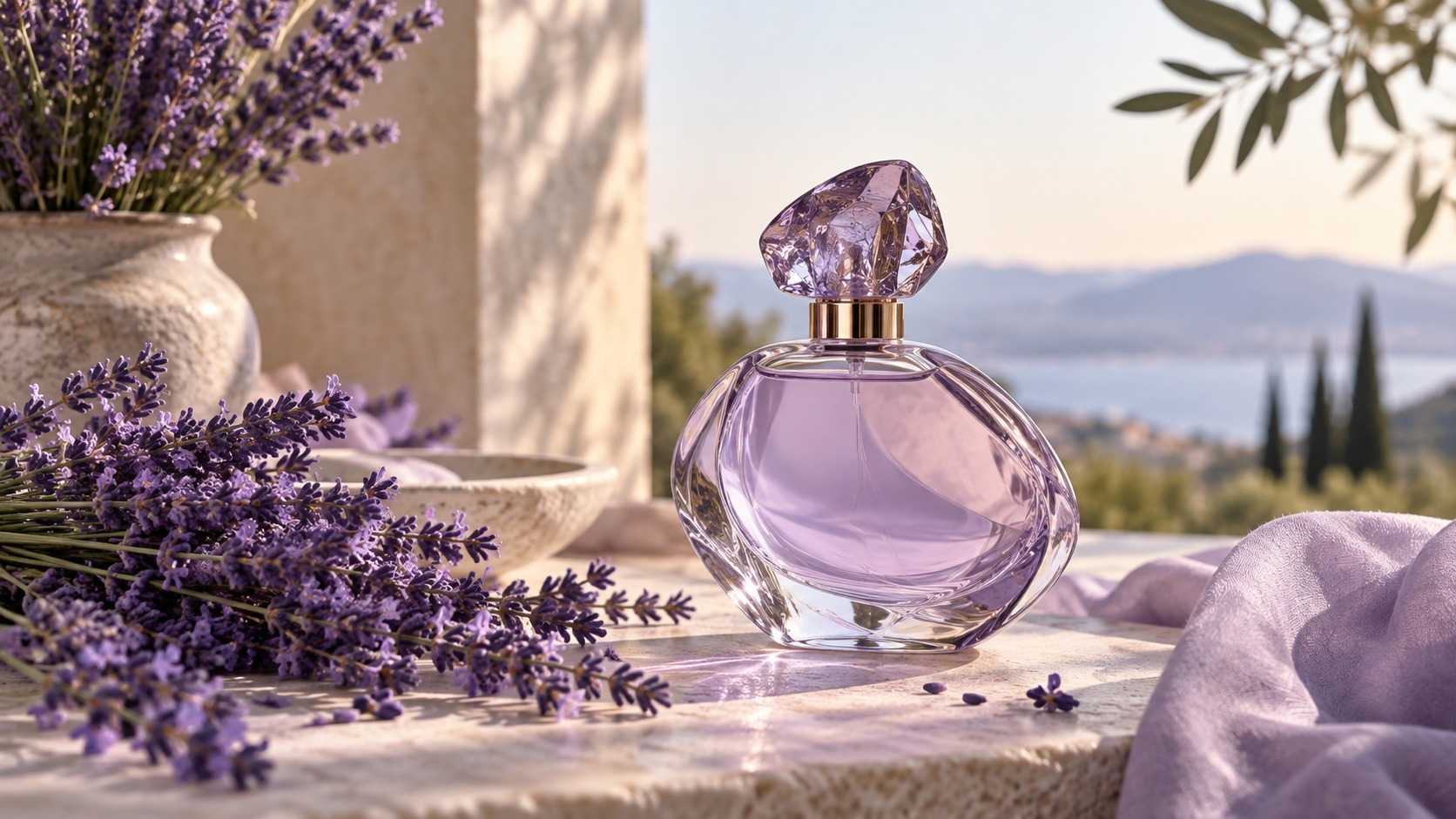
Lavender perfume can smell clean, herbal, floral, sweet, powdery, smoky, or woody. Its reputation is often trapped between two clichés: old-fashioned sachets and traditional barbershop cologne. Modern perfumery uses lavender far more broadly, from transparent skin scents to dark aromatic woods and soft gourmands.
This guide explains what lavender smells like, how lavender differs from lavandin, which notes change its character, and how to choose a style that feels current rather than medicinal or overly soapy.
What Does Lavender Smell Like in Perfume?
Lavender has several recognizable facets:
- Floral: soft, airy, and slightly sweet.
- Herbal: green, aromatic, and dry.
- Camphoraceous: cool and penetrating, especially in sharper materials.
- Clean: associated with soap, linen, and traditional grooming products.
- Hay-like or coumarinic: warm, softly sweet, and almost tobacco-like when paired with tonka or similar materials.
The amount and treatment determine which facet dominates. Lavender can be the main theme, a fresh opening, or a bridge between citrus, florals, spice, and woods.
Lavender Versus Lavandin
Lavender and lavandin are related but not identical. “Lavender” on a note list may refer to different species, extracts, fractions, or an accord. Lavandin, a cultivated hybrid commonly used in fragrance and functional products, often smells more forceful, aromatic, and camphoraceous. Fine lavender can feel softer, more floral, or more nuanced.
These descriptions are tendencies, not guarantees. Distillation, origin, quality, dosage, and the rest of the formula matter. A perfume labeled with lavender may also use modern aroma materials to refine or extend the effect.
For a first-party view of how Maison IRFĒ documents selected naturals and fragrance materials in its collection, see the fragrance ingredients page.
Five Modern Lavender Perfume Styles
1. Fresh aromatic lavender
Citrus, herbs, mint, and light woods emphasize freshness. This style feels crisp and useful in warm weather, but it can become sharp if the camphoraceous side is too strong.
If that cool green facet is the part you enjoy, compare it with our Mint Perfume guide. Mint-led fragrances push the freshness toward crushed leaves, cool herbs, tea, citrus or woods rather than making lavender carry the whole aromatic effect.
2. Floral lavender
Jasmine, rose, magnolia, violet, or orange blossom soften the herb and bring out its floral side. The result can feel romantic, airy, or powdery depending on the flowers and musks used.
3. Clean musky lavender
White musk, pale woods, and soft powder create a quiet linen-like effect. This is often the easiest lavender style for work, travel, and close spaces.
4. Sweet or gourmand lavender
Vanilla, tonka, honey, marshmallow, or almond-like notes turn lavender into a comforting contrast between aromatic freshness and sweetness. The balance matters: too much sugar can hide the herb entirely.
5. Woody and smoky lavender
Patchouli, cedar, vetiver, tobacco, leather, or incense make lavender feel darker and more structured. This style can be elegant and gender-neutral, especially in cooler weather.

How Other Notes Change Lavender
| Pairing | Effect on lavender | Good for |
|---|---|---|
| Bergamot and citrus | Brighter, cleaner, more sparkling | Daytime and warm weather |
| Vanilla or tonka | Softer, warmer, more gourmand | Comforting scents and cool weather |
| White musk | Cleaner, quieter, more skin-like | Office and everyday wear |
| Jasmine or magnolia | More floral and rounded | Soft, modern feminine styles |
| Patchouli or tobacco | Darker, earthier, more textured | Evening and statement scents |
| Cedar or vetiver | Drier and more tailored | Woody, less sweet perfumes |
For a closer look at the bright side of aromatic compositions, see our bergamot perfume guide. For the sweet direction, compare the main styles in the vanilla perfume guide.
Is Lavender Perfume Masculine or Feminine?
Lavender has a long history in fougère and grooming compositions marketed to men, but the material itself has no gender. Florals, musks, vanilla, tea, and powder can make it feel soft and luminous. Leather, mossy effects, tobacco, and dry woods make it more severe. Many contemporary lavender perfumes sit comfortably between those conventions.
Choose by texture and setting rather than the label on the department-store shelf.
Lavender in Maison IRFĒ Fragrances
Maison IRFĒ uses lavender in two notably different contexts.
Marshmallow Musk places lavender petals in the opening with Earl Grey tea and magnolia. Jasmine, marshmallow cotton, iris, airy vanilla, fluffy woods, and powdery musk make the lavender feel soft and romantic rather than aromatic or barbershop-like.
Patchouli Forever Worn lists lavandin in a composition centered on honey, tobacco, davana, amber, patchouli, sandalwood, and cedarwood. Here the aromatic material acts as a bridge within a darker, earthier structure.
Both are available in the Maison IRFĒ Discovery Set, making it possible to compare a powdery lavender effect with a patchouli-tobacco interpretation.
Three Modern Lavender Perfumes to Compare
YSL Libre Eau de Parfum: Lavender with Orange Blossom and Vanilla
YSL Libre Eau de Parfum is a useful example of lavender moved decisively into a modern floral structure. YSL describes the fragrance through lavender, orange blossom, musk accord and vanilla. The aromatic backbone remains visible, but orange blossom and vanilla make the overall effect warmer and more polished than a traditional fougère.
Mon Guerlain Eau de Parfum: Lavender with Vanilla, Jasmine and Sandalwood
Mon Guerlain Eau de Parfum pairs French lavender with Tahitensis vanilla, sambac jasmine and sandalwood. Guerlain describes the lavender as bringing aromatic freshness while vanilla adds an enveloping facet. Compare it when you want lavender to feel soft, sensual and ambery rather than crisp or medicinal.
Maison Margiela REPLICA Coffee Break: Lavender with Coffee, Spearmint and Milk Mousse
REPLICA Coffee Break Eau de Toilette pushes lavender into a very different setting. Maison Margiela combines lavender essence with spearmint, coffee accord and milk mousse, using the aromatic note inside a warm coffee-shop memory. It is a useful example of how lavender can bridge clean freshness and gourmand comfort.
These three fragrances show why modern lavender perfume is not one category. Libre makes it floral and assertive, Mon Guerlain makes it ambery and enveloping, while Coffee Break turns it cozy and lactonic.
How to Choose a Lavender Perfume
- Identify the facet you enjoy. Floral, herbal, clean, sweet, or woody lavender lead to very different perfumes.
- Check for camphor. If medicinal sharpness bothers you, look for lavender paired with florals, musk, vanilla, or tea.
- Decide how sweet it should be. Tonka, honey, vanilla, and marshmallow can quickly shift the perfume toward gourmand territory.
- Consider the base. Musk keeps it soft; woods make it drier; patchouli and tobacco make it darker.
- Test beyond the opening. Lavender may fade into the background as the heart and base emerge.
- Wear it in the intended climate. Sweet lavender can feel heavy in humidity, while a very aromatic version may feel thin in cold air.
Choosing by Season and Setting
| Setting | Recommended lavender style |
|---|---|
| Summer daytime | Citrus, herbs, clean musk, light woods |
| Office | Soft musk, tea, pale florals, moderate projection |
| Relaxed evening | Vanilla, tonka, powder, gentle amber |
| Formal or tailored wear | Cedar, vetiver, leather, restrained spice |
| Cold weather | Patchouli, tobacco, amber, woods, gourmand accents |
Lavender Perfume Performance
Lavender often appears near the top or heart of a fragrance, so its most recognizable freshness may soften before the perfume disappears. The base determines what remains. Musk creates a clean veil; vanilla leaves sweetness; woods create dryness; patchouli or tobacco add depth.
Do not judge longevity only by whether you can still identify lavender. Ask whether the complete drydown remains balanced and pleasant.
Common Lavender Perfume Problems
- Too medicinal: choose softer floral lavender or pairings with musk and vanilla.
- Too soapy: look for woods, tea, pepper, or a less clean musk base.
- Too sweet: choose citrus, cedar, vetiver, or aromatic herbs.
- Too traditional: seek unusual contrasts such as tea, iris, smoke, mineral woods, or soft gourmand notes.
- Too fleeting: look at the base structure rather than expecting lavender alone to provide persistence.
How to Test Lavender on Skin
Use one spray and wait at least thirty minutes. First note whether the opening is floral or camphoraceous. Then observe what replaces it: clean musk, sweetness, woods, powder, or earthiness. A second test in different weather is useful because aromatic notes can behave very differently in heat and cold.
Lavender and the Fougère Structure
Lavender is central to the classic fougère idea, commonly paired with coumarin-like hay sweetness, mossy effects, herbs, and woods. Modern fougères may be clean, spicy, marine, fruity, or ambery, and many are marketed beyond traditional masculine categories. Recognizing the structure helps explain why a lavender perfume can feel groomed and tailored even when the flower itself is soft.
When Lavender Feels Too Familiar
Because lavender appears in soaps, detergents, grooming products, and home fragrance, some compositions trigger functional associations. Look for a distinctive contrast: tea and iris for quiet elegance, saffron or leather for tension, fruit for brightness, smoke for depth, or unusual woods for a more abstract effect. The aim is not to disguise lavender completely, but to give it a clear artistic context.
Sensitivity and Application
Sharp aromatic materials can feel intense to fragrance-sensitive wearers. Begin with one spray away from the face and test in open air before using it in a shared room. A softer formula and lower dose are usually more effective than trying to “train” yourself to tolerate discomfort.
Frequently Asked Questions
Does lavender perfume smell like essential oil?
Sometimes, but many perfumes soften, sweeten, abstract, or reconstruct lavender. The finished fragrance may be more floral, musky, or woody than a bottle of essential oil.
Is lavender perfume calming?
People may associate lavender with relaxation, but perfume should not be treated as medical therapy. Choose it for the scent and the mood it creates for you.
Can lavender work in a gourmand perfume?
Yes. Vanilla, tonka, honey, almond-like notes, and marshmallow can create a sweet aromatic contrast.
Can women wear fougère-style lavender?
Absolutely. Fougère structures are olfactory constructions, not gender rules.
What is the best lavender perfume for beginners?
A balanced composition with citrus, soft florals, clean musk, or gentle vanilla is usually easier than a highly camphoraceous or smoky version.
Final Takeaway
Lavender is not one fixed smell. It can be a clean top note, a floral bridge, a powdery veil, a sweet contrast, or the aromatic spine of a dark woody perfume. Decide which facet you want, then use the surrounding notes to predict the style. That approach is more reliable than judging the category by its oldest stereotypes.
