


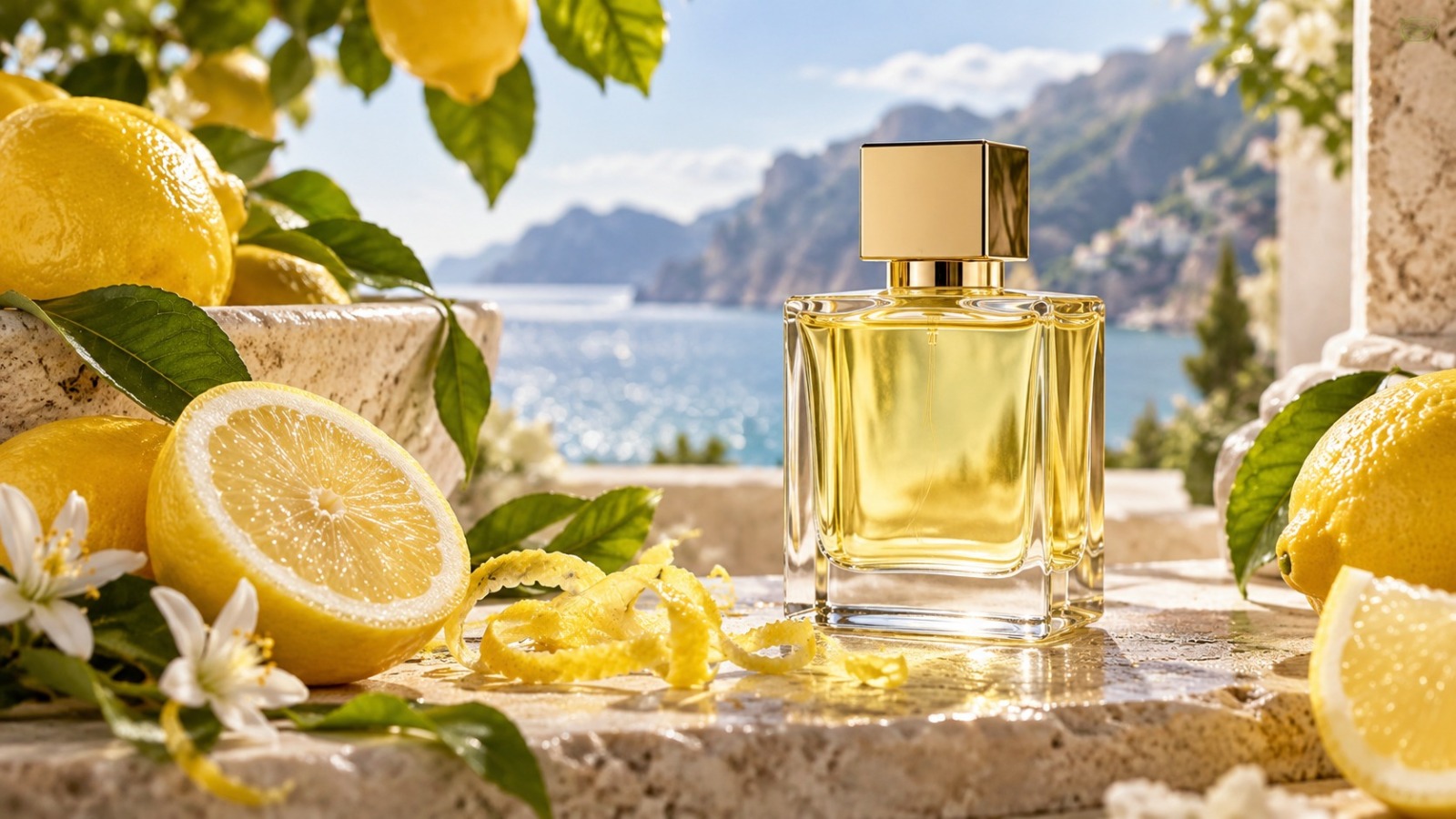
Lemon perfume can be crisp and sparkling, juicy and sweet, bitter like fresh peel, or soft and creamy. It can also go wrong quickly: when lemon is too sharp or isolated, some people associate it with household cleaner. The solution is not to avoid lemon, but to understand the notes that frame it and the structure that carries it beyond the opening.
This guide explains what lemon smells like in perfume, how it differs from bergamot, mandarin, neroli, and orange blossom, why citrus notes often feel fleeting, and how to choose a lemon fragrance with a convincing drydown.
What Does Lemon Smell Like in Perfume?
Perfumery can emphasize several sides of lemon:
- Fresh juice: bright, tart, energetic, and immediately recognizable.
- Yellow peel: bitter, aromatic, green, and slightly waxy.
- Candied lemon: sweeter, softer, and often paired with vanilla or sugar-like notes.
- Lemon blossom effect: floral and delicate, usually created as an accord rather than from the fruit alone.
- Mineral or musky lemon: clean, abstract, and less obviously edible.
The most wearable lemon perfumes usually give the citrus something to move toward: tea, flowers, herbs, woods, musk, amber, or a restrained gourmand base.
When that herbal turn is the part you enjoy, our Basil Perfume guide shows how basil can sharpen citrus, connect green notes, and carry freshness into woods.

Lemon Versus Other Citrus Notes
| Note | Typical impression | How it differs from lemon |
|---|---|---|
| Lemon | Tart juice, bright peel, clean sparkle | The sharpest and most immediately “yellow” citrus effect |
| Bergamot | Fresh, bitter-green, floral, tea-like | Usually more complex and less literal than lemon |
| Mandarin | Juicy, sweet, soft peel | Rounder and less acidic |
| Neroli | Green, floral, citrusy, slightly bitter | Comes from bitter-orange blossom and reads more floral |
| Orange blossom | White floral, honeyed, radiant | More floral and often sweeter than neroli |
Explore those distinctions in our guides to bergamot perfume, mandarin perfume, neroli perfume, and orange blossom perfume.
Why Lemon Perfume Can Smell Like Cleaner
The association usually appears when a formula presents sharp lemon with little contrast, especially alongside very clean musks or harsh aldehydic effects. Familiarity with lemon-scented cleaning products reinforces the connection.
Perfumers can redirect lemon in several ways:
- tea and herbs make it aromatic and refined;
- rose, jasmine, iris, or orange blossom make it floral;
- cedar, vetiver, and sandalwood give it a dry foundation;
- vanilla, amber, or soft musk make it rounder;
- ginger, pepper, or cardamom add energy without more acidity;
- fruit notes make it juicy rather than functional.
If you are sensitive to the cleaner effect, avoid buying from the top-note list alone. The heart and base are the evidence that the perfume has somewhere to go.
Six Lemon Perfume Styles
1. Lemon cologne
Lemon with bergamot, petitgrain, herbs, and light woods creates a brisk, refreshing style. It is easy to wear in heat but may need reapplication because the effect is deliberately light.
2. Lemon tea
Tea, mate, aromatic herbs, or soft woods turn lemon into a drier and more contemplative fragrance. This is a useful choice for people who want freshness without a sporty cologne effect.
3. Lemon floral
Jasmine, rose, magnolia, neroli, or orange blossom soften the acidity. The result can feel luminous and dressed rather than casual.
4. Lemon musk
Clean or powdery musk extends the sense of freshness after the citrus fades. This style often works in offices and close spaces, but overly sharp musk may revive the cleaner association.
5. Lemon wood
Cedar, vetiver, sandalwood, or incense provide structure. The perfume becomes drier and often more gender-neutral.
6. Lemon gourmand
Vanilla, pastry, sugar, cream, or caramel can create a lemon dessert effect. The best versions keep a little peel bitterness or woodiness so the sweetness does not become flat.
Three Lemon Fragrances to Compare
Maison Margiela Replica Under the Lemon Trees
Replica Under the Lemon Trees builds the memory of a lemon tree through a bright Kalamansi lime accord, green coriander and cedarwood. Maison Margiela describes baskets of lemons and fresh shade beneath the leaves, so this is a useful example of a lemon idea created through citrus brightness and green-woody atmosphere rather than a literal single-note lemon formula.
Hermès Eau de Citron Noir
Hermès Eau de Citron Noir Eau de Cologne takes lemon in a drier, darker direction. Hermès pairs sharp black lemon with woody black tea and smoky guaiac wood. Compare it when you want citrus freshness with bitterness, tea and smoke rather than sweetness.
Acqua di Parma Colonia
Acqua di Parma Colonia Eau de Cologne shows the classical cologne route: lemon, sweet orange and Calabrian bergamot in the opening; lavender, rose, verbena and rosemary in the heart; vetiver, sandalwood and patchouli underneath. It is the clearest comparison here for lemon framed by aromatic herbs and polished woods.
These three fragrances show why “lemon perfume” can mean three very different things: leafy citrus freshness, smoky black-lemon contrast, or a classical aromatic cologne. The supporting notes decide the character long after the first bright impression.
Why Citrus Notes Often Feel Short-Lived
Lemon is commonly used near the top of a fragrance, where it creates immediate lift. Those bright volatile effects naturally change faster than many woods, resins, musks, and amber materials. That does not mean the entire perfume has poor longevity. It means the recognizable lemon phase may be brief.
To predict performance, look at the support structure:
| Base or heart | Likely drydown |
|---|---|
| Tea and herbs | Dry, aromatic, quiet |
| White musk | Clean and skin-like |
| Cedar or vetiver | Woody and crisp |
| Vanilla or amber | Warm and sweet |
| Florals | Radiant, soft, or powdery |
How to Choose a Lemon Perfume
- Decide between juice and peel. Juicy lemon feels cheerful; peel is greener, drier, and more bitter.
- Choose the destination. Tea, flowers, woods, musk, or gourmand notes determine the perfume after the opening.
- Check the sweetness. “Lemon” can mean sparkling cologne or lemon cake.
- Test in the intended weather. Heat expands citrus and musk; cold can shorten the bright opening.
- Wait at least an hour. A beautiful first minute is not enough.
- Judge the whole scent, not the survival of lemon. A well-designed perfume may evolve rather than preserve a literal lemon note all day.
Choosing by Season and Occasion
| Use | Recommended style |
|---|---|
| Hot weather | Lemon cologne, herbs, tea, light woods |
| Office | Lemon musk, tea, restrained florals |
| Weekend | Juicy lemon, green notes, soft fruit |
| Evening | Lemon with woods, incense, amber, or spice |
| Cold weather | Candied lemon, vanilla, amber, creamy woods |
How to Layer Lemon Perfume
Layering can extend or redirect lemon, but begin lightly. A fresh lemon fragrance can be paired with:
- white musk for a clean skin scent;
- vanilla for a softer gourmand effect;
- cedar or vetiver for dry structure;
- tea for an aromatic profile;
- orange blossom for floral radiance.
Apply the more persistent fragrance first and add the brighter lemon scent sparingly. If both formulas are already complex, layering may blur rather than improve them.
Storage Matters More for Citrus
Keep perfume away from direct sunlight, heat, and repeated temperature swings. Citrus-heavy fragrances can lose their fresh impression when poorly stored. A closed cabinet in a stable room is usually better than a bathroom window or a car.
Sampling Before a Full Bottle
Citrus is especially persuasive in the first minutes, so a sample is valuable. Wear the perfume through a complete day and decide whether you enjoy the heart and base after the lemon recedes. For a broader way to compare fragrance structures, see our guide to testing perfume samples. The Maison IRFĒ Discovery Set also demonstrates how bright openings can lead into rose, leather, oud, musk, and patchouli-centered drydowns.
Common Lemon Perfume Mistakes
- Expecting the lemon top note to remain unchanged for eight hours.
- Buying a sweet lemon gourmand when you wanted bitter peel.
- Assuming every clean citrus will be office-safe without testing projection.
- Overspraying a light cologne to force longevity.
- Storing the bottle in heat or direct light.
- Judging only on paper, where the drydown may differ from skin.
Lemon in Eau de Cologne, Eau de Toilette, and Eau de Parfum
A concentration label does not tell you how long the lemon itself will remain. Eau de cologne often celebrates a brief, generous citrus effect. Eau de toilette may balance freshness with herbs and woods. Eau de parfum can provide a longer base, but the lemon top may still evolve quickly. Choose the format by the complete wearing experience, not by expecting a higher concentration to freeze the opening in place.
Body Products and Lemon Layering
Unscented moisturizer can help perfume sit more evenly on dry skin. Matching scented body products may reinforce the theme, but they can also make a sharp lemon accord feel more functional. Test the perfume alone first. If layering, add only one supporting texture, such as clean musk or sandalwood, rather than combining several citrus products at full strength.
When a Simple Lemon Cologne Is the Right Choice
Not every fragrance needs an eight-hour dramatic drydown. A brisk citrus cologne can be ideal after a shower, during travel, or in very hot weather precisely because it feels light and can be reapplied. Performance should be judged against the intended use, not one universal longevity standard.
Frequently Asked Questions
Does lemon perfume always smell fresh?
No. Lemon can be bitter, candied, creamy, floral, woody, or smoky depending on the composition.
What is the difference between lemon and bergamot?
Lemon usually feels more tart and literal. Bergamot often has bitter-green, floral, and tea-like facets.
Can lemon perfume last all day?
The full perfume can, but the most recognizable lemon effect may fade earlier. Woods, musks, resins, and amber materials determine the later stages.
Is lemon perfume only for summer?
No. Vanilla, amber, spice, tea, and woods can make lemon comfortable in cooler weather.
How do I avoid a cleaning-product smell?
Choose a formula with a clear heart and base, such as tea, florals, woods, spice, or soft musk, and test it on skin for at least an hour.
Final Takeaway
A convincing lemon perfume is not required to preserve a photorealistic lemon from first spray to bedtime. Its job is to use brightness well and evolve into a satisfying composition. Choose the kind of lemon you enjoy, then pay equal attention to what supports it after the sparkle fades.
