


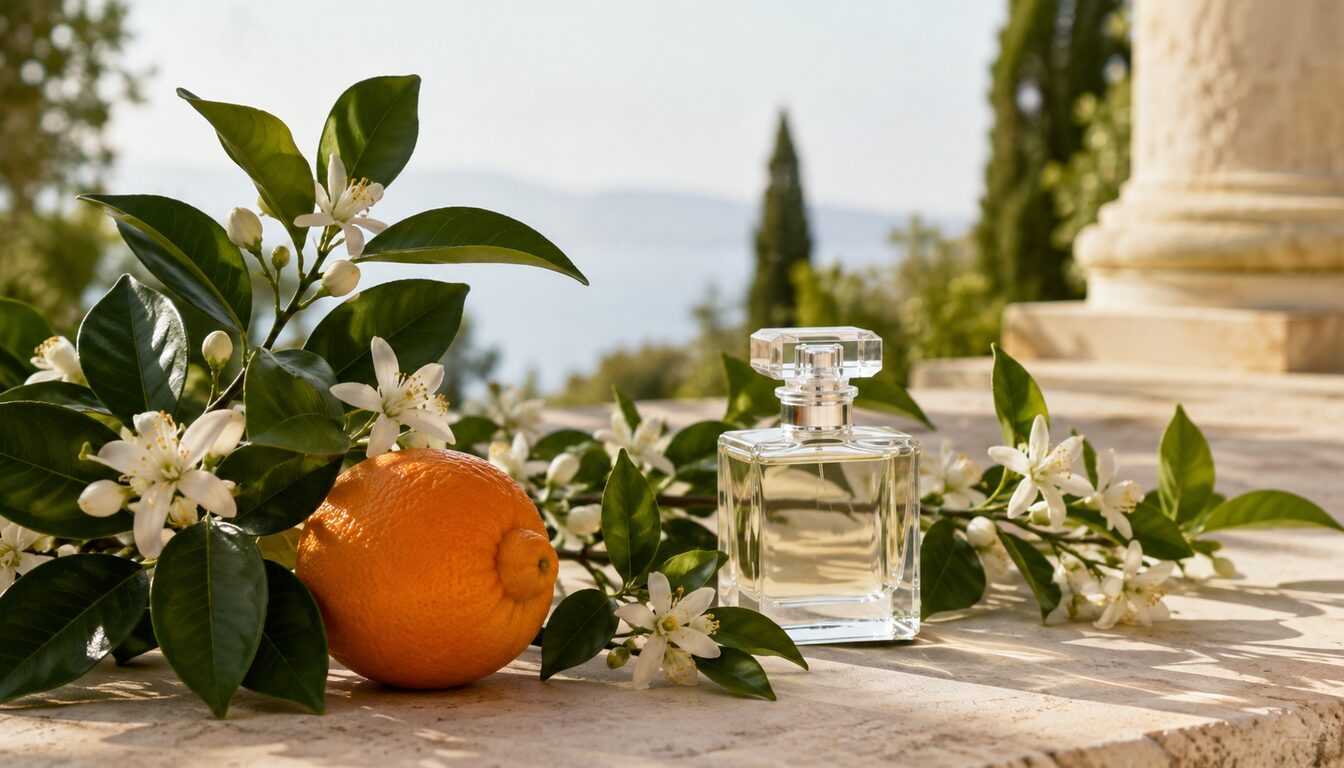
Orange blossom perfume captures one of perfumery’s most changeable white-floral notes. It can smell fresh and green, warm and honeyed, softly citrusy, or deeply sensual. The result depends not only on the surrounding notes, but also on which material—or accord—the perfumer uses to suggest the flower.
The best way to choose an orange blossom fragrance is therefore to look beyond the name. A bright cologne, a green interpretation of the entire bitter-orange tree, and a marshmallow gourmand can all feature orange blossom while creating completely different impressions.
What Does Orange Blossom Smell Like?
Orange blossom is the white flower of the bitter orange tree. Its scent is floral first: radiant, sweet and petal-like, with citrus facets rather than the literal smell of orange juice or peel.
Natural orange flower absolute can also have warm, honeyed, green and indolic nuances. “Indolic” describes the richer, more animalic side found in several white flowers. In a balanced composition, this gives orange blossom depth and sensuality rather than making it simply sweet.
Its character changes considerably according to its partners:
- Bergamot, lemon and clementine emphasize freshness and citrus light.
- Petitgrain, herbs and green notes bring out the leaves and branches of the tree.
- Jasmine, tuberose and ylang-ylang make the floral effect fuller and more opulent.
- Orris and musk can soften the blossom with powdery or clean textures.
- Vanilla, amber, caramel or marshmallow move it toward a warm gourmand style.
- Woods and spices create a drier, darker contrast.
Orange Blossom, Neroli and Petitgrain: What Is the Difference?
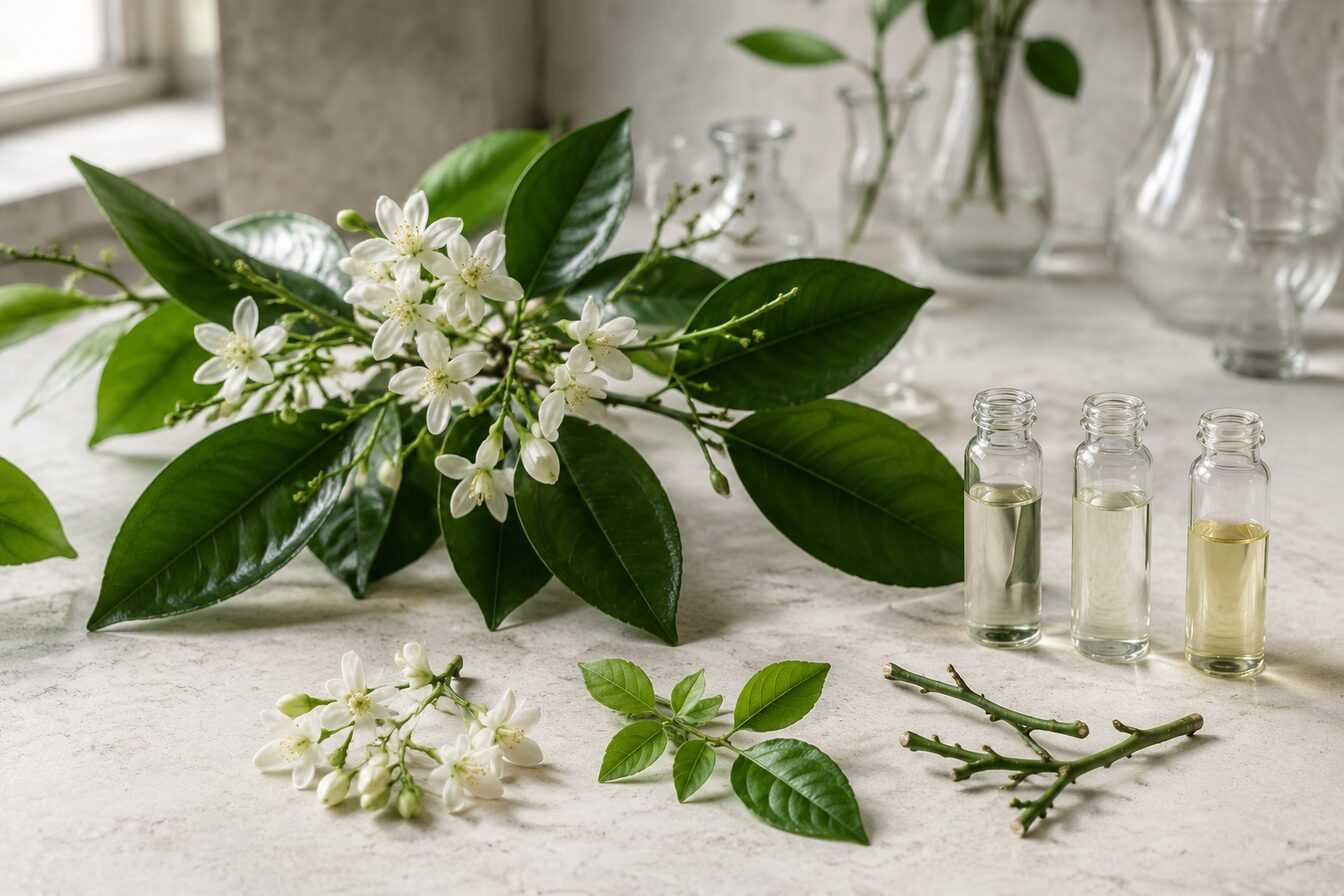
These materials are closely related, but they are not interchangeable. They can come from the same bitter-orange tree while using different plant parts or extraction methods.
Orange Flower Absolute
Orange flower absolute is obtained from the blossoms through solvent extraction followed by purification. Ingredient supplier dsm-firmenich describes its Moroccan material as green, floral, sweet and fruity, with a warmer indolic character. Absolute generally presents the flower’s richer, more enveloping side.
Neroli Essential Oil
Neroli is produced by distilling the flowers. It is usually fresher, greener and more transparent than orange flower absolute, which is why it appears so naturally in colognes and luminous floral compositions.
The two materials may also appear together: neroli can brighten a composition while absolute provides body and warmth. For a closer look at the distilled material and the fragrances built around it, read our guide to neroli perfume.
Petitgrain Essential Oil
Petitgrain comes from steam-distilling the twigs and leaves rather than the flowers. Its aroma can suggest orange blossom, but it is greener, woodier and more herbaceous. Perfumers often use it to connect floral citrus notes with aromatic or woody parts of a composition.
The phrase “orange blossom note” does not by itself prove that a perfume contains natural absolute. A perfumer may use natural extracts, aroma molecules, or a combination of materials to construct the desired impression. Official brand descriptions are the safest guide when a specific material matters to you.
Six Orange Blossom Perfumes Worth Exploring
These fragrances are not presented as a universal ranking. They were selected because their official descriptions show six distinct ways of working with orange blossom—from sparkling and green to opulent and gourmand.
1. Jo Malone London Orange Blossom Cologne
Jo Malone London Orange Blossom Cologne takes a bright, springlike direction. The brand places clementine flower at the opening, white lilac in the heart and powdery orriswood in the base.
The structure emphasizes transparency rather than the dense, indolic side of the flower. Clementine keeps the opening lively, while lilac and orriswood turn it into a polished floral rather than a straightforward citrus cologne.
Consider it if: you want a light, luminous orange blossom with soft floral and powdery facets.
2. Diptyque Eau des Sens Eau de Toilette
Diptyque Eau des Sens interprets more than the flower alone. Its official notes are orange blossom, angelica root, patchouli and juniper berry, and the composition is intended to express the branches, leaves, blossom and fruit of the bitter-orange tree.
That whole-tree idea gives the fragrance a greener, spicier frame. It is a useful reference for anyone who finds creamy white florals too sweet but still wants orange blossom to remain recognizable.
Consider it if: you prefer green, aromatic and slightly woody citrus-floral fragrances.
3. Matière Première Neroli Oranger Eau de Parfum
Matière Première Neroli Oranger makes the material distinction especially clear. Tunisian orange flower absolute is the central ingredient, while Tunisian neroli and Italian bergamot emphasize freshness. Ylang-ylang and floral musks expand its floral character.
Using absolute and neroli in the same composition allows the flower’s enveloping and radiant sides to appear together. It is the most direct raw-material study in this selection.
Consider it if: you want orange flower absolute at the center, supported by neroli rather than replaced by it.
4. Serge Lutens Fleurs d’Oranger Eau de Parfum
Serge Lutens Fleurs d’Oranger places orange blossom inside a fuller white-floral composition. The Maison’s description combines it with Egyptian jasmine, rose and a hint of civet.
Jasmine and the animalic accent emphasize the flower’s warmer and more sensual dimensions. This is far removed from a sheer citrus cologne: the emphasis is on floral richness and the character of bitter-orange blossom itself.
Consider it if: you are drawn to expressive, opulent white florals rather than clean citrus styles.
5. Houbigant Orangers en Fleurs Eau de Parfum
Houbigant Orangers en Fleurs builds an elaborate bouquet around orange blossom, rose absolute and Egyptian jasmine absolute. Tuberose, ylang-ylang and nutmeg develop the heart, followed by cedarwood and musk.
The additional white flowers make the orange blossom feel expansive, while nutmeg and cedarwood provide contrast. It demonstrates how the note can lead a traditional floral composition without becoming a simple soliflore.
Consider it if: you want a layered floral bouquet with warmth, spice and a woody drydown.
6. Memo Paris Sintra Eau de Parfum
Memo Paris Sintra takes orange blossom into gourmand territory. The official composition places bergamot, red fruits and petitgrain above orange flower absolute, cinnamon and rose, with vanilla, caramel and a marshmallow-style musk in the base.
Petitgrain gives the opening a green counterpoint before the sweeter materials emerge. Orange blossom remains the floral bridge between fresh citrus and the creamy gourmand base.
Consider it if: you want orange blossom with vanilla, caramel and marshmallow rather than a dry floral cologne.
How to Choose an Orange Blossom Perfume
Start by deciding which facet of the flower interests you most.
For a fresh interpretation, look for neroli, bergamot, lemon, clementine or petitgrain. These notes tend to emphasize brightness and the greener parts of the bitter-orange tree.
For a full white floral, look for jasmine, tuberose, rose or ylang-ylang. These pairings amplify orange blossom’s creamy, petal-like and indolic dimensions.
Choose musk, orris or light woods when you want a softer and more polished drydown. For greater warmth, look for amber, vanilla or spices. Caramel, honey and marshmallow signal a more obviously gourmand direction.
Sampling matters because the opening may not represent the whole composition. Smell the fragrance first on a blotter, then on skin if possible, and allow enough time for the citrus top notes to recede. The floral heart and base will show whether the perfume remains green, becomes powdery, or develops into something warmer and sweeter.
Frequently Asked Questions
Is Orange Blossom the Same as Neroli?
No. Both can come from bitter-orange flowers, but orange flower absolute is produced through extraction, while neroli essential oil is distilled. Absolute is generally warmer and more enveloping; neroli is typically lighter and greener.
Does Orange Blossom Perfume Smell Like Oranges?
It may have citrus nuances, but its principal character is white floral. It does not smell exactly like orange juice, zest or sweet-orange essential oil. Honeyed, green, creamy and indolic facets may be just as noticeable.
Is Orange Blossom Perfume Sweet?
Orange blossom has natural sweetness, but the finished perfume does not have to be gourmand. Petitgrain, herbs, woods and citrus can make it feel dry or fresh. Vanilla, caramel, honey and marshmallow increase the sweetness.
Is Orange Blossom Perfume Unisex?
The note itself is not limited to a gender. A sheer citrus-and-petitgrain composition may feel very different from a voluptuous white floral or a marshmallow gourmand. The complete formula determines the style.
Does Orange Blossom Last a Long Time?
The note alone cannot predict longevity. Concentration, formula, supporting materials, application and individual skin all affect how a fragrance develops. Two perfumes centered on orange blossom may perform very differently.
Final Thoughts
Orange blossom perfume can be luminous, green, creamy, indolic or gourmand. Understanding the difference between orange flower absolute, neroli and petitgrain makes the category much easier to navigate. Rather than looking for one universally “best” bottle, choose the interpretation that emphasizes the part of the bitter-orange tree—and the style of floral fragrance—you actually want to wear.
