


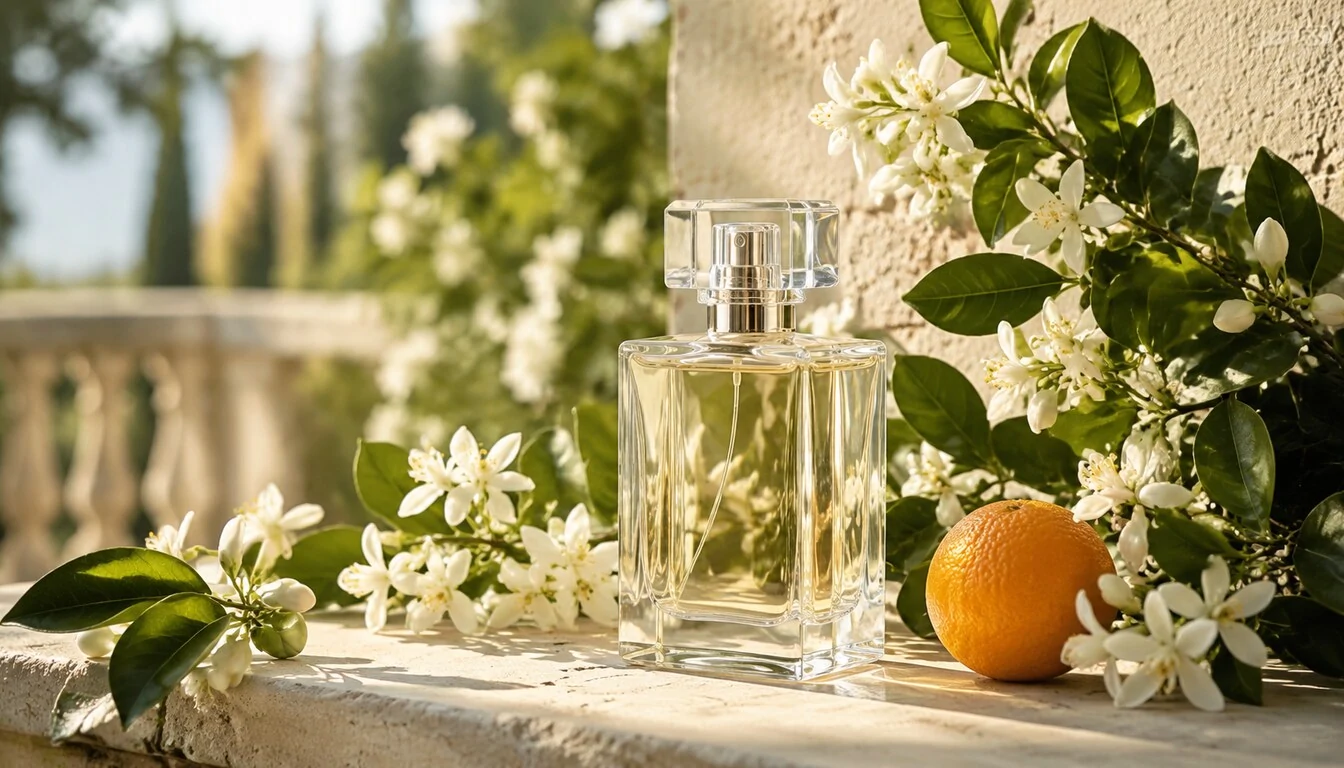
Neroli perfume smells bright, floral, green, and distinctly citrusy. It comes from the white blossoms of the bitter orange tree, yet it does not smell like orange juice or sweet orange candy. The impression is cleaner and more elegant: fresh petals, orange peel, soft honey, and a slightly aromatic edge.
To me, neroli feels like white flowers in strong Mediterranean sunlight. It can be crisp and almost cologne-like at first, then soften into a luminous floral note on the skin. That contrast is why perfumers use it in everything from airy summer fragrances to warmer compositions with musk, vanilla, saffron, or woods.
What Is Neroli?
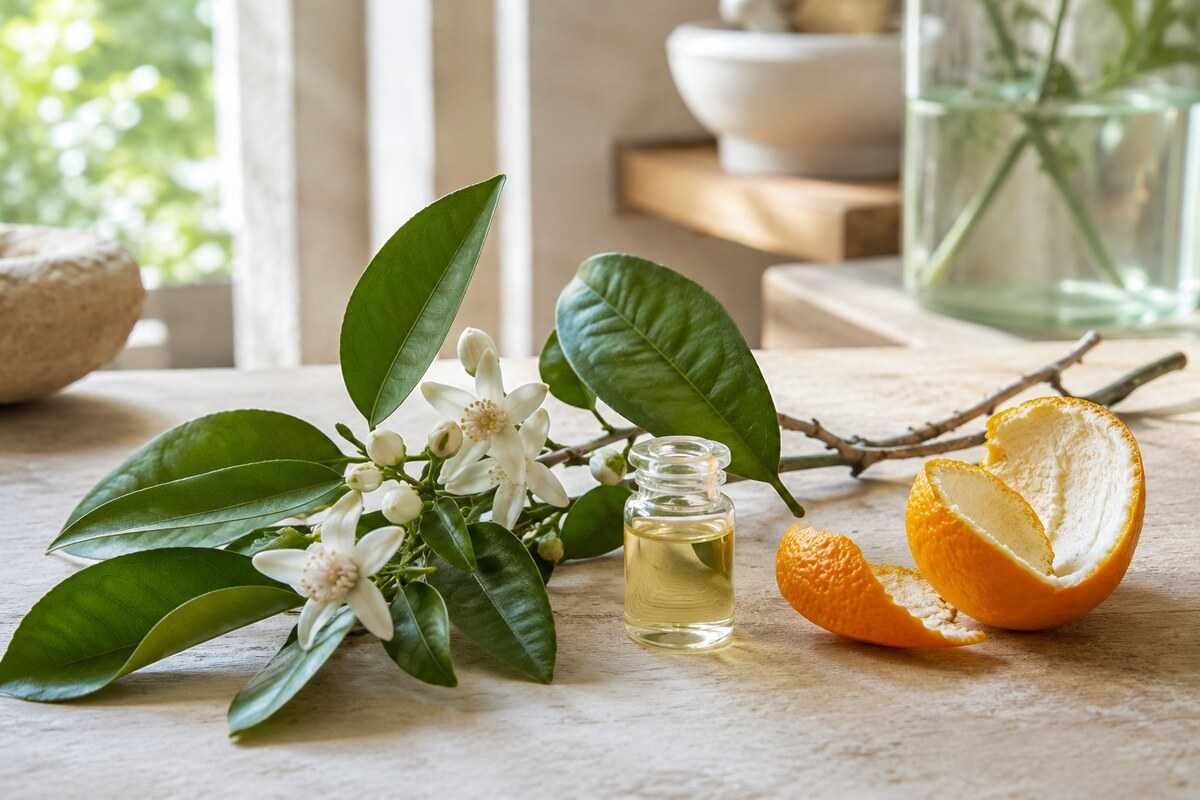
Neroli is the essential oil obtained by steam-distilling the blossoms of the bitter orange tree, Citrus aurantium. The same tree gives perfumery several different materials: bitter orange oil from the peel, petitgrain from the leaves and young twigs, and orange blossom absolute from the flowers.
Although neroli and orange blossom come from the same flower, they are not identical materials. Their different extraction methods emphasize different parts of the blossom’s aroma. Neroli is usually fresher, greener, and more citrus-forward, while orange blossom absolute tends to smell sweeter, fuller, and more deeply floral.
- Source: white blossoms of the bitter orange tree
- Extraction: steam distillation
- Main impression: fresh citrus, green stems, white flowers, and light honey
- Typical role: a luminous opening or early heart note
- Style: naturally genderless and especially popular in fresh fragrances
What Does Neroli Smell Like?
The first impression of neroli is often sparkling and clean. It has the brightness we associate with citrus, but the floral character is immediately present. As it develops, you may notice green, slightly bitter, softly soapy, and gently honeyed facets.
Natural neroli is not a simple sweet flower. It can have aromatic, metallic, or faintly animalic nuances that give it dimension. Those less polished edges are part of what makes the material feel alive. In a finished perfume, the formula may smooth them with musk, amplify the citrus with bergamot, or make the floral side richer with jasmine and orange blossom.
How neroli smells in a bottle therefore depends on its companions:
- With bergamot, lemon, or mandarin: crisp, sparkling, and refreshing
- With jasmine or orange blossom: fuller, softer, and more floral
- With musk: clean, skin-like, and quietly sensual
- With vetiver or cedarwood: greener, drier, and more structured
- With vanilla or amber: warmer and rounder without losing its brightness
Neroli vs. Orange Blossom vs. Petitgrain
These three notes are often grouped together because they come from the bitter orange tree. They are related, but each brings a different texture to perfume.
Neroli
Neroli is distilled from the flowers. It is the brightest of the three: floral, green, citrusy, airy, and sometimes lightly bitter. It is a classic material in eau de cologne and in modern clean fragrances.
Orange blossom
Orange blossom absolute is extracted from the same flowers rather than distilled. It generally smells richer, sweeter, warmer, and more narcotic. If you enjoy a lush white-floral effect, our guide to orange blossom perfume explores that side of the flower in more detail.
Petitgrain
Petitgrain is distilled mainly from the leaves and young twigs. It smells leafy, woody, bitter-green, and aromatic. It has less petal-like sweetness than neroli and often gives citrus compositions a dry, tailored quality.
A perfume may use all three. Neroli supplies radiance, orange blossom creates floral volume, and petitgrain adds the green framework around them.
How Neroli Behaves in Perfume
Neroli often appears early in a fragrance because its brightest facets lift quickly from the skin. However, it is not simply a fleeting top note. In a well-built composition, its floral character can remain through the heart, especially when supported by jasmine, musk, orange blossom, or woods.
This is also why two neroli perfumes can perform very differently. A traditional cologne may be deliberately transparent and refreshing. A neroli eau de parfum built around musk, amber, or vetiver can feel warmer and last longer. Concentration matters, but structure matters just as much.
If longevity is important to you, test the fragrance on skin rather than relying only on a paper blotter. Give it at least several hours. Neroli’s opening is easy to love; the real decision is whether you enjoy what remains after the bright citrus effect settles.
Four Neroli Perfumes That Show Different Sides of the Note
These are not interchangeable versions of the same idea. Each uses neroli to create a different mood, from brisk Mediterranean freshness to soft floral warmth.
Tom Ford Neroli Portofino
This is the polished, citrus-forward interpretation many people associate with modern neroli perfume. Tunisian neroli is paired with Italian bergamot, mandarin, orange flower, and lavender. The effect is cool, crisp, and expansive, with the familiar ease of a classic cologne made more luxurious.
Best for: someone who wants bright citrus, clean white florals, and a refined summer atmosphere.
Hermès Eau de Néroli Doré
Hermès places abundant neroli beside saffron and petitgrain bigarade. The saffron brings a dry, spicy glow, while petitgrain reinforces the green side of the bitter orange tree. It feels more aromatic and distinctive than a purely citrusy cologne.
Best for: someone who prefers neroli with spice, dryness, and a quietly unusual edge.
Guerlain Aqua Allegoria Nerolia Vetiver
Here, Calabrian neroli is framed by vetiver, basil, and a fig accord. The green and woody notes give the floral brightness more body without making it heavy. It is a useful example of how neroli can feel natural and textured rather than simply clean.
Best for: someone who enjoys fresh florals with green herbs, fruit, and a dry vetiver finish.
Le Labo Neroli 36
Neroli 36 moves in a warmer direction, combining its sunny floral character with rose, jasmine, mandarin, musk, and vanilla. The result is softer and more enveloping, showing how neroli can become sensual without turning dense or syrupy.
Best for: someone who wants neroli wrapped in white florals, musk, and gentle sweetness.
How to Choose a Neroli Perfume
Start by deciding which part of neroli attracts you most. If you love the sparkling opening, look for bergamot, lemon, mandarin, and petitgrain in the note list. If you want more floral presence, choose jasmine, orange blossom, rose, or ylang-ylang. Musk, amber, vanilla, and woods usually make the drydown softer and more persistent.
Then consider when you want to wear it. Light neroli colognes are excellent in warm weather, after a shower, or whenever you want something fresh without smelling generic. Warmer neroli eaux de parfum can move easily into evening and cooler seasons.
Neroli is also one of the easiest floral notes to wear regardless of gender. Citrus keeps it brisk; green and aromatic facets prevent it from feeling overly sweet; and woods or musk can make it feel very close to the skin.
Layering Neroli
Neroli layers well because it can brighten heavier fragrances and give structure to softer ones. A few combinations are especially reliable:
- Neroli and musk: clean, smooth, and intimate
- Neroli and sandalwood: creamy but still luminous
- Neroli and vanilla: softly sweet with a fresh opening
- Neroli and vetiver: dry, green, and elegant
- Neroli and leather: a sharp contrast between brightness and depth
For the last effect, IRFĒ Saffron Leather offers a related bitter-orange facet through petitgrain and bergamot before moving into saffron, woods, and leather. It is not a neroli perfume, but it can create an interesting contrast when worn beneath a transparent neroli fragrance. Apply lightly and test the combination before adding more.
Frequently Asked Questions
Is neroli the same as orange blossom?
No. Both come from bitter orange flowers, but neroli is steam-distilled and orange blossom absolute is solvent-extracted. Neroli is usually brighter, greener, and more citrusy; orange blossom is typically sweeter and fuller.
Does neroli smell like oranges?
It has a recognizable citrus brightness, but it smells more like fresh orange blossoms, green stems, and aromatic peel than sweet orange fruit or juice.
Is neroli perfume for women or men?
Neroli is naturally genderless. Its floral side can feel soft and elegant, while its citrus, green, and aromatic facets work beautifully in traditional men’s colognes and modern unisex fragrances.
Does neroli perfume last?
The brightest citrus effect may fade relatively quickly, but the floral character can last longer when supported by musk, amber, woods, or other white flowers. Performance depends on the complete formula rather than the presence of neroli alone.
When is the best time to wear neroli?
Neroli is especially appealing in spring and summer, during the daytime, and in warm climates. Richer interpretations with musk, saffron, vanilla, or woods can also work in the evening and through cooler weather.
The Lasting Appeal of Neroli
Neroli occupies a rare space between citrus and flower. It is radiant without being sugary, floral without feeling heavy, and clean without losing character. That balance explains why it has remained essential to perfumery from classical eau de cologne to contemporary niche fragrance.
The best neroli perfume is ultimately the one that emphasizes the facet you love most: sparkling citrus, green stems, white petals, soft musk, or warm spice. Smell the opening, but choose by the drydown. That is where the perfume reveals whether its brightness truly belongs on your skin.
