


Updated October 2, 2026.
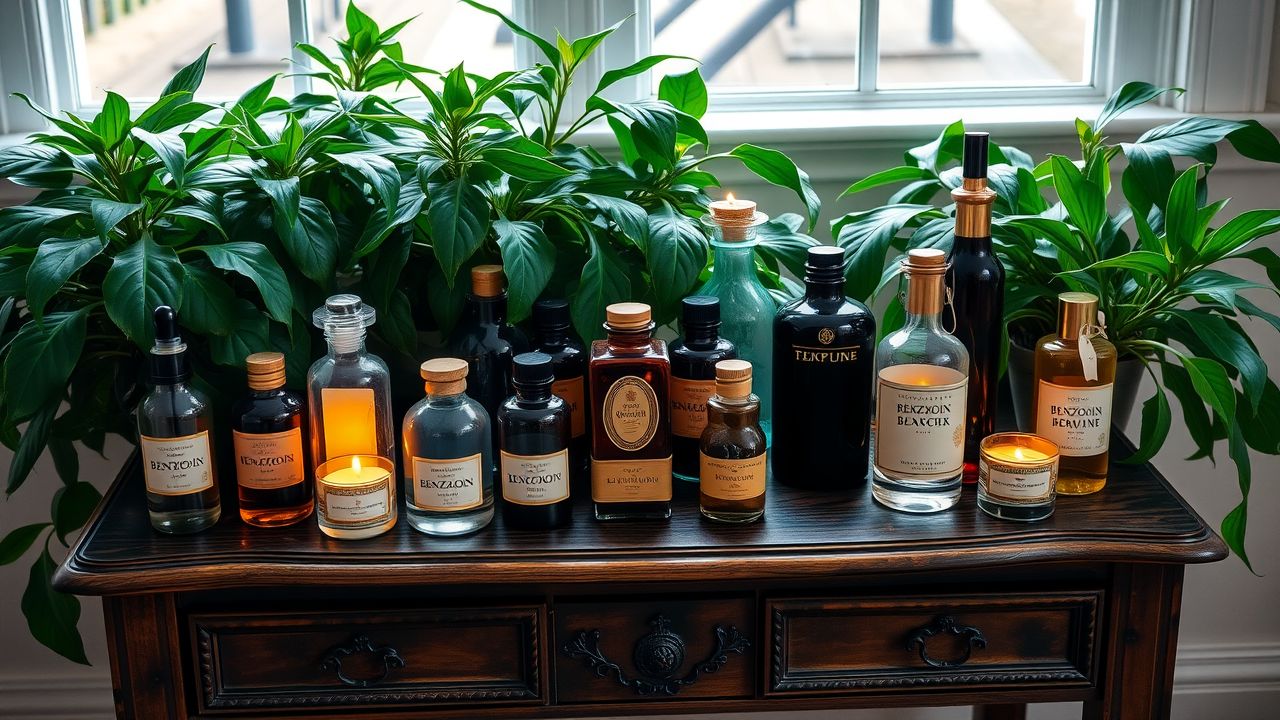
Benzoin perfume explores sweetness with a little more depth beneath it: a warm, balsamic scent with vanilla-like facets, sometimes described through caramel, powder or a softly spiced edge. It can make a gourmand feel more rounded, add warmth beneath flowers or become part of an amber accord. The interesting detail is the setting, not simply the presence of another sweet note.
I am drawn to that kind of quiet contrast. A soft finish beside a sharply cut jacket; a floral composition with something darker underneath; caramel that feels more textured than its name first suggests. Learning to recognize benzoin gives you another way to describe what you enjoy in a fragrance, without needing to become a perfumer.
This guide follows the material from aromatic resin to finished perfume, explains its relationship with vanilla, amber and woods, and compares three fragrances whose houses explicitly describe benzoin. It also shows how to follow a preference for warmth into the IRFĒ collection without inventing an ingredient that a product does not list.

What Is Benzoin in Perfume?
Benzoin is an aromatic resin obtained from Styrax trees. The material used in a finished fragrance is a prepared extract or other suitable perfumery preparation, not a handful of raw resin dropped into the bottle. The names resin, resinoid and tincture refer to related but different stages or forms, so the preparation matters when discussing the ingredient.
dsm-firmenich’s Benzoin Siam SFE identifies Styrax tonkinensis and describes warm, balsamic and vanilla facets, with a delicate cinnamic profile. That is a particular supplier material and extraction, not evidence that every perfume mentioning benzoin uses the same preparation.
For choosing a fragrance, the distinction is simple: the raw material supplies possibilities, while the complete composition determines the result you wear. Benzoin can be prominent or sit beneath another subject. A perfume with a rose or caramel name may therefore be a useful place to discover it, even when benzoin is not printed on the front of the bottle.
Resin, Tears, Extract and Tincture
The word tears describes the collected resin. Maison Francis Kurkdjian’s account of benzoin describes resin collected after incisions in the tree, then cleaned and prepared. It also distinguishes infusion in alcohol from extraction with volatile solvents.
Those preparations are not interchangeable instructions for home use. A concentrated perfumery material has a different purpose from a finished fragrance, and its appearance or aromatic strength does not tell you an appropriate skin application. A finished sample is the relevant first choice when your question is which perfume you would enjoy wearing.
The supplier’s botanical identity, extraction and any dilution belong together. Calling everything benzoin essential oil can conceal those differences. When reading a product description, distinguish an ingredient sold for formulation from an Eau de Parfum, perfume oil or other finished cosmetic product with its own directions.
Siam and Sumatra: Names Worth Recognizing
You may encounter Siam and Sumatra benzoin in descriptions of the raw material. Sylvaine Delacourte’s benzoin guide discusses different qualities and the material’s vanillic and spiced nuances. Supplier terminology provides more detail than the single word benzoin on a fragrance note list.
For a wearer, the practical lesson is not to memorize a hierarchy of supposedly better and worse resin. Two perfumers can use related materials to create very different results. Unless the house identifies the source and preparation, do not infer them from price, bottle color or a description of sweetness. Compare the perfume itself, then investigate the material when it helps explain your preference.
What Does Benzoin Smell Like?
Warm and Balsamic
Balsamic is a perfumery description of rich, resinous warmth. Here it does not mean vinegar. Benzoin’s sweetness can feel rounded rather than sparkling, with a deeper resinous impression behind its vanilla-like side. That combination makes the material interesting when a simple sugary note feels too flat.
Imagine two garments in the same pale color: one smooth silk, the other a textured knit. The color is not the whole experience. In a similar way, two sweet fragrances can offer different textures. One may center on an explicit confection; another may make warmth feel more shaded and substantial.
Vanilla-Like, but Not Vanilla
Vanilla and benzoin can suggest related warmth without being the same material. A description of caramel, honey or vanilla-like facets is an account of smell, not a declaration that the perfume contains those foods. The distinction keeps a useful sensory vocabulary from turning into an imagined ingredient list.
Compare a benzoin-containing fragrance with a vanilla perfume whose character you already understand. Notice the setting around the sweetness. Do you enjoy the resinous depth, or would you prefer a clearer vanilla focus? Our vanilla perfume selection for women offers a separate route when the vanilla itself is the main attraction.
Powder, Spice and a Darker Edge
Not every warm fragrance feels edible. A powdery finish can suggest softness without a dessert theme; spice can interrupt sweetness; woods can give it a firmer line. Benzoin is worth exploring through those relationships rather than assuming that every perfume containing it will smell like a caramel confection.
The detail that interests you may emerge through comparison. Try one overt gourmand beside a rose-and-wood composition with benzoin, then ask which element changes the whole impression. You might discover that you enjoy warmth best when it is supporting something else, rather than occupying the center of attention.
Benzoin, Amber, Vanilla and Woods: A Comparison
| Term | What it describes | Question to ask when sampling |
|---|---|---|
| Benzoin | An aromatic resin and its perfumery preparations | Do I enjoy the balsamic texture beneath the sweetness? |
| Amber | A family of accords and warm impressions | Does this composition emphasize resins, vanilla or woods? |
| Vanilla | A recognizable aromatic direction expressed through different materials | Do I want vanilla itself to be the main subject? |
| Sandalwood | A woody direction often described through smooth or creamy textures | Would a woody frame suit me better than a more resinous finish? |
| Frankincense | A different resinous perfumery subject | Am I looking for a less confectionary resinous contrast? |
| White musk | A musky direction rather than the same resin or extract | Is powdery or musky softness what I actually prefer? |
Our amber perfume guide explains the broader accord, while the sandalwood guide follows a neighboring woody subject. Benzoin may participate in an amber construction, but the word amber does not prove a universal formula containing benzoin.
The contrast with frankincense is also useful. The two belong in a conversation about aromatic resins without being substitutes for one another. Follow the relationship you enjoy rather than treating every resin, balsam and warm base note as the same thing.
For a drier contrast, explore the green, mossy side of oakmoss perfume. Comparing that earthy character with benzoin’s balsamic warmth can help you decide whether you are drawn to resinous sweetness or a less gourmand direction.
How Benzoin Works Within a Fragrance
At the Base, Without Being Invisible at the Beginning
A note pyramid is a way to organize the description of a fragrance, not a timetable in which one set of ingredients switches off before another begins. A base material can help shape the overall impression even while you are noticing the opening. Return to the perfume later to learn how the balance changes, rather than waiting for an exact minute at which benzoin is supposed to appear.
This makes a sample more informative. Notice the brighter or floral details first, then ask what supports them. A fragrance can become warmer as the opening recedes, or reveal a woody line that was less obvious initially. The relationship is more useful than trying to isolate one ingredient from a finished composition.
Warmth, Roundness and the Word Fixative
Benzoin is often discussed as a base or fixing material. That does not mean it acts as an invisible adhesive that gives every fragrance a predictable extra number of hours. It has a smell of its own, and its role belongs to the complete formula. A product’s note list does not disclose enough information to calculate wear time.
For a wearer, judge two things separately: how long you continue to notice the fragrance and how much you enjoy its later character. Our long-lasting perfume guide addresses the performance question. A persistent finish is only a benefit when it remains a finish you want to wear.
Flowers and Aromatic Details
Warmth can sit behind a floral composition rather than turn it into a gourmand. A rose-and-oud fragrance with benzoin asks a different question from caramel and musk. The flower can provide the central subject while resin supplies another layer underneath it.
For related contrasts, explore jasmine in perfume or the aromatic direction of lavender. These guides explain different subjects; they are not a claim that every benzoin perfume contains both. Read the named composition first, then follow the detail that interests you.
Three Benzoin Fragrances to Compare
The examples below use the fragrance houses’ own product descriptions. They are chosen to reveal different contexts for benzoin, not to identify a strongest perfume or establish a laboratory-tested ranking.
Prada Candy Eau de Parfum: A Gourmand Starting Point
Prada Candy Eau de Parfum places benzoin resin beside a caramel accord and white musk. It is a clear place to begin when sweetness itself is what you want to explore. Benzoin belongs to a deliberately gourmand composition rather than appearing behind a large floral subject.
I would set that idea against a clean silhouette: dark trousers, a crisp shirt or a sharply proportioned dress. The contrast keeps the styling from repeating every sweet detail. Compare Candy with Grand Soir when choosing between caramel-led pleasure and a more explicitly ambery setting.
During a separate wear, ask whether the caramel remains the reason you enjoy it or whether the musky, resinous finish becomes more interesting. Keep the exact version on your list. Candy Eau de Parfum and other fragrances carrying the Candy name should not be treated as the same perfume in different packaging.
Maison Francis Kurkdjian Grand Soir: Resinous Amber
Grand Soir Eau de Parfum is described through cistus labdanum, lavandin and cinnamon leaf, with an amber-vanilla accord and benzoin facets in the base. It provides an ambery comparison rather than another straightforward caramel theme.
I would consider it with evening tailoring or a dress whose line does most of the work. The warm composition supplies texture, so the clothes need not supply every decorative element. Against Candy, notice whether you prefer sweetness as the central pleasure or the more resinous setting around it.
The house’s description also offers a useful lesson about amber: it is a constructed relationship, not a golden stone melted into perfume. Following that distinction makes the fragrance’s warmth easier to understand without reducing it to a technical formula.
Maison Francis Kurkdjian Oud Satin Mood Eau de Parfum: A Floral-Woody Contrast
Oud Satin Mood Eau de Parfum brings violet and Damascena rose into an oud and vanilla-amber setting. Benzoin is among the materials the house describes for the fragrance. Flowers and woods give the resin a different context from the preceding two examples.
This is the comparison I would add when a sweet or ambery shortlist feels too narrow. Notice whether the rose is the center of your interest or whether you are drawn to the warmth beneath it. Fluid fabric is one possible styling partner, but the same richness can create an appealing contrast beside restrained tailoring.
The oud perfume guide follows that woody subject more closely. Ask for the Eau de Parfum specifically; Oud Satin Mood Extrait is a separate comparison, not an automatic upgrade to the same experience.
Choosing a Benzoin Direction for Your Wardrobe
Start with the character you want more of, not a demand to identify the most benzoin-heavy bottle. A gourmand may be right when you enjoy overt sweetness. An amber composition can give warmth a more resinous setting. A floral or woody fragrance can let benzoin remain part of the foundation rather than the whole story.
For a daytime wardrobe, I would investigate how the fragrance sits beside the clothes you actually wear. A soft knit may invite one kind of warmth; a crisp shirt may make another contrast more interesting. There is no need to make every choice an evening statement simply because a resin appears in the note list.
For cooler-weather dressing, a richer composition can supply a satisfying textural idea beside wool or velvet. That is a styling preference, not a rule about how every formula performs in cold air. Learn the fragrance indoors as well as outside, particularly when the room and the amount of clothing change.
A second bottle should add a difference you can describe. Before buying another sweet fragrance, compare its resinous, floral or woody setting with the bottle you already own. The perfume wardrobe guide considers that question of useful variety without prescribing a collection size.
Where the Warmth Connects with IRFĒ
The IRFĒ ingredient and fragrance guide helps connect materials, scent families and the house’s actual compositions. An ingredient article can also point toward a neighboring fragrance direction when the comparison is explained clearly.
Patchouli Forever Worn offers an Amber Wood comparison, with honey, tobacco and davana, then lavandin, Clearwood and amber, followed by patchouli, sandalwood and cedarwood. It belongs here because it offers another way to explore warmth and a woody frame. Benzoin is not being presented as one of its declared notes.
Compare the idea with a benzoin-containing amber when you want to understand what the woods contribute. The amber wood perfume guide makes that bridge more specific. You might prefer a softer resinous finish, or discover that a stronger woody outline is the part you were looking for.
For another contrast in softness, Marshmallow Musk uses a tea-and-floral setting with marshmallow cotton, airy vanilla and powdery musk among its declared notes. Again, that is a comparison of character, not a benzoin claim. The white musk guide offers a related path when the musky finish is what appeals.
Sampling, Application and Layering
Choose one overt gourmand and one less confectionary contrast. Wear them separately and make a short note after the opening, then another later. Is it the sweetness, the flower, the wood or the resinous texture that makes you want to return? A plain answer is more useful than borrowing a complex description you cannot recognize yourself.
A perfume sampler set can help organize this exploration, provided its contents answer your question. IRFĒ’s five-fragrance Discovery Set compares the house’s own directions; it is not a set of five benzoin perfumes. Check the actual compositions rather than allowing the article’s topic to redefine the product.
For the final choice, try a sample in your ordinary routine. Our guide to testing perfume samples explains a repeat-wear approach. Keep the exact name and concentration in your notes, and follow the finished product’s directions for application.
Try each fragrance alone before layering it with another. A warm resinous perfume may already contain the contrast you want; adding several unfamiliar products can obscure it. Matching body products can be a pleasurable extension of one scent, but this guide does not promise a fixed number of extra hours from lotion, oil or a second spray.
Why a Home Tincture Is a Different Project
A tincture is a preparation of aromatic material, not a finished perfume selected for wearing. Understanding that distinction preserves the interesting formulation question without confusing it with the shopping decision. Raw-resin work involves the identity and preparation of the material, an appropriate solvent, intended use and the requirements of the finished formula.
There is no single mixture ratio that can be transferred from an unidentified online recipe to every benzoin material. A supplier extract may already be diluted; another preparation may behave differently. The correct approach is to follow the documentation for the specific material and seek formulation guidance, rather than infer a skin-use recipe from a fragrance description.
For the reader choosing a scent, none of that work is necessary. A properly identified finished sample lets you explore the aromatic result directly. The appeal of benzoin does not depend on turning the dressing table into a laboratory.
Questions About Benzoin Perfume
Is Benzoin the Same as Vanilla?
No. Benzoin is an aromatic resin with vanilla-like facets. Vanilla is a different perfumery subject. They can work together without becoming interchangeable ingredients.
Is Benzoin Always Very Sweet?
The material has sweet facets, but the complete fragrance may emphasize flowers, woods or a darker resinous setting. The surrounding composition matters more than assuming one sweetness level from the note name.
Does Every Amber Perfume Contain Benzoin?
No. Amber describes a family of accords and impressions rather than one compulsory recipe. Look for a specific description from the fragrance house.
Does Benzoin Guarantee All-Day Wear?
Benzoin is often used precisely for warm, lingering depth. In amber, vanilla, woods or resinous compositions, it can help a fragrance feel persistent and carry beautifully into the drydown. The note alone does not set one exact clock, so compare the finished perfume and notice both how long its warmth stays with you and whether you still enjoy the character later.
Is Benzoin Perfume the Same as Benzoin Essential Oil?
No. A finished perfume, raw aromatic preparation, extract and tincture are different products. Their directions and intended uses should not be substituted for one another.
Can a Benzoin Fragrance Be Worn Every Day?
It can, when the composition and amount suit your ordinary setting. Choose the balance you enjoy rather than treating a warm resin as an evening-only ingredient.
The Detail Beneath the Sweetness
Benzoin becomes most interesting when warmth stops being a single effect. It can support caramel, deepen an amber or sit beneath a floral-woody composition. Find the relationship you enjoy, and the unfamiliar material becomes a useful part of your fragrance vocabulary: not just another word on a note list, but a more precise reason to choose.
