


Updated October 2, 2026.
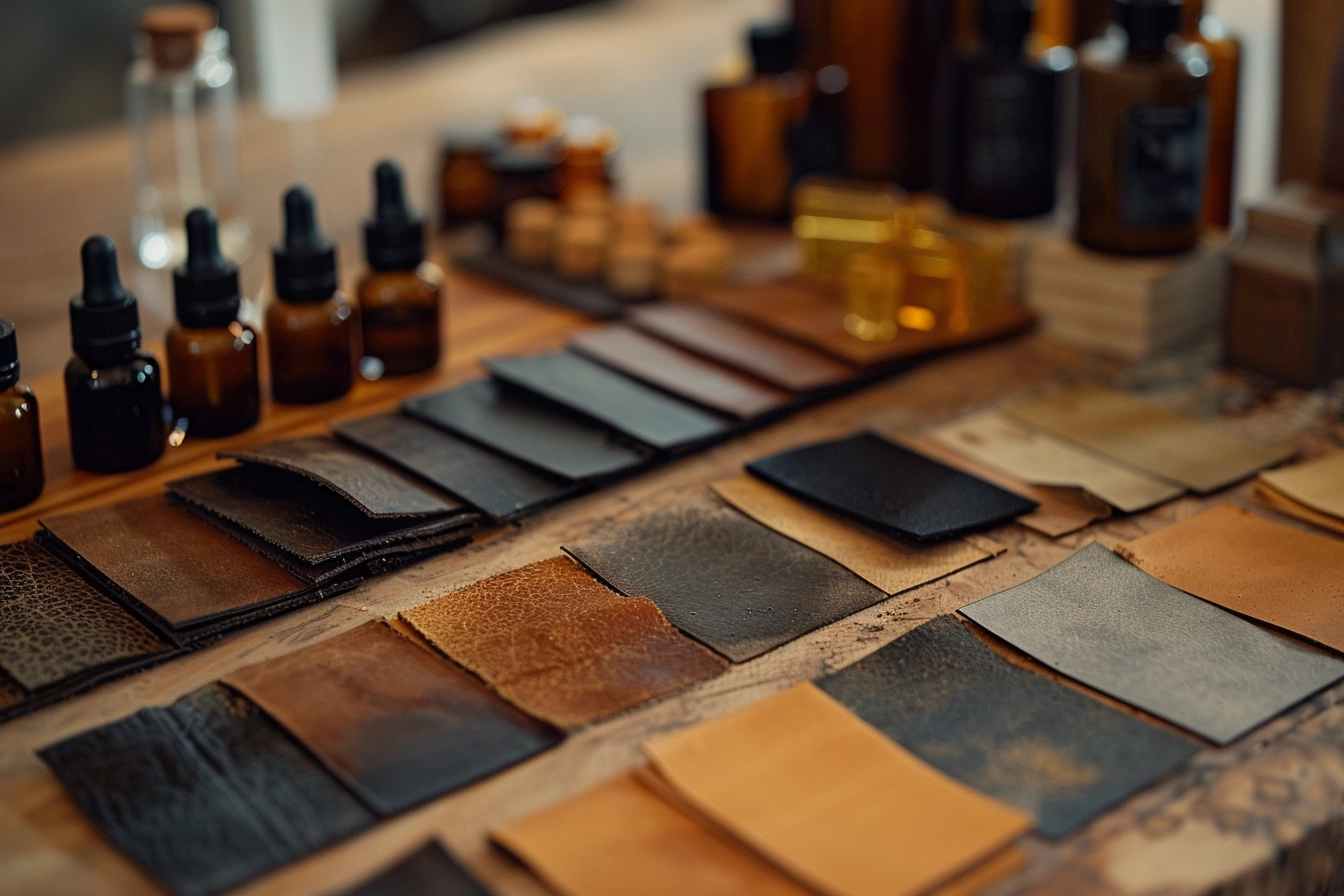
Leather perfume is not one dark, forceful smell. It can suggest pale suede, a polished handbag, the dry surface of a well-worn jacket or a smoky, resinous finish. Flowers can soften it, aromatic notes can sharpen it, and vanilla can make it unexpectedly supple. The pleasure lies in discovering which texture belongs beside your own style.
In fashion, leather can be an entire silhouette or one small detail that changes everything around it. Fragrance offers the same freedom. A leathery accent can give a floral composition definition without taking over; a leather-led perfume can become the decisive element beside a simple dress. Neither approach requires a costume or a more aggressive personality.
This guide explores the history and construction of the leather idea, compares four distinct fragrances and follows the useful connections among leather, suede, woods, amber and musk. The goal is to find a character you enjoy, not choose whichever bottle makes the largest promise about intensity.
What Does Leather Perfume Smell Like?
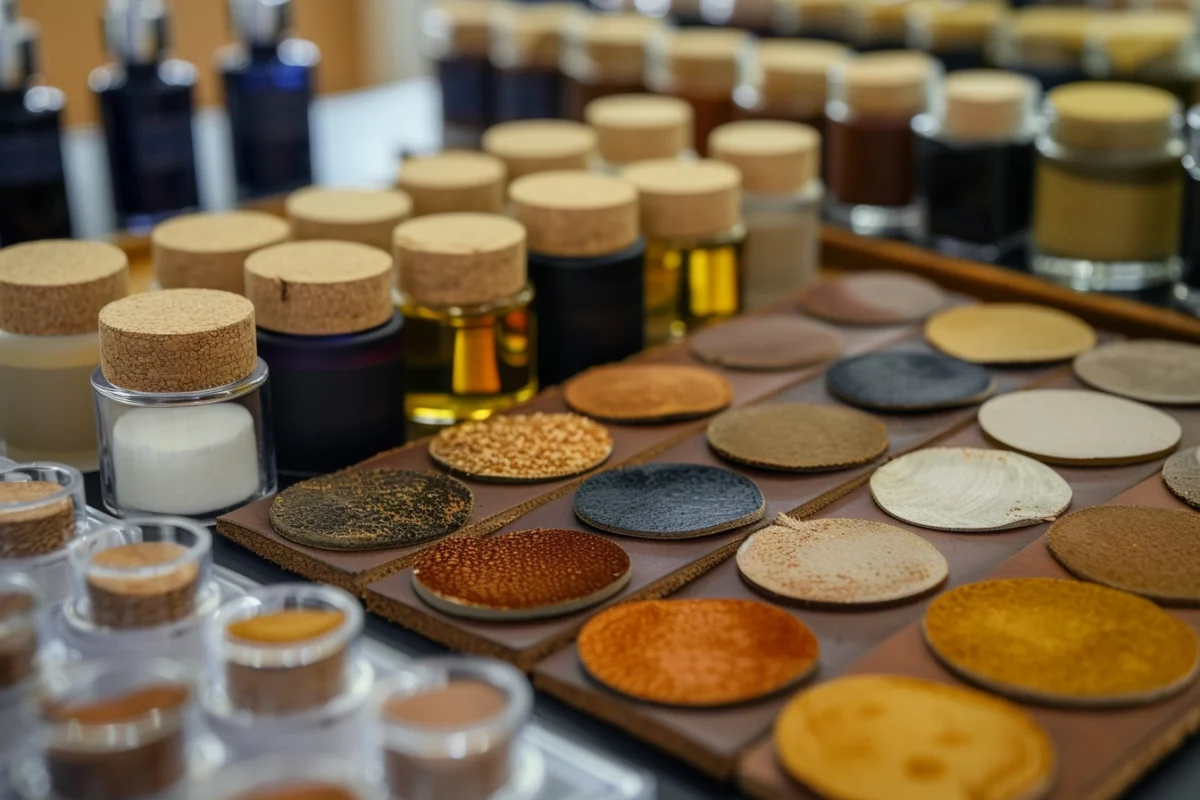
A leather note is an aromatic impression created within a composition. There is no single universal leather essence that makes every perfume in the category smell alike. One interpretation can feel dry and woody, another softly powdery, another darker and smoky. The surrounding notes determine whether that impression is the main subject or a supporting detail.
Think first about finish. Does the description suggest polished leather, soft suede, aromatic spice or smoke? Those words are more useful than a general promise of luxury. A perfume that combines flowers and leather may appeal to someone who dislikes a tar-like interpretation. Conversely, a wearer seeking a dry, rugged character may find a vanilla-softened suede too rounded.
Distinguish character from projection. A fragrance described as soft suede is not necessarily faint, and a smoky character does not tell you how far it travels. Texture describes the impression; application, composition and setting affect the wearing experience. Learn the actual perfume instead of allowing the name to answer every question.
From Scented Gloves to a Fragrance Family
The connection between leather and perfume has a practical history as well as a romantic one. The Musées de Grasse account of local perfume plants describes the aromatic materials available to glove-perfumers, including lavender and local botanicals. It also traces the growing importance of jasmine, rose and tuberose in the region.
That relationship is more interesting than a vague claim that leather has always symbolized luxury. A crafted accessory and its fragrance were once directly connected. In modern perfumery, the direction can be reversed: a scent evokes the accessory, allowing the idea of leather to be worn without the garment itself.
Chanel’s Cuir de Russie offers one example of that imaginative world. The house describes birch wood and labdanum with jasmine and ylang-ylang, linking the fragrance to its own cultural inspiration. The point is not that every modern leather must reproduce one historical formula, but that flowers and leather have a more nuanced relationship than simple opposites.
For IRFĒ, fashion remains a useful way to read fragrance. The house’s heritage gives the brand context, while today’s compositions have their own declared notes and creative identities. A history of dress should enrich a modern fragrance description, not become an invented origin story for a particular bottle.
How Perfumers Create a Leather Impression
A perfumer can assemble different materials to suggest leather rather than reproduce the smell of one object literally. Sylvaine Delacourte’s account of leather fragrances discusses smoky, resinous, green and suede-like facets, including materials used to create softer leather effects. These are possible tools in a perfumer’s palette, not a disclosed formula for the bottles below.
The distinction matters when reading a note list. Raw leather, suede and smoked leather can describe creative effects. They do not establish that animal hide has been put into the liquid. Nor does an accord name prove that a complete product is vegan: that requires the brand’s specific product information.
The IRFĒ ingredient guide is the starting point for the house’s declared materials and fragrance relationships. Read a named composition first, then follow the note that interests you. This keeps an exploration of leather connected to actual perfumes rather than a collection of imagined ingredients.
Four Leather Directions at a Glance
| Direction | What changes the impression | Example to explore |
|---|---|---|
| Aromatic leather | Brightness, spice, green and floral details around leather | IRFĒ Saffron Leather Eau de Parfum |
| Floral leather | A leather accord with flowers, woods and an earthy setting | Tom Ford Ombré Leather Eau de Parfum |
| Soft suede and vanilla | A smoother, rounded treatment with a warm finish | Guerlain Cuir Béluga Eau de Parfum |
| Smoked leather and oud | Spice and resins around a darker woody base | IRFĒ Smoldering Pepper Eau de Parfum |
These categories are routes into a shortlist, not sealed compartments. A fragrance may combine several effects. Begin with the contrast you want most, then compare another interpretation far enough away to make the difference clear.
Four Leather Perfumes to Compare
IRFĒ Saffron Leather: Aromatic Definition
Saffron Leather Eau de Parfum, by Ilias Ermenidas, belongs to IRFĒ’s Aromatic Leather family. Bergamot, cinnamon, petitgrain and cassis lead into saffron, cistus leaves, burnt rose and violet. Raw leather, sandalwood and cedarwood form the base.
The important detail is how the leather is framed. Aromatic brightness and a darker floral heart give you more to explore than a simple warm-and-smoky description. I would consider it with a fluid black dress under a sharply cut jacket, allowing the clothes to keep their movement while the fragrance supplies another line of definition.
Compare it with Ombré Leather when you want to understand how floral and woody accents alter a leather theme. Or compare it with Smoldering Pepper when deciding whether the broader subject should remain aromatic leather or move toward oud and spice. Those are different questions, and they lead to different shortlists.
Our saffron perfume guide follows one of the composition’s central accents. The bergamot guide explores a different part of the opening. Shared notes connect fragrances without making them interchangeable.
Tom Ford Ombré Leather Eau de Parfum: Flowers Against Leather
Ombré Leather Eau de Parfum names black leather accord, cardamom, jasmine sambac, patchouli, white moss and amber among its key notes. The house describes floral leather with a woody, earthy texture.
This makes a useful comparison with Saffron Leather: not which perfume sounds darker, but which surrounding detail attracts you. Do you enjoy the jasmine setting, the aromatic opening or the earthy finish? A simple silhouette and one tactile accessory would leave room for that contrast without making the entire outfit literal.
During a sample wear, notice whether the flower remains part of your interest later on. Our guide to jasmine in perfume can help distinguish a floral subject from the supporting role it plays here. A familiar note may behave as part of a very unfamiliar whole.
Ask for the Eau de Parfum specifically. Ombré Leather Parfum and Eau d’Ombré Leather are separate choices. A related name should not become an accidental substitution for the version that made you interested in the first place.
Guerlain Cuir Béluga: A White-Suede Idea
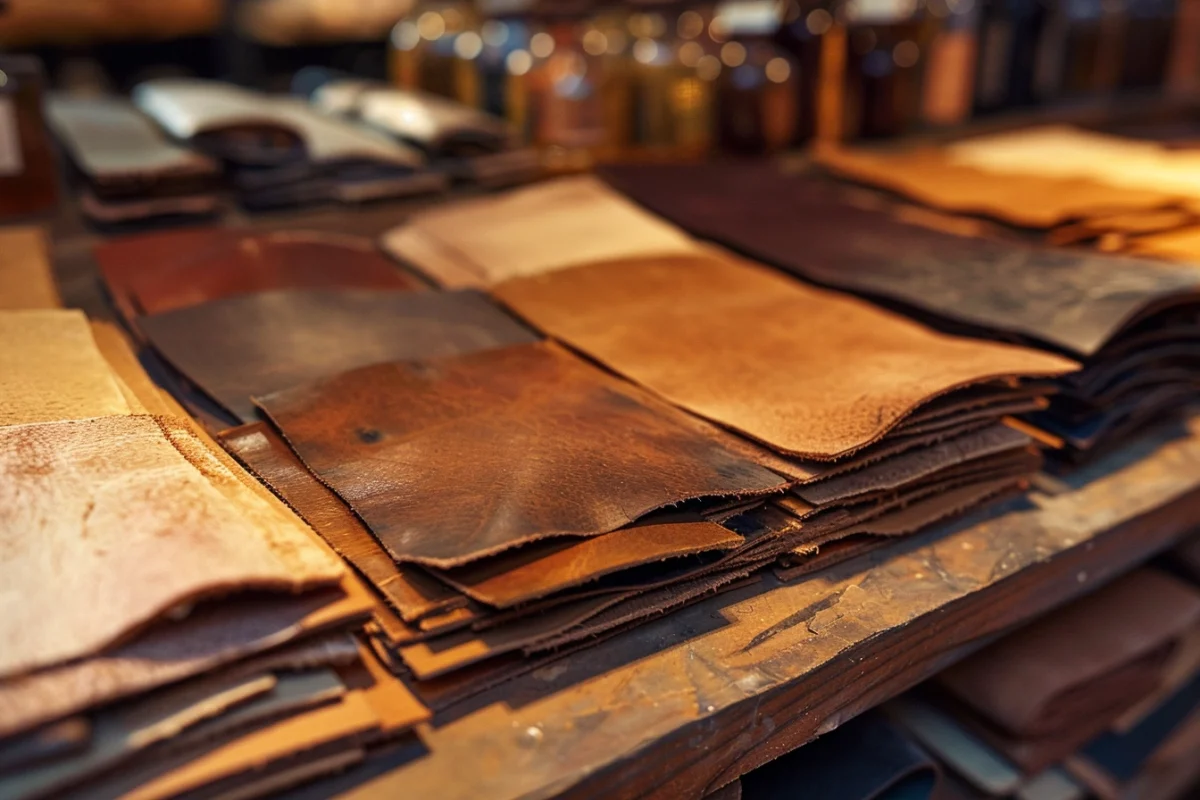
Cuir Béluga Eau de Parfum gives leather a softer, vanilla-inflected interpretation. Guerlain describes tangerine and immortelle around a white-suede idea, with amber, musk and vanilla in the finish.
I would explore it when the texture of leather appeals but smoke is not what you want to wear. Fine knitwear, a pale blouse or a clean neckline would provide one possible setting. There is no need to dress in suede to enjoy the impression, just as a floral perfume does not require a floral print.
The comparison with Ombré Leather is especially useful. You are choosing between two treatments, not a supposed feminine and masculine rule: a vanilla-softened suede on one side, a floral leather with a more defined earthy frame on the other. Notice which supporting detail makes the leather feel complete.
For another exploration of softness, the white musk guide follows a neighboring idea. Our vanilla perfume guide considers warmth in settings beyond leather. Neither note guarantees that a fragrance will be quiet; they help describe its character.
IRFĒ Smoldering Pepper: Leather Within Oud and Spice
Smoldering Pepper Eau de Parfum, created by Alexis Grugeon, belongs to IRFĒ’s Oud Spicy family. Black pepper, saffron and olibanum lead into labdanum, Indonesian patchouli and cypriol, with vanilla bourbon, smoked leather and oud in the base.
Leather belongs to a wider composition here rather than being the only subject. I would pair that darker aromatic idea with restrained evening clothes, letting a clean shape provide contrast. A loose jacket over silk can be more interesting than matching every smoky note with another dark accessory.
Compare Smoldering Pepper with Saffron Leather on separate days. Both contain leather-related notes, but their centers of attention differ. Our oud perfume guide follows that woody direction, while the frankincense guide provides context for olibanum. The resins and spice may be the details that make the darker base appealing to you.
A leather article can therefore lead to an oud-spice fragrance for a specific reason. The relationship is an overlapping facet, not a claim that every woody perfume is secretly a leather perfume.
Leather with Woods, Flowers, Amber and Musk
A Woody Frame
Sandalwood offers a different texture from leather, often discussed through smoother or creamier woody effects. Cedarwood gives you another woody reference. In a complete fragrance, the balance between these elements can make leather seem more polished, drier or more substantial.
Ask which subject you actually want. A wood-led composition with a leather accent may suit you better than one centered on leather. If the woods are what you keep noticing, follow them into another comparison rather than forcing yourself to choose the strongest leather identity.
Warmth Without Losing Definition
An amber accord can give a leathery composition a warm setting; vanilla can provide a different sweetness. Neither turns every leather perfume into a gourmand. The relationship between warmth and dryness is the important part.
When leather feels too severe, sample a rounder interpretation before abandoning the entire category. When it feels too sweet, go the other way: compare an aromatic or wood-led option. The question becomes more precise than simply deciding that leather is or is not for you.
Flowers as a Counterpoint
Flowers and leather can emphasize one another through contrast. A floral detail gives the darker texture another dimension, while leather can keep a bouquet from feeling entirely soft. Ombré Leather and Saffron Leather demonstrate different approaches through their named compositions.
You can also compare a leather perfume with a non-leather floral to understand your preference. IRFĒ Centifolia Rose offers flowers with a woody foundation, rather than a leather claim. The comparison asks whether it is the floral-woody relationship you enjoy most or whether you genuinely want leather in the picture.
A Musky Alternative
Sometimes the attraction is tactile softness rather than leather itself. Compare a suede idea with the powdery, tea-and-floral sweetness of Marshmallow Musk. This is an alternative in mood, not a claim that Marshmallow Musk contains a leather note.
That distinction makes a fragrance wardrobe more useful. You might choose one perfume for its firmer line and another for its softness. The goal is not to make every bottle illustrate the same ingredient, but to understand how each one changes the overall impression.
How to Wear Leather Perfume in Your Own Style
For an everyday setting, begin with the clothes you already use as a foundation: a shirt, a fine knit, a familiar jacket. A leather fragrance can introduce contrast without becoming the loudest part of the outfit. Learn the amount during an ordinary day rather than making the first trial an important meeting.
For evening, you may want a more deliberate texture beside silk, tailoring or a simple black dress. The Sexiest Perfumes for Women edit explores several sensual directions beyond leather. A close dinner and a larger gathering need not call for the same application, even when you wear the same fragrance.
Season can influence the mood you want, but it should not be a rigid calendar. A suede-like composition may interest you beside light clothing; a darker leather may feel right with winter fabrics. Try the perfume indoors as well as outside, particularly when the setting changes from cool air to a warm room.
There is no requirement to reserve leather for men or for an assertive image. The family contains floral, aromatic, musky and sweet interpretations. Choosing by texture gives you far more freedom than choosing by an advertisement’s imagined wearer.
A Better Sampling Method for Leather
Start with two genuine contrasts. Cuir Béluga beside Smoldering Pepper asks a broad question about softness and darkness. Saffron Leather beside Ombré Leather asks a closer question about aromatic and floral support. Choose the pair that matches what you are trying to learn.
Wear them separately and note three things: the leather impression, the detail that softens or sharpens it, and the part you still enjoy later. Keep the language plain. Less smoke, a flower I like, or too much sweetness gives your next comparison a useful direction.
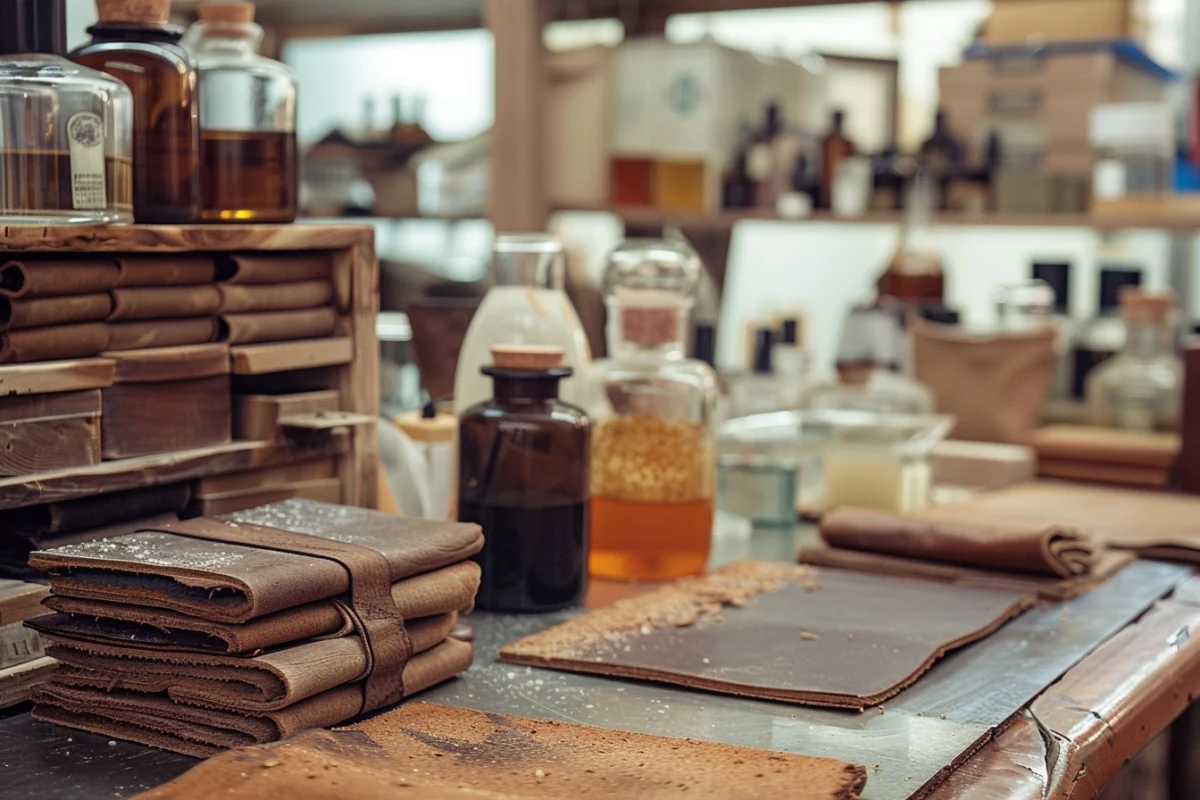
A perfume sampler set can make the comparison manageable. IRFĒ’s Discovery Set includes both Saffron Leather and Smoldering Pepper alongside three different compositions, so it can also show whether a non-leather direction suits you better.
Check the exact concentration and format before buying. A perfume oil, Eau de Parfum and body spray are not automatically the same composition at different prices. Our perfume oil guide explores that format separately. Follow the product’s directions instead of transferring an application habit from another bottle.
Before a full-size purchase, repeat the most promising sample. The perfume samples guide develops this approach. A second leather bottle should offer a difference you can name, rather than another version of a dramatic description.
Questions About Leather Perfume
Does Leather Perfume Contain Actual Leather?
A leather accord creates an aromatic impression. The name does not mean pieces of leather are added to the fragrance, and it does not by itself certify that the complete product is vegan.
What Is the Difference Between Leather and Suede Perfume?
Suede usually describes a softer, smoother interpretation of the leather idea. It is a guide to texture, not a fixed ingredient formula or a guarantee of low projection.
Can Leather Perfume Smell Fresh?
Aromatic and citrus details can give a leather composition brightness. Read the complete note description rather than assuming that the family contains only smoky or heavy fragrances.
How Long Does Leather Perfume Last?
Leather perfumes are often chosen for the persistent base presence they can create. Suede, smoke, woods, resins and musk can leave a long-lasting trail that carries through an evening and gives the drydown real texture. There is no single hour count for every leather fragrance, so test the exact version and notice both how long it stays with you and whether you still enjoy its later character.
What Should I Try When Smoke Is the Problem?
Compare a vanilla-softened suede or a floral or aromatic leather. This helps establish whether you dislike leather itself or a particular smoky setting.
Should I Layer Leather with Another Perfume?
Try the finished fragrance alone first. It may already contain the softness, flowers or warmth you want. Layering several unfamiliar products makes it harder to understand which composition you actually enjoy.
Choose the Texture, Not the Costume
Leather perfume can sharpen, soften or deepen an impression. Its most interesting quality is not that it asks you to become someone else, but that it adds another texture to the way you already dress. Find the aromatic edge, suede softness or smoky contrast you enjoy, and the category becomes a set of personal possibilities rather than one intimidating name.
