



Updated October 2, 2026.
Oud perfume is often introduced through darkness: smoke, resin, leather, a sense of something richly wooded. Yet a rose-and-oud composition can feel very different from a dry woody fragrance or an oud surrounded by pepper and incense. The category becomes far more interesting when you stop treating intensity as its only attraction.
A darker note can bring definition to a fluid dress, or give a simple shirt another dimension. It can also sit beneath flowers without becoming the entire subject. For me, that contrast is the useful starting point: not how imposing an oud sounds, but what it contributes to the complete fragrance.
Here is a guide to the material, its different aromatic directions, three real compositions to compare, and the distinctions among oud oil, an oud accord and a finished perfume. It also connects the subject to the woods, leather, resins and fragrance choices explored elsewhere in IRFĒ’s collection.

What Is Oud in Perfume?
Natural oud oil is obtained from resin-rich agarwood associated with Aquilaria trees. The aromatic resin develops as part of the tree’s response to damage or biological stress, transforming the character of the wood. It is not simply the ordinary smell of every healthy branch from the tree.
Creed’s introduction to oud explains the relationship between Aquilaria, resinous agarwood and the material used in perfumery. That origin helps explain the fascination, but a finished perfume is a composition rather than a botanical specimen.
An oud note can be expressed through natural material, an aromatic construction or a combination within a wider formula. The words on a note list do not disclose the complete ingredient inventory. Unless the house supplies sourcing information, the name does not establish a country of origin, a percentage or a particular extraction method.
This leaves room for interpretation. A perfumer can emphasize one facet of a material, place it beside an unexpected flower or create a woody effect without reproducing a raw sample literally. For the wearer, the central question is how that interpretation feels as a complete fragrance.
Agarwood, Oud Oil and an Oud Accord
| Term | What it refers to | What not to assume |
|---|---|---|
| Agarwood | Resinous aromatic wood associated with the oud material | That an ordinary wood chip and a finished skin fragrance have the same purpose |
| Oud oil | An aromatic material obtained from agarwood, or a product described with that name | That every bottle sold as oud oil has the same preparation or composition |
| Oud accord | A constructed aromatic impression within a fragrance | That its note list discloses the formula or the presence of a particular natural extract |
| Oud Eau de Parfum | A finished fragrance in a named product format | That it is pure oud, or that every variation of its name smells the same |
Read the intended use and directions for the exact product. A raw material for formulation, incense wood and a finished fragrance are not interchangeable. When your aim is to find something to wear, a properly identified finished sample is the most relevant place to begin.
A Material with More Than One Cultural Setting
Oud’s story extends beyond the modern perfume counter. Frédéric Malle’s account of oud discusses its longstanding place in Asian and Middle Eastern aromatic traditions, as well as the woody, smoky, leathery and balsamic facets that interest perfumers.
It is worth keeping those different uses distinct. Burning aromatic wood, wearing an oil and choosing a contemporary Eau de Parfum are related parts of a wider subject, not one identical ritual. A perfume can evoke a cultural or material reference without claiming to reproduce every historical practice associated with it.
The same care belongs in the language of luxury. Words such as rare, precious and traditional can invite curiosity, but they should lead to specific product information rather than substitute for it. There is no need to invent a journey to a distillery or a personal encounter with a raw material to appreciate a well-described composition.
IRFĒ’s own fashion-house history provides a different creative context. The contemporary collection connects dress, character and fragrance, while its actual notes identify the materials and impressions relevant to each perfume. These histories can enrich a comparison without being blended into one imaginary origin story.
What Does Oud Smell Like?
Woody and Resinous
Oud descriptions often emphasize a deeper, resinous woodiness rather than the clean line of a freshly cut board. That can provide a foundation for flowers, spices or warmer notes. The resulting perfume may feel dry and angular or more rounded, depending on what surrounds the oud idea.
Compare it with the different vocabulary of cedarwood. Shared membership in a woody discussion does not make the two notes interchangeable. A fragrance can contain both and still give one a more prominent role.
Smoky, Leathery or Animalic Facets
Smoke and leather can appear in the aromatic picture, but they do not define every oud fragrance. An animalic description may be useful for a particular impression without proving the presence of an animal-derived ingredient. Read the house’s actual description rather than infer the formula from a sensory adjective.
A disliked sample may reveal a preference against one surrounding facet rather than oud as a whole. Too smoky, too medicinal or too sweet are different reactions. Write down the specific detail, then compare a composition that frames oud differently. That is more productive than trying to force an entire category into a single verdict.
Flowers and Sweetness Change the Conversation
Rose can become a central partner rather than a small decoration. Vanilla and an amber setting can make the wood feel warmer, while aromatic spice can give it another edge. The combination is where the choice becomes personal: wood alone, flowers against wood, or a richer meeting of resin and sweetness.
Our rose perfume selection offers a broader floral comparison. The vanilla perfume selection explores another possible preference. Neither is a substitute for the oud guide; they help identify which part of a composition you want more of.
Three Oud Perfumes, Three Different Starting Points
| Fragrance | Direction | Question to explore |
|---|---|---|
| IRFĒ Smoldering Pepper Eau de Parfum | Spice, resins, smoked leather and oud | Do pepper and a darker resinous setting make the wood more appealing? |
| Tom Ford Oud Wood Eau de Parfum | Woods with aromatic spice and warmth | Would you prefer the woody frame to remain the main subject? |
| Maison Francis Kurkdjian Oud Satin Mood Eau de Parfum | Flowers, oud and vanilla-amber warmth | Do you want rose to play a central role alongside the wood? |
These examples are selected to clarify differences rather than declare a universal winner. Their product descriptions support the notes below. The wardrobe suggestions are an editorial interpretation, not a claim of comparative wear testing.
IRFĒ Smoldering Pepper: Oud, Spice and Leather
Smoldering Pepper Eau de Parfum, created by Alexis Grugeon, belongs to IRFĒ’s Oud Spicy family. Black pepper, saffron and olibanum open the composition; labdanum, Indonesian patchouli and cypriol form the heart; vanilla bourbon, smoked leather and oud provide the base.
That gives the oud a specific setting rather than a generic promise of darkness. Spice leads toward resins, with vanilla beside a leather-and-wood finish. I would consider it with a clean silhouette and one substantial detail: a structured coat, a sculptural ring or a loose jacket over silk.
The saffron guide follows one aromatic accent, while the frankincense guide provides context for olibanum. Reading those related subjects can help you decide whether it is oud, spice or resin that you want to investigate next.
Compare it with Saffron Leather when choosing between an oud-spice composition and an aromatic leather. The latter is not being presented as another oud perfume. It is a neighboring direction for someone deciding which kind of definition belongs in the wardrobe.
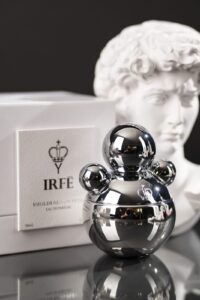
Tom Ford Oud Wood: A Woody Frame with Warmth
Oud Wood Eau de Parfum places oud notes beside rosewood, cardamom, sandalwood and vetiver, with tonka bean and amber adding warmth. It offers a different comparison from a rose-centered perfume or a strongly gourmand theme.
I would approach it through the relationship between the woods and the softer finish. Does the aromatic spice make the opening more interesting to you? Are you drawn to the wood itself or the warmth underneath? A crisp shirt and dark trousers provide one possible setting, but ordinary clothes are a better test than an outfit chosen to imitate the advertisement.
Compare it with Smoldering Pepper on a separate day. The distinction is not which description sounds more luxurious. It is whether you prefer this woody-aromatic frame or the pepper, olibanum and smoked-leather relationships in IRFĒ’s composition.
Our sandalwood perfume guide explains one supporting woody direction in more detail. Ask for Oud Wood Eau de Parfum when sampling, rather than assuming every product carrying the Oud Wood name is the same fragrance.
Maison Francis Kurkdjian Oud Satin Mood: A Floral Counterpoint
Oud Satin Mood Eau de Parfum brings a violet accord and Damascena rose into a woody, vanilla-amber composition. Benzoin is among the materials the house discusses for this fragrance, giving warmth another role beneath the floral subject.
This is the sample I would add when a woody shortlist feels too narrow. The rose can become part of the central impression rather than merely an accent. Notice whether that makes the fragrance more appealing, or whether you would rather keep flowers in the background and explore a wood-led alternative.
Fluid evening fabric is one possible partner for this mood. Restrained tailoring offers another, with the fragrance providing the richness instead of every detail of the outfit doing the same thing. The name suggests a texture; the wearing experience still needs to be discovered.
The benzoin perfume guide follows that resinous subject separately. Keep the Eau de Parfum distinct from Oud Satin Mood Extrait when ordering: a related name is not a reason to substitute an untried version.
Oud, Leather, Sandalwood and Amber Are Not the Same
Leather perfume explores an accord that can range from suede-like softness to smoke. Sandalwood gives another kind of woody vocabulary. Oud has its own resinous and woody possibilities. These subjects can meet in a composition without losing their different roles.
An amber accord can change the setting again. Warmth may sit beneath the wood, soften a floral heart or become one of the main pleasures. That does not turn every oud fragrance into a gourmand. The important question is which element the composition puts in focus.
Read a note list as relationships rather than a count of recognizable ingredients. A perfume with oud in its base may be experienced primarily as a rose fragrance. A leather-led perfume may contain woods you enjoy without being a good introduction to oud itself.
IRFĒ’s ingredient guide connects the collection through its declared notes. It lets a broader discovery lead back to the actual house compositions, rather than making every perfume claim every fashionable ingredient.
Oil, Spray or Discovery Vial?
Product format is a separate decision from scent family. A finished perfume oil, Eau de Parfum and raw oud material are not simply three sizes of the same product. Check the concentration or preparation, the intended use and the application mechanism before comparing prices.
The perfume oil guide explores that format without treating every oil as pure oud. An oil base does not by itself prove a particular ingredient source, and a spray does not establish a fixed wear time. Follow the directions belonging to the product you actually have.
For a first comparison, a small finished sample is often the clearest choice. A perfume sampler set can help you compare different compositions before committing to a larger bottle. IRFĒ’s Discovery Set includes Smoldering Pepper alongside four different fragrance directions, not five versions of oud.
Choosing an Oud Perfume for Women or Men
A useful shortlist starts with taste rather than a gender label. Someone who enjoys rose may approach oud through flowers; someone who prefers dry woods may choose a wood-led composition. Spice, sweetness and the amount of smoke offer more precise questions than whether a fragrance sounds traditionally masculine.
For a first oud, choose two clearly different interpretations and wear them separately. Keep a short note about the part you enjoy most and the part you would soften. Do you like the wood but not the sweetness? The rose but not the smoky finish? Those answers help select the next sample.
For evening, oud can provide a rich contrast beside simple clothes. The Sexiest Perfumes for Women edit places it within a wider range of moods. A quieter setting may call for a different amount, not necessarily a different fragrance.
For everyday wear, test the perfume during an ordinary day before making it part of an important occasion. A fragrance chosen only for an imagined formal evening may not be the one you want beside your usual wardrobe. The sample testing guide gives that decision a repeatable structure.
Price, Sourcing and Claims About Rarity
The reputation of natural oud should prompt better questions, not automatic acceptance of a large price tag. Ask what the house actually discloses about the finished fragrance. A note list alone does not establish the quantity, botanical source or extraction used. A beautiful story and a sourcing statement are different kinds of information.
Compare the same concentration and bottle size. A refill, travel format and full-size presentation may look similar in a search result while containing different quantities or requiring different accessories. The luxury perfume comparison considers these distinctions beyond the oud category.
When buying online, review the seller, the exact product and the return conditions together. Our online perfume guide supplies a broader purchasing context. An unsupported claim of exceptional rarity should not replace the practical information needed for a confident choice.
Questions About Oud Perfume
Is Oud the Same as Agarwood?
Agarwood refers to the resinous aromatic wood. Oud commonly refers to the aromatic oil or an oud direction in a finished fragrance. The product and context determine the exact meaning.
Do All Oud Perfumes Smell Smoky?
No. Smoke is one possible facet. Flowers, woods, aromatic spice and sweet notes can produce very different complete impressions.
Does Oud Perfume Always Last All Day?
The note name cannot establish a universal wear time. Test the exact fragrance and notice both its persistence and whether you continue to enjoy the character later.
Can an Oud Perfume Be Sweet?
Yes. Vanilla, amber and other warm elements can give the composition a sweeter setting. The balance varies, so compare complete fragrances rather than deciding from one ingredient name.
What Should I Try After Disliking One Oud?
Identify the detail you disliked and compare a different direction: floral instead of smoky, wood-led instead of sweet, or aromatic instead of resinous. One sample does not describe the whole category.
Is Natural Oud Automatically Better?
A material’s origin does not determine whether you will enjoy the finished composition. Specific sourcing information can be valuable, but your choice should also consider the actual fragrance and its intended use.
A More Personal Kind of Depth
Oud becomes easier to choose when intensity stops being the only story. Flowers can change its mood, spice can sharpen its outline and warmth can give it another texture. Find that relationship and follow it through the samples you wear. The result is a more useful fragrance vocabulary, and a better chance of choosing a bottle that feels genuinely yours.
