


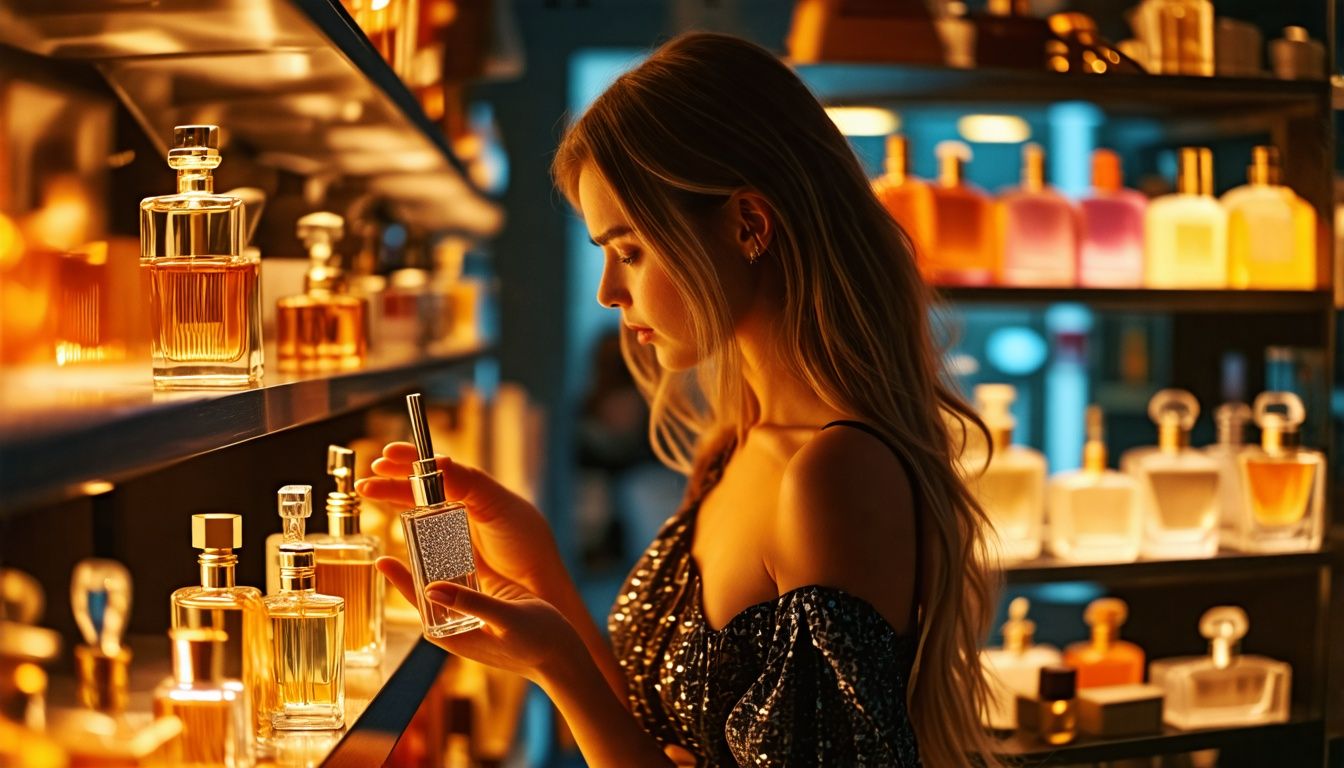
The enchantment of entering a room and being welcomed by a fragrance that quickens your pulse is truly special. The memorable moment when it first happened to me felt like subtle gravity pulling me to someone. That is the feeling I think of when I hear the words aphrodisiac perfume.
As I continued exploring fashion and design, I became interested in the qualities that make a fragrance feel intimate: a creamy wood, a full white floral, the warmth of vanilla or a scent that seems to belong to a particular person. The attraction lies in the composition and in the associations we bring to it.
Here, I use aphrodisiac to describe that sensual character. It is a useful starting point for choosing a mood, while studies of essential oils or physical responses need to be read for what they actually tested. I want the fragrance itself to remain at the center of the choice, from familiar notes to IRFE’s own expression of seduction.
What makes a perfume feel sensual?
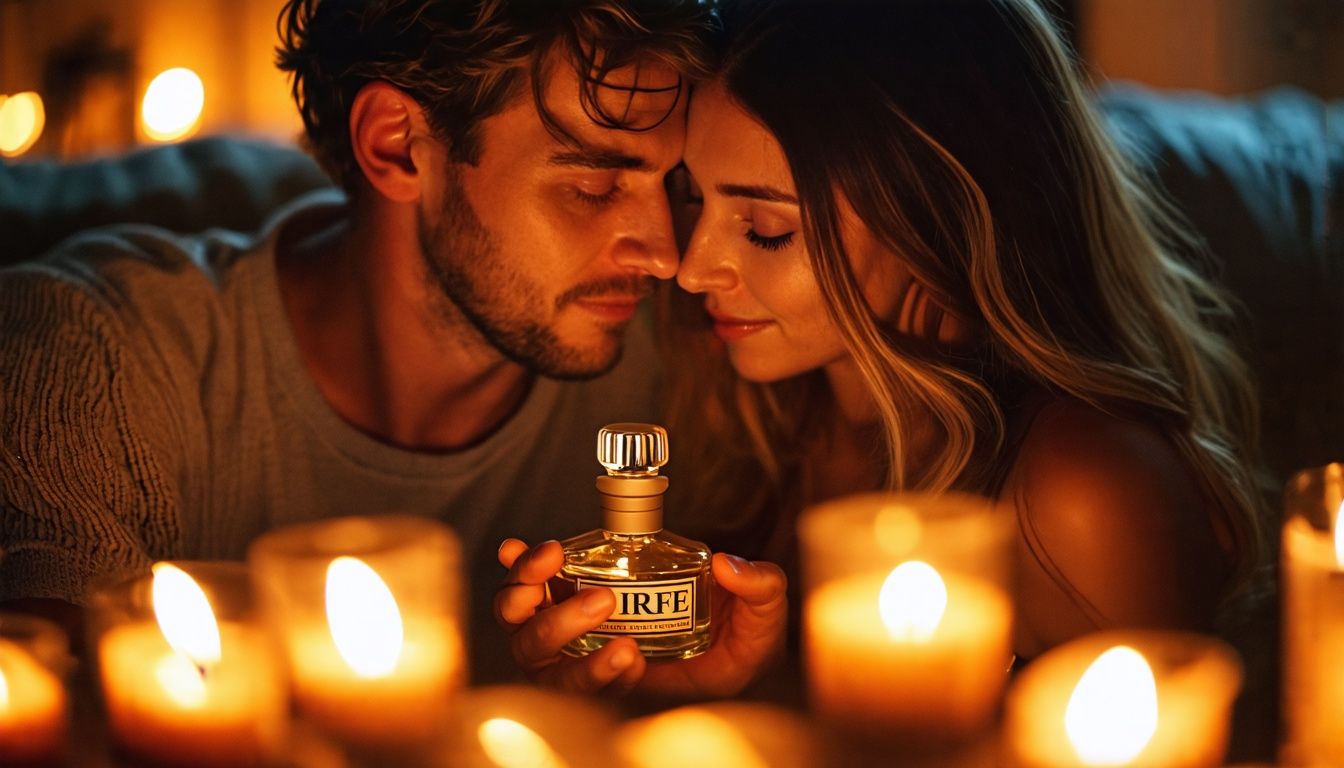
I find warmth inviting, but warmth can take several forms. A vanilla composition may feel almost edible; sandalwood can suggest a smoother, drier creaminess; jasmine can make the same idea feel much more floral and expansive. Calling them all seductive tells me less than describing the difference.
There is also the question of distance. A perfume that makes an entrance and one that becomes noticeable only in a close conversation can both feel sensual. I would decide which kind of presence I want before choosing how much to wear.
The fragrance notes offer a starting point, then the balance of the whole perfume does the more interesting work. A touch of sweetness within dry woods feels different from a generous gourmand. A rose with a bright opening may suggest another mood from a rose surrounded by musk.
Notes I would explore for different kinds of intimacy
Vanilla, from comforting to richly sweet
Vanilla is a natural place to begin if warmth is what draws you to a scent. I find perfumes that integrate this luscious ingredient appealing for its cozy yet provocative charm. Its sweetness can suggest familiarity and comfort, while a woody or spicy setting gives it another character.
I would first decide how close to dessert I want the perfume to feel. Someone who enjoys a sweet, enveloping composition may look for a different balance from someone who wants vanilla as a softer detail beneath woods. Our vanilla perfume choices compare individual fragrances, while the vanilla perfume guide explores the note more broadly.
For me, the word sensual does not require maximum sweetness. A little contrast can make the warmth more interesting: a fresh opening, a dry woody finish or a spice that interrupts the smoothness. I would want to enjoy that balance beyond the first spray.
Jasmine and rose bring different floral moods
Jasmine has an intensity that I associate with a more expansive floral presence. It can be a compelling choice when I want the flower to be unmistakable. Rose has a familiar romantic vocabulary of its own, but I would still ask whether the particular composition is fresh, soft, sweet or rich.
Jasmine need not stand alone. Mugler’s Alien Goddess Supra Florale sets jasmine Grandiflorum alongside a cactus-flower accord and a jasmine-sambac/everlasting-flower co-distillate. The maker’s description gives a much clearer reason to explore it than a general promise that jasmine is irresistible.
If a softer rose-centered floral fragrance is more your style, that is a different route into the same evening. I like having that distinction available: a white floral that fills out the composition, or a rose whose surroundings determine how delicate or substantial it feels.
Jasmine also suggests an interesting contrast with the warmth associated with amber perfume oils. That is a useful direction if you want a fuller warmth around the flower. For me, a perfume should captivate and provoke deep emotions; it’s an unseen form of art.
Ylang-ylang and sandalwood: floral richness, creamy woods
I always found the blend of ylang-ylang and sandalwood intriguing. Ylang-ylang’s floral richness and sandalwood’s warm, creamy character offer different kinds of fullness. Together, they suggest the sort of sensual perfume I would consider when sweetness alone feels too straightforward.
Mugler Angel Elixir is a concrete example of that direction. Mugler describes a white-floral composition with ylang-ylang, orange blossom and jasmine, alongside sandalwood and a vanilla finish. It is an eau de parfum; the appeal comes from the relationship among its notes, rather than sandalwood by itself.
My journey in fashion taught me to appreciate such details—the way natural ingredients can evoke emotions and memories. In crafting my own collections, I’ve been inspired by such powerful natural essences, aiming to imbue garments with similar depth and character. That connection between texture and mood remains part of how I think about fragrance.
For a different balance, I would also consider the lighter impression associated with green tea perfumes. It gives a useful contrast to a rich floral or creamy wood when thinking about a fragrance wardrobe.
Lavender, patchouli and spice can change the balance
The aromatic character of lavender offers a different route from syrupy sweetness. I can imagine choosing that direction when I want freshness within a warm composition. Patchouli brings an earthier impression, which can give a sweet or floral fragrance more depth.
Ginger and cinnamon suggest another useful distinction. A bright, spicy edge and a warmer, sweeter spice can lead a composition in different directions. I would look at the accompanying notes and the overall balance instead of assuming that every spicy perfume will feel equally inviting.
This is where a little sampling can be especially revealing. The note that first catches my attention may become a quieter detail as the fragrance settles. For a close evening, I want to enjoy that later impression as much as the opening.
What the often quoted studies actually examined
The research interests me, but a few frequently repeated examples need their setting kept intact. They investigate different things, and none is a straightforward test of whether wearing a particular retail perfume makes someone more desirable.
Hirsch and Gruss’s report compared responses to scented and unscented masks in 31 male volunteers, measuring penile blood flow. The largest reported increase was for a mixture of lavender and pumpkin-pie odors. The experiment examined responses to odors presented in masks, rather than the attractiveness of someone wearing a perfume.
Hongratanaworakit’s 2010 jasmine-oil study involved 40 healthy volunteers and topical application to the abdomen. It measured autonomic responses and self-reported feelings, with the jasmine group reporting greater alertness and vigor and less relaxation. Those outcomes describe activation in that experiment; emotional or physical intimacy was not its measured result.
Mohebitabar and colleagues’ 2017 paper reviewed clinical research on rose oil. The sexual-function research included a very specific setting: a trial in men with depression and SSRI-related sexual dysfunction. It is a different question from the effect of a rose perfume on a date.
I can take an interest in those findings while choosing a perfume for its smell, associations and comfort. That is the connection I want to carry into perfume design: a thoughtful composition that invites an emotional response, with the scientific claims kept as precise as the fragrance notes.
Signature scents and the memories attached to them
My journey through fashion and luxury has taught me that every scent tells a story, evoking memories and emotions tied to moments or places. I think of fragrances such as “Yes I Am” by Cacharel and “Voulez-Vous Coucher Avec Moi” by Kilian as different expressions within that personal vocabulary.
I also add one from my lineage, an IRFE perfume, to my personal anthology, marrying luxury with notable history. These scents transform into sensory cues, immersing me in a romantic fragrance cloud reminiscing about memorable times filled with love and joy.
A name such as Agent Provocateur can become part of the way one remembers an early encounter; La Belle by Jean Paul Gaultier can suggest another kind of occasion. I like the idea of a scent returning us to a particular mood, although the memory is made by the moment and the people as well as the perfume.
For me, a scent can call up a memory more vividly than a photograph. That is part of the pleasure of returning to a familiar bottle.
IRFE Centifolia Rose in that fragrance wardrobe
The craftsmanship in a bottle such as IRFE’s Centifolia Rose Eau de Parfum gives the idea something tangible. The house lists bergamot, pink pepper and pear at the opening, rose with orris and neroli at the heart, then cedarwood, sandalwood and white musk at the base.
That combination lets me think about contrast: brightness around a rose, then the warmer framework of woods and musk. I would consider it when a rose with brightness and a substantial woody setting feels more appealing than a very sweet floral.
Theo Fennell Scent belongs among the other names in my fragrance anthology. I value the possibility that different compositions can suggest different versions of elegance, and that a perfume can acquire meaning as it becomes familiar. Selecting essences for IRFE has been part of that interest in the emotional character of a scent.
How much variety does an evening wardrobe need?
Deciding the ideal number of perfumes for a woman’s collection often feels overwhelming. With fragrances ranging from Acqua Viva by Profumum Roma to Tobacco Vanille by Tom Ford, including an IRFE perfume for a touch of historical richness and personal connection, variety truly spices up one’s perfume wardrobe.
Whether it’s the fresh allure of Jimmy Choo Blossom for daytime wear or the deep mystery of Spiritueuse Double Vanille by Guerlain for evening engagements, having options allows you to express different facets of your personality.
I’ve found that owning between five to ten perfumes strikes a perfect balance; it gives you enough diversity to match any occasion without overwhelming your senses. That is my preference for a wardrobe, rather than a number every woman needs to reach. One scent you love may serve you well, while a collection offers more ways to vary the mood.
Seasonal impressions also deserve to be kept separate from concentration labels. Pink Me Up by Atelier des Ors is an eau de parfum, even if its sparkling character feels light to you. Casamorati Lira is also an eau de parfum; its caramel, vanilla and citrus direction does not make it a perfume oil.
Each fragrance in my own collection serves as an olfactory accessory that complements my outfit and mood, ensuring I’m always enveloped in aromas that enhance my presence. When considering another bottle, I would ask what different pleasure it adds: fresh floral brightness, warm sweetness, creamy woods or a quieter scent for close company.
Questions about aphrodisiac perfume
What does “aphrodisiac perfume” mean?
In fragrance descriptions, it usually points to a sensual mood or notes associated with desire, such as warm woods, vanilla or rich florals. The specific scent and its associations matter more to the choice than the label alone.
Is it the same thing as pheromone perfume?
The words describe different ideas. Aphrodisiac language concerns sensuality or desire, while pheromone perfume is marketed around a proposed chemical-signal effect. Our guide to pheromone perfume meaning explains that terminology more closely.
Does a stronger scent make a better date-night perfume?
I would choose the amount with the setting in mind. A fragrance noticed at close quarters offers a different experience from a broad scent trail. The one I would prefer is the one that feels comfortable to wear and suits the company and space.
The scent I would want to remember
I return to that first feeling of being drawn toward someone by a fragrance. What interested me was the person and the moment, with the scent woven into both. A note list can help me explore that feeling, but the finished composition has to be something I want to wear.
For a romantic evening, I would begin there: with the warmth, freshness or floral richness that feels most like me, and enough restraint to enjoy it at the distance of a conversation. The memory can take care of itself.
