


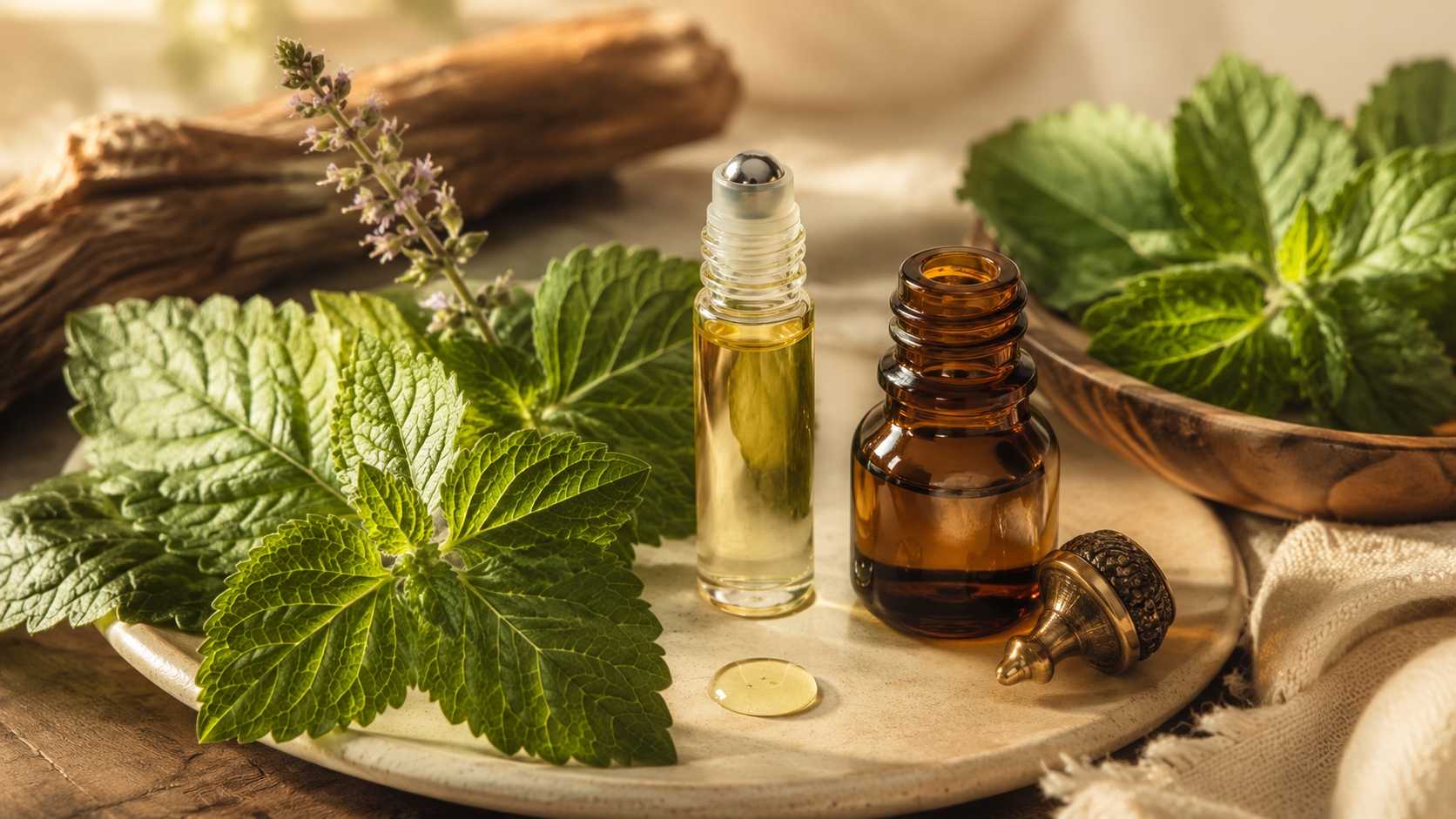
Patchouli oil perfume is a small-format fragrance with a very different personality from a spray. It is usually applied with a rollerball, dropper, or glass wand, then warmed directly on the skin. The scent tends to stay closer to the body, unfolding through touch and heat rather than filling the air immediately.
The name causes confusion because patchouli oil perfume does not always mean pure patchouli essential oil. Most finished perfume oils are blends of aromatic materials diluted in a cosmetic carrier oil. Patchouli may lead the composition, or it may sit beneath rose, vanilla, musk, amber, citrus, tobacco, or woods. A ready-to-wear perfume oil and a bottle of concentrated essential oil are not interchangeable.
I like perfume oils for their intimacy. A spray can enter a room before you do; an oil waits until someone comes closer. The ritual is quieter too: a small bottle, a controlled touch at the wrist or neck, a moment that feels closer to fastening jewelry than misting fragrance into the air.
This guide explains the difference between patchouli perfume oil, essential oil, attar, roll-on fragrance, and alcohol-based eau de parfum. It also covers carrier oils, projection, longevity, safe application, storage, layering, and how to choose a patchouli oil that suits the way you actually want to smell.
Patchouli Oil Perfume at a Glance
| Format | What it usually contains | How it wears |
|---|---|---|
| Perfume oil | Fragrance blend diluted in a cosmetic carrier oil | Smooth, concentrated, usually close to skin |
| Patchouli essential oil | Concentrated botanical extract from patchouli leaves | Raw material, not automatically a finished perfume |
| Attar | Traditional concentrated oil fragrance, often built through distillation or maceration | Dense, layered, applied by dabber or wand |
| Eau de parfum | Fragrance materials in an alcohol-based formula | More diffusion and a broader scent trail |
| Roll-on | An applicator format, not a separate fragrance category | Portable, precise, easy to control |
| Body oil | Skincare oil with added fragrance | Broader application, usually softer scent intensity |
What Is Patchouli Oil Perfume?
Patchouli oil perfume is a finished personal fragrance in an oil base. The formula usually combines aromatic materials with a carrier such as jojoba or fractionated coconut oil. It is designed to be worn on the skin in small amounts, usually at pulse points.
The patchouli itself may come from natural essential oil, refined patchouli fractions, modern patchouli-like materials, or a blend of these. The fragrance may smell clearly earthy and woody, or patchouli may simply give depth to a softer composition. A rose-patchouli oil can feel floral and dramatic. Vanilla-patchouli may feel warm and gourmand. Musk-patchouli can become almost transparent.
Roll-on, dropper, and dabber refer to the way the fragrance is dispensed. They do not tell you how much patchouli is in the formula, how concentrated the perfume is, or whether it uses natural essential oil. Those details depend on the product.
A good perfume oil should feel intentional from opening to drydown. It should not smell like raw patchouli leaves floating in carrier oil unless that is specifically the style. The best formulas give the note shape, contrast, and a reason to remain close to the skin.
Patchouli Essential Oil vs. Patchouli Perfume Oil
Patchouli Essential Oil
Patchouli essential oil is a concentrated aromatic material obtained from dried patchouli leaves. Its natural profile can be woody, earthy, balsamic, camphoraceous, green, smoky, and slightly sweet. It is a perfumery ingredient, not automatically a complete personal fragrance.
A bottle labelled “100% patchouli essential oil” may be intended for aromatherapy, home fragrance, professional formulation, or dilution before cosmetic use. Natural origin does not guarantee that a concentrated oil is suitable for direct application. Essential oils can irritate skin or provoke allergic reactions, so the label and manufacturer’s directions matter.
Patchouli Perfume Oil
A finished patchouli perfume oil is already formulated for personal fragrance use. It may contain patchouli essential oil, but it also includes a carrier and often other aromatic materials. The perfume might combine patchouli with rose, jasmine, vanilla, musk, amber, leather, citrus, spice, or woods.
The distinction is simple but important:
- Essential oil is a concentrated raw material.
- Perfume oil is a finished fragrance formula intended for wear.
Do not assume a small dark bottle is ready for skin merely because it smells beautiful. Read the product category, ingredient list, warnings, and directions.
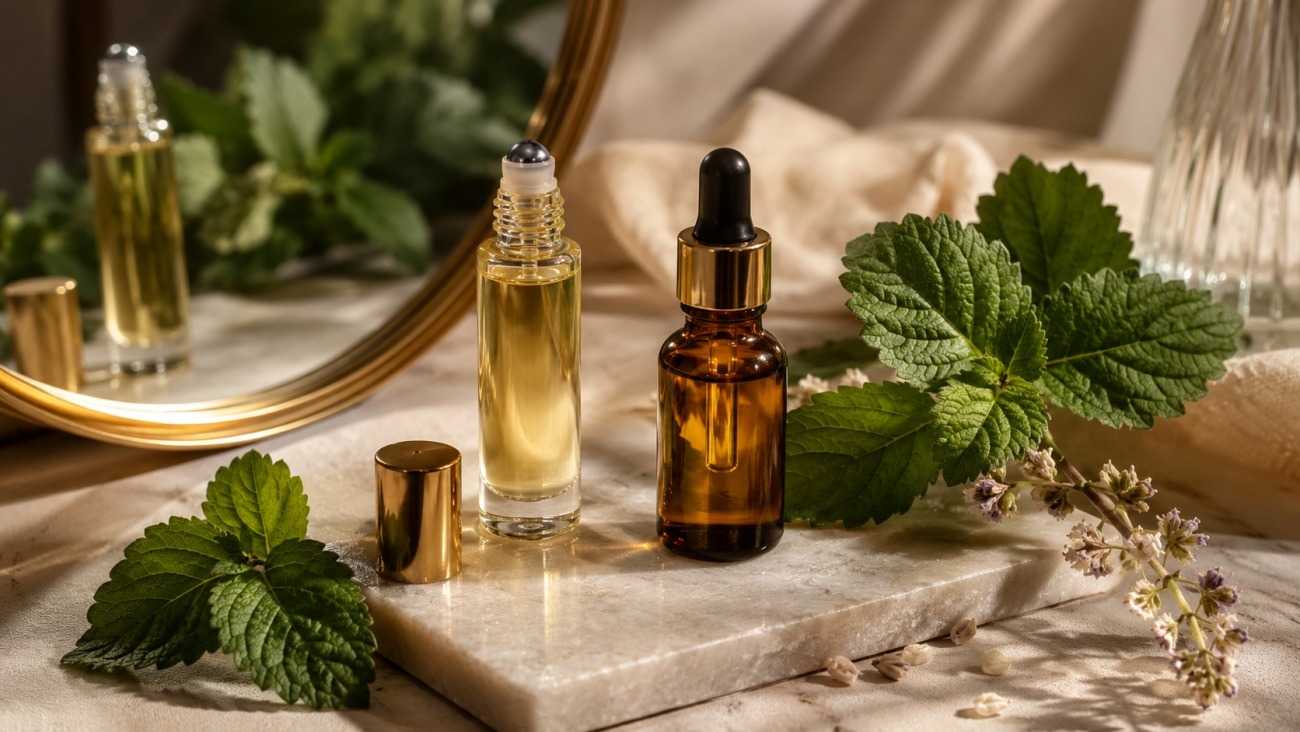
Perfume Oil vs. Alcohol-Based Eau de Parfum
Neither format is universally better. They create different kinds of presence.
How Perfume Oil Wears
Perfume oil is applied directly and precisely. Because the formula does not flash away in the same way as an alcohol spray, the opening often feels smoother and less expansive. The scent warms gradually and tends to stay near the skin.
This makes oil appealing for travel, quiet offices, close conversation, and people who dislike a large fragrance cloud. It is also easy to layer because a tiny amount can deepen another scent without taking over immediately.
The trade-off is projection. A perfume oil may remain detectable for many hours while creating only a modest scent trail. It can also leave a mark on fabric, particularly if the carrier is heavy or the oil has not fully absorbed.
How Eau de Parfum Wears
An eau de parfum uses alcohol to disperse aromatic materials more widely. The first impression tends to be brighter and more diffusive, and the fragrance can create a noticeable trail around the wearer.
Sprays are useful when you want fragrance to move with clothing, hair, and air. They also make it easier to cover a broader area with one or two controlled applications. The opening may feel more dramatic, while the drydown gradually moves closer to skin.
The practical choice is not oil versus spray in the abstract. Choose according to the effect:
- Closer, quieter, portable: perfume oil
- More projection and air around the scent: spray perfume
- Layered wardrobe: use both carefully
What Is an Attar?
An attar is a concentrated oil-based fragrance associated with traditional perfumery in South Asia and the Middle East. Historically, aromatic materials such as flowers, herbs, woods, and spices could be distilled into a base such as sandalwood oil. Modern attars vary widely in method, ingredients, and style.
Attars are usually applied with a glass wand, dabber, or very small roll-on. They may be rich, complex, and highly persistent, developing slowly through warmth rather than projecting in a broad alcohol cloud.
Not every perfume oil is an attar, and not every attar contains patchouli. A contemporary rollerball made from fragrance concentrate and jojoba oil is a perfume oil. A traditionally produced rose-oud composition in an oil base may be sold as an attar. The packaging can look similar, but the history and formulation are not necessarily the same.
Common Carrier Oils in Roll-On Perfumes
The carrier affects texture, absorption, stability, and the way the perfume feels on skin. It does not determine the complete scent, but it shapes the wearing experience.
Jojoba
Jojoba is popular because it feels light, stable, and relatively neutral. Technically wax-like in composition, it spreads smoothly and usually interferes very little with the fragrance.
Fractionated Coconut Oil
Fractionated coconut oil remains liquid at room temperature and has a light, fluid texture. It is widely used in rollerballs because it moves easily through the applicator and feels less heavy than traditional coconut oil.
Sweet Almond Oil
Sweet almond oil can feel softer and richer on skin. Products using it should be clearly labelled, and anyone with relevant sensitivities should read the ingredient list carefully rather than assuming every perfume oil uses the same base.
Other Cosmetic Carriers
Grapeseed, sunflower, caprylic/capric triglyceride, and proprietary cosmetic bases may also appear. A finished formula may include stabilizers, antioxidants, or texture modifiers as well as fragrance materials.
The best approach is wonderfully unromantic: read the label. “Natural,” “alcohol-free,” and “oil-based” do not tell you everything about comfort, allergens, or suitability for your skin.
How Patchouli Oil Perfume Can Smell
Earthy and Woody
This is the most direct expression of patchouli: forest floor, dark wood, roots, moss, balsam, and a slightly camphoraceous freshness. Cedar, vetiver, sandalwood, and oakmoss make the effect drier and more architectural.
Sweet Patchouli with Vanilla
Vanilla softens patchouli and brings out its warm, chocolate-like facets. The result can feel creamy, ambered, or gourmand. Tonka, caramel, honey, and benzoin may add further sweetness.
Patchouli and Rose
Rose gives patchouli color and lift; patchouli gives rose depth and shadow. In oil form, the pairing can feel especially intimate, with petals and earth warming together on skin rather than projecting as a large formal bouquet.
Patchouli and Musk
Musk can turn patchouli into a quiet skin scent. White musk makes it cleaner; ambrette gives a soft, warm texture; deeper musks create a more sensual effect. This is a useful style for anyone who finds raw patchouli too forceful.
Patchouli and Amber
Amber materials, resins, vanilla, and musk make patchouli warmer and more enveloping. This style suits evening and cool weather, though a transparent amber can keep the composition lighter.
Patchouli with Tobacco, Leather, or Smoke
Tobacco, leather, incense, birch, and saffron push patchouli toward a darker, more unisex mood. In an oil base, these notes can feel dense and tactile, so a very small application often carries enough character.
For a full map of the note, see our patchouli perfume guide.
Projection vs. Longevity
These two ideas are often confused.
Projection is how far a fragrance travels from the skin. Longevity is how long it remains detectable. A patchouli perfume oil can last quietly for hours without filling the room. A spray may project strongly at first and then settle much sooner.
Oil does not automatically mean stronger. The concentration, amount applied, carrier, aromatic materials, skin temperature, and climate all influence the result. Some oils are dense and persistent; others are deliberately soft.
This close-to-skin quality is part of their appeal. Perfume oil can become a private layer rather than public decoration. It is often noticed when someone leans closer, catches your wrist, or stands beside you rather than from the other side of the room.
How to Apply Patchouli Perfume Oil
- Begin with a small amount.
- Apply to clean skin at the wrists, neck, inner elbows, collarbone, or behind the ears.
- Allow the oil to absorb before dressing.
- Avoid aggressive rubbing, which spreads the product unevenly and makes the opening harder to judge.
- Use several small touchpoints rather than saturating one patch of skin.
- Keep oil away from delicate fabric unless the manufacturer specifically indicates that it is safe.
- Reapply only after you have checked the drydown at close range.
A rollerball does not need twenty passes. One or two controlled strokes can be enough, especially with dark patchouli, tobacco, leather, amber, or attar-style formulas.
The best placement depends on the desired effect. Wrists make the fragrance easy to smell during the day. Neck and collarbone allow gentle diffusion. Inner elbows protect the oil slightly from constant washing and contact.
Can Patchouli Essential Oil Be Applied Directly to Skin?
Do not treat concentrated patchouli essential oil as though it were automatically a ready-made roll-on perfume. Use it only according to the manufacturer’s directions and intended purpose.
Plant-derived materials can still irritate skin or trigger allergic reactions. A product described as natural, alcohol-free, or aromatherapy-grade is not automatically hypoallergenic. For personal fragrance, the simplest option is a properly labelled finished perfume oil formulated for skin.
When trying a new cosmetic fragrance:
- read the label and warnings;
- test a small area first if your skin is sensitive;
- do not use on irritated or broken skin;
- stop using it if redness, itching, or discomfort develops;
- seek professional medical advice for a significant reaction.
This section is intentionally less romantic than the rest of the article. Safety information should not be dressed in velvet.
How to Choose a Patchouli Oil Perfume
Choose the Scent Style First
Decide whether you want earthy, floral, sweet, musky, ambered, smoky, or fresh patchouli. The word on the label is only the starting point.
Check Whether Patchouli Leads or Supports
A patchouli-forward oil will usually mention the material prominently and pair it with woods, amber, tobacco, leather, or spice. In a softer floral or fruity oil, patchouli may appear mainly in the drydown.
Choose the Applicator
A rollerball is convenient for travel and controlled application. A dropper gives more flexibility at home but requires a steady hand. A glass wand or dabber creates a more traditional ritual and works well with concentrated attars.
Read the Ingredient List
Look for the carrier base, fragrance ingredients, essential oils, and any warnings. Do not assume every oil is jojoba-based or that every “patchouli oil” is a finished cosmetic product.
Sample on Skin
Oil fragrances often smell different from the bottle. Give the formula time to warm, then notice whether patchouli becomes sweeter, woodier, smokier, or softer after thirty minutes.
Think About Your Real Setting
A dark tobacco-patchouli attar may be beautiful at dinner and too dense for a small summer office. A musky roll-on may be perfect for work and too quiet when you want a visible evening trail.
How to Store Perfume Oils
Perfume oils prefer a cool, dark, stable environment. Heat and direct sunlight can change the aromatic materials and carrier over time.
- Keep the cap tightly closed.
- Store the main bottle in a drawer or cabinet.
- Do not leave it permanently in a hot car.
- Wipe the rollerball or neck of the bottle if residue collects.
- Notice major changes in odor, color, or texture.
- Use clean hands when applying from a dabber or open-neck bottle.
A small rollerball can live in a handbag, but it should not spend its entire life baking beside a window or radiator. Portable does not mean indestructible.
How to Layer Patchouli Perfume Oil
Patchouli oil makes an excellent base layer because it adds depth without necessarily creating immediate projection. Apply a small amount first, allow it to settle, then place the second fragrance on another pulse point or slightly above it.
Patchouli + Rose
Creates a richer floral with more shadow and structure.
Patchouli + Vanilla
Adds warmth, creaminess, and a gourmand effect.
Patchouli + Musk
Softens the earthiness and keeps the fragrance close to skin.
Patchouli + Citrus
Brightens the opening and makes the composition easier in warm weather.
Patchouli + Woods
Creates a drier, more unisex, and often more sophisticated effect.
Start with simple combinations. Two very complex oud, amber, tobacco, or gourmand fragrances can quickly become an aromatic stew in which every beautiful detail has drowned.
Why Perfume Oils Feel Modern Again
Perfume oils fit several current fragrance habits particularly well: small portable formats, layering, close-to-skin scents, and a preference for personal rituals over one large cloud of perfume. Rollerballs and droppers also make it easier to control placement and carry fragrance through the day.
The appeal is not novelty. Oil fragrance is ancient. What feels contemporary is the way it fits modern wardrobes: a discreet office scent, a travel companion, a warm base beneath a spray, or a small bottle chosen for the pleasure of touch as much as smell.
A perfume oil can also make fragrance feel less performative. It belongs to the space immediately around the wearer. In a world of loud launches and enormous bottles, that small radius can feel unexpectedly luxurious.
Where IRFĒ Patchouli Forever Worn Fits
IRFĒ Patchouli Forever Worn is an eau de parfum, not a perfume oil. That distinction makes it useful here because it shows how the same patchouli idea changes in an alcohol-based fine fragrance.
Created by Frank Voelkl, the composition opens with honey, tobacco, and davana. Lavandin, Clearwood, and amber shape the heart, while Patchouli Heart SFE, sandalwood, and cedarwood form the base. The result is an amber-woody patchouli with a wider, more diffusive presence than a typical roll-on oil.
Where a perfume oil might keep honeyed tobacco close to the wrist, Patchouli Forever Worn lets the theme move through the air. It is the difference between a secret lining and the full coat. Neither format replaces the other; they serve different moods.
The IRFĒ Discovery Set offers a practical way to experience this spray format before choosing a full bottle.
Bottom Line
Patchouli essential oil is a concentrated botanical ingredient. Patchouli perfume oil is a finished fragrance in a carrier base. An attar is a traditional concentrated oil perfume with its own history and methods. An eau de parfum uses alcohol to create more diffusion and a broader scent trail.
Choose perfume oil when you want intimacy, portability, controlled application, and easy layering. Choose a spray when you want more air and projection around the fragrance. Choose the patchouli style according to your wardrobe: earthy woods, rose, musk, vanilla, amber, tobacco, leather, or citrus.
The best patchouli oil perfume should feel close without feeling unfinished. It should warm on skin, develop with patience, and remain personal enough that discovering it feels a little like being invited closer.
FAQs
1. What is patchouli oil perfume?
Patchouli oil perfume is a finished personal fragrance in an oil-based carrier. It may feature patchouli as the main note or use it beneath florals, vanilla, musk, amber, tobacco, leather, or woods.
2. Is patchouli perfume oil the same as essential oil?
No. Essential oil is a concentrated botanical raw material. Perfume oil is a finished fragrance formula diluted in a cosmetic carrier and intended for personal wear.
3. Can patchouli essential oil be applied directly to skin?
Do not assume it can. Follow the manufacturer’s instructions and use only products specifically labelled for skin application. Concentrated essential oils can irritate skin or cause allergic reactions.
4. Does patchouli perfume oil last longer than spray perfume?
It may stay detectable close to the skin for a long time, but the result depends on concentration, formula, carrier, skin, climate, and application. Oil often projects less than a spray even when it lasts well.
5. Why does perfume oil stay close to the skin?
An oil base does not disperse aromatic materials into the air as quickly as alcohol. The fragrance warms gradually and usually creates a smaller scent radius.
6. What is the difference between attar and perfume oil?
Perfume oil is a broad modern category for fragrance diluted in an oil base. Attar refers to traditional concentrated oil perfumery, often associated with specific distillation and aging practices. Not every perfume oil is an attar.
7. Can patchouli perfume oil stain clothes?
Yes, some oils can mark fabric. Allow the product to absorb before dressing and avoid direct application to delicate or pale materials unless the label says it is suitable.
8. Where should perfume oil be applied?
Common points include the wrists, neck, collarbone, behind the ears, and inner elbows. Begin with a small amount and add more only after judging the drydown.
9. Is alcohol-free perfume automatically hypoallergenic?
No. Alcohol-free products can still contain fragrance allergens, essential oils, and other ingredients capable of causing reactions. Check the label and test cautiously if your skin is sensitive.
10. How should patchouli perfume oil be stored?
Keep it tightly closed in a cool, dark place away from direct sunlight, radiators, and prolonged heat. Avoid leaving the bottle permanently in a hot vehicle.
Editorial note: This guide separates finished perfume oils from concentrated essential oils and traditional attars. Safety information reflects FDA guidance that natural fragrance ingredients and essential oils can still irritate skin or trigger allergic reactions. Product labels and manufacturer instructions should always take priority.
