


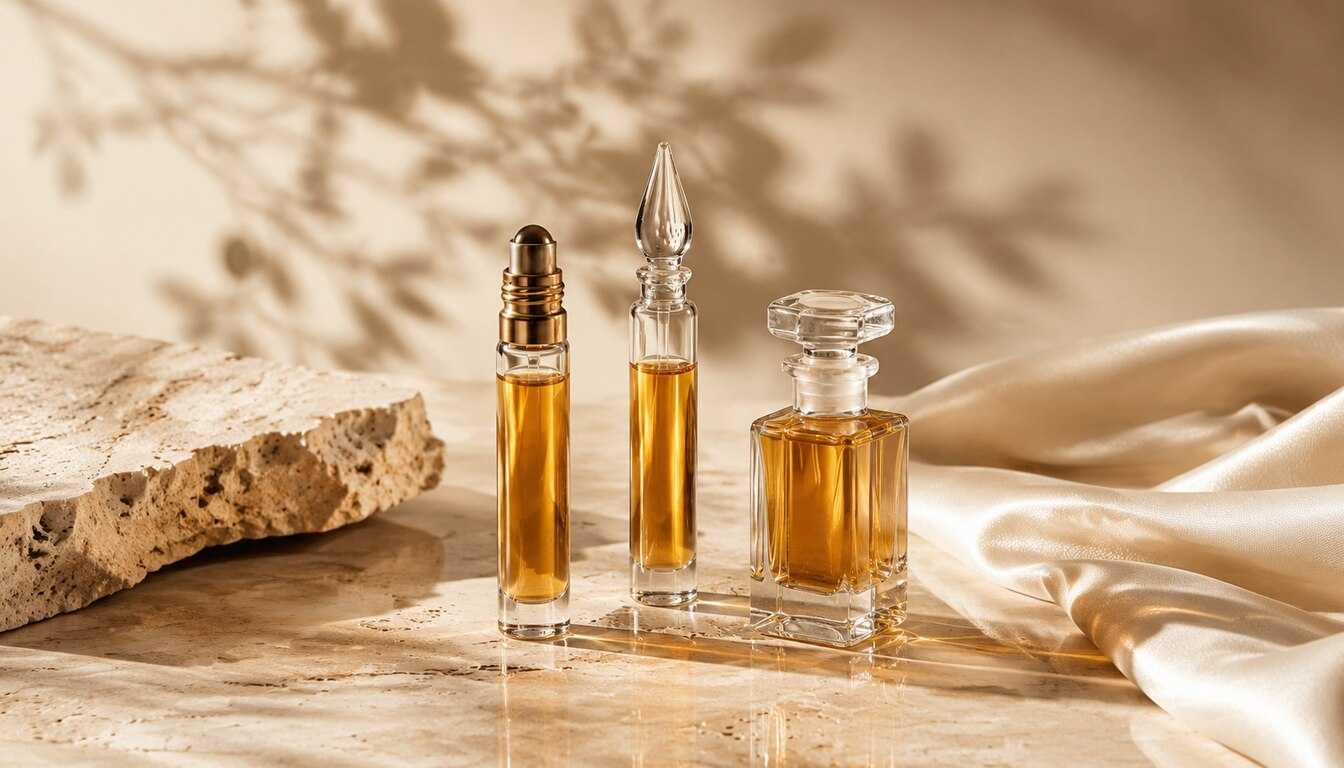
Perfume oil changes the scale of fragrance. A spray announces itself in the air; an oil is discovered closer to the body, warmed gradually by skin and movement. That intimacy can feel luxurious, but it is not automatically stronger, purer, more natural, or longer-lasting. The format is simply another way of constructing and wearing scent.
For women choosing a perfume oil, the useful questions are practical and aesthetic at once: Does the oil glide cleanly or feel sticky? Does the fragrance keep its shape after the first hour? Is the bottle designed for controlled application? Does the scent belong to your wardrobe, or does it only seem intriguing in the first five minutes?
This guide explains how perfume oils differ from eau de parfum, how to read the format and ingredient list, which scent styles work especially well in oil, how to apply and layer them, and which current oil formats offer three very different ways to wear fragrance close to skin.
What Is a Perfume Oil?
A perfume oil is a scented product in which fragrance materials are blended into a non-spray base. The carrier varies by formula. It may include plant-derived oils, emollients, esters, or other cosmetic ingredients, so the word oil should not be treated as a complete ingredient description.
Perfume oil is not the same thing as an essential oil. A finished perfume oil is a composed cosmetic product that may contain natural materials, synthetic aroma molecules, or both. It also differs from scented body oil, which is intended for broader application and body care.
Many roll-on perfume oils are alcohol-free, but the individual product page or ingredient list should confirm this. The same caution applies to claims such as natural, clean, hypoallergenic, or highly concentrated.
Why Perfume Oil Feels Different on Skin
I think about the format in terms of placement rather than a contest between weak and strong. A spray disperses fragrance over an area; a roll-on places it more locally. Neither action tells you exactly how the finished perfume will project or how many hours you will enjoy it. For me, the appeal of an oil begins with that deliberate, close application.
This can make oil feel private and deliberate. A roll-on at the wrists or collarbone is easy to control, discreet in shared spaces, and portable enough for travel. It also changes how a composition is perceived. Citrus may seem softer, woods more tactile, musk more intimate, and gourmand notes denser.
There are trade-offs. A perfume oil can last for hours yet project very little. A heavy base may stain pale fabric. Some formulas feel elegant and dry; others remain greasy. An oil marketed as “natural” can still contain sensitizing fragrance materials, while a carefully formulated synthetic-and-natural blend may be smoother and more stable. The label does not replace a skin test.
Perfume Oil vs Eau de Parfum
Perfume oil and Eau de Parfum can express the same fragrance idea differently. Formula, applicator, dose, and materials all influence the result.
| Feature | Perfume oil | Eau de Parfum |
|---|---|---|
| Application | Usually rolled or dabbed onto selected areas | Usually dispersed with a spray |
| Diffusion | Often more localized, depending on formula and dose | Spray distribution can create a broader opening |
| Portability | Small roll-ons are convenient for controlled application | Travel sprays and samples are also widely available |
| Longevity | Varies by formula, materials, skin, and application | Varies for the same reasons; concentration alone is not a complete prediction |
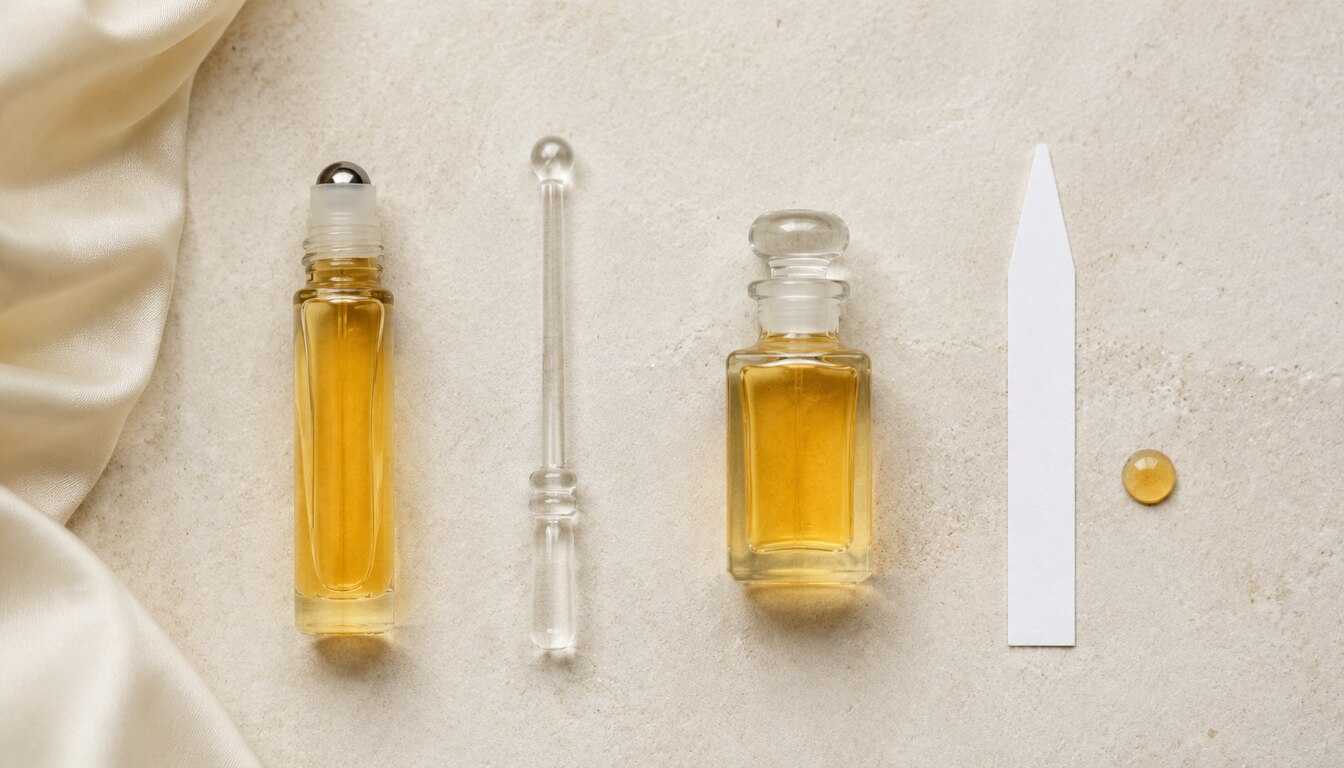
An oil can remain perceptible yet stay relatively close to the skin. An Eau de Parfum may open with more projection and then settle. Neither format is automatically better; choose the diffusion and development that suit you.
How to Choose the Right Perfume Oil
Start with the scent profile
Choose by notes and fragrance family before focusing on claims about strength. A woody-floral oil will create a different impression from a tropical coconut musk or a dark composition built around leather, patchouli, and rum. Familiar notes can provide a starting point, but the complete composition matters more than a single ingredient named on the box.
Check the exact format and ingredient list
Look for a product that its manufacturer explicitly calls perfume oil or roll-on perfumed oil. Body oil, hair perfume, fragrance mist, and essential-oil blends serve different purposes. Check the volume, applicator, directions, and current ingredient list.
Decide how much presence you want
A small roll-on works well for controlled application, travel, or close-range wear. It may be less suitable if the goal is a broad trail. Brand descriptions can help, but skin testing is more informative than treating the format as a performance promise.
Consider sensitivities
Oil-based does not mean irritation-free. The FDA guidance on fragrances in cosmetics notes that some people may be allergic or sensitive to fragrance ingredients and recommends checking ingredient information carefully. Follow the labeled directions and stop using a product if irritation develops.
Six Perfume-Oil Personalities
1. Clean skin musk
Musk, ambrette-style notes, iris, and pale woods suit the intimacy of oil. The effect is less a visible accessory than beautifully finished lining: quiet, close, and noticeable mainly when someone enters your space. This style works for offices, travel, and people who dislike a large scent trail.
2. Wood and incense
Sandalwood, cedar, hinoki, patchouli, vetiver, and incense become especially tactile in oil. The format can make wood feel polished rather than dry and smoke feel meditative rather than theatrical. It pairs naturally with knitwear, suede, dark denim, and the calm weight of cooler weather.
3. Warm amber and spice
Cardamom, clove, saffron, cinnamon, labdanum, benzoin, and amber materials gain density on skin. This is the evening wardrobe of perfume oil: rich but controlled, provided the formula does not collapse into sweetness. One or two small applications are often more elegant than tracing every pulse point.
4. Floral oil
Rose, jasmine, tuberose, orange blossom, and violet can feel more rounded and less airborne in an oil base. The flower is experienced as texture rather than bouquet. A floral oil can be romantic without becoming decorative, especially when grounded by musk, tea, or dry woods.
5. Gourmand oil
Vanilla, coconut, cocoa, honey, caramel, and lactonic notes become warm and enveloping. Oil makes gourmand perfume feel almost edible, so contrast matters. Tea, spice, salt, woods, or musk keep the composition from turning into a cosmetic dessert.
6. Green and aromatic oil
Tomato leaf, herbs, citrus peel, cannabis-style accords, mint, and tea can feel surprisingly sophisticated in oil. Their freshness is quieter than in a spray, but the leafy texture may last longer. This style suits someone who wants individuality without a sweet or conventionally floral signature.
| If you prefer… | Look for… | How the oil may wear |
|---|---|---|
| Discreet intimacy | Musk, iris, ambrette, soft woods | Close, smooth, skin-like |
| Grounded calm | Sandalwood, incense, hinoki, patchouli | Woody, meditative, tactile |
| Evening warmth | Amber, spice, tobacco, leather | Dense, sensual, controlled |
| Soft femininity | Rose, jasmine, orange blossom, musk | Floral, rounded, intimate |
| Comforting sweetness | Vanilla, coconut, tonka, milk notes | Warm, creamy, gourmand |
| Modern freshness | Tea, herbs, citrus, green leaves | Quietly fresh, distinctive |
Three Perfume Oils to Explore
Each product below is explicitly identified by its manufacturer as a perfume oil. Together, they illustrate three distinct scent directions and formula approaches.
1. Byredo Mojave Ghost Roll-On Perfumed Oil
Mojave Ghost Roll-On Perfumed Oil is a 7.5 ml alcohol-free roll-on that Byredo classifies as woody, genderless, and medium intensity. Ambrette opens the composition, followed by magnolia, sandalwood, and violet, with cedarwood, amber, and musks in the base.
This is the most airy woody-floral option in the group. The compact applicator and clearly disclosed format make it useful for someone who wants a recognizable fine-fragrance composition in a controlled roll-on rather than a spray.
2. NEST Balinese Coconut Perfume Oil
Balinese Coconut Perfume Oil combines creamy coconut, tropical tiare blossom, salted musk, and a solar frangipani accord. Its profile is warmer and more overtly tropical than Mojave Ghost, but the salted musk gives the composition another dimension beyond straightforward coconut sweetness.
Choose this direction for a creamy, solar scent rather than dry woods or dark spice. NEST offers more than one size, allowing a smaller first purchase.
3. MALIN+GOETZ Dark Rum Perfume Oil
Dark Rum Perfume Oil takes a deeper route. Bergamot and plum form the top, rum and leather shape the middle, and amber, patchouli, and milk compose the base. MALIN+GOETZ supplies a full ingredient list on the official product page rather than relying only on a note pyramid.
This profile suits someone looking for warmth and contrast: fruit against leather, brightness against rum, and patchouli against a creamy base. It is less floral than the other two examples and offers a useful counterpoint to the idea that perfume oils must always be soft musks or sweet vanilla blends.
How to Apply and Store Perfume Oil
Begin with the manufacturer’s directions because formulas vary. With a roll-on, a small amount on a recommended area is enough for an initial test. Let it settle before adding more.
Apply with clean hands and avoid the eyes, lips, broken skin, and areas excluded by the label. Test an unfamiliar formula on a small area. Keep the cap secure and store the bottle away from heat and direct sunlight—not baking in a car.
Can You Layer Perfume Oil with Eau de Parfum?
I would approach layering as I would adding an accessory: first decide what the composition is missing. A musky oil might suggest a softer setting for a floral spray, or a woody one a drier frame for sweetness. These are ideas to try, not formulas for a better perfume.
Start by wearing each fragrance alone. Then, following the directions for both products, compare a small combination with the original. A blotter can help you explore the scent pairing, although it will not reproduce the result on skin. Leave physical mixing inside the bottles out of the experiment.
Ask whether the combination gains something you actually want: contrast, softness, or a clearer sense of character. Shared notes are not enough. Two roses may simply become more insistent; tea beside vanilla may feel more interesting to you. Neither is an improvement until you prefer the result.
Do not treat oil as a guaranteed fix for a spray that fades sooner than you would like. It may change what you notice without extending the original fragrance. I would rather keep a beautifully balanced scent intact than bury it beneath an extra layer added only to make a promise about longevity.
Exploring IRFĒ in Eau de Parfum Format
Maison IRFĒ does not currently present the fragrances in its main collection as perfume oils. Readers who want to compare several spray compositions on skin can use the IRFĒ Discovery Set, which contains five 3 ml Eau de Parfums: Centifolia Rose, Saffron Leather, Smoldering Pepper, Marshmallow Musk, and Patchouli Forever Worn.
For a powdery gourmand musk, Marshmallow Musk Eau de Parfum combines Earl Grey tea, magnolia, and lavender with jasmine, iris, airy vanilla, woods, and powdery musk. It is an Eau de Parfum spray, not a perfume oil, and should be considered as a contrasting format rather than placed inside an oil ranking.
Building a Small Perfume-Oil Wardrobe
One oil does not need to cover every occasion. A useful three-piece wardrobe might include a clean musk for daytime, a warm wood or amber for evening, and a floral or green oil for moments when you want more character. Because the bottles are small and application is controlled, oils are well suited to rotation rather than allegiance to one oversized signature.
Think about texture in the same way you choose clothing. A musky oil belongs with cotton, silk, and quiet tailoring. A woody or incense oil has the weight of knitwear and suede. A floral oil can soften black or add polish to a simple dress. A gourmand oil works best when the rest of the presentation has restraint; sweetness needs line around it.
Travel is another advantage. A rollerball is easy to carry and reapply without filling a room. Still, check the closure and store it upright. A beautiful oil that migrates through a handbag is no longer an intimate luxury; it is an expensive lining treatment.
How to Judge Quality and Value
Price does not reveal concentration, material quality, or longevity. Look for a clear size, ingredient list, application method, and return policy. A brand should distinguish perfume oil from body oil and explain whether the product is a roll-on, dropper, or concentrated extract.
On skin, evaluate four things. First, does the carrier disappear cleanly or stay greasy? Second, does the fragrance develop, or remain a flat top-note impression? Third, is the drydown pleasant at close range? Fourth, does the bottle dispense enough product without flooding the skin?
Value is also about use. A 7 ml roll-on worn twice a week may be more sensible than a large spray admired from a distance. Conversely, someone who wants a visible trail may find an intimate oil frustrating no matter how refined it smells. The best format is the one that performs the job you actually need.
When Perfume Oil Is Not the Better Choice
Choose a spray if you want lift, diffusion, and an easy scent cloud over clothing. Choose oil if you prefer control, portability, and a closer effect. Neither is superior in every setting.
Pay attention to how the particular formula feels on you. An oil that remains uncomfortable or marks clothing is not improved by using more of it. Follow the directions, keep it off delicate fabrics unless explicitly suitable, and judge the amount and finish before adding another layer. More product is not a reliable route to the airy effect you may associate with a spray.
FAQs
1. Are perfume oils better than regular perfume for women?
Not automatically. I would choose an oil for its applicator, texture, and fragrance, not because oil is assumed to be stronger or longer-lasting. The finished formula determines how it wears.
2. Which perfume oils for women last the longest?
A list of notes cannot establish which perfume oil lasts longest. This guide does not contain a controlled longevity ranking. Compare the exact products on skin and record both their later presence and how much you still enjoy them.
3. How should I apply perfume oil for the best longevity?
Follow the directions for the exact oil and start with a small amount on a recommended area. Let it settle before applying more. No placement routine guarantees the same wear time for every formula.
4. Are perfume oils good for layering?
They can be, when you prefer the combination to each fragrance alone. Compare modest amounts and follow the directions. Compatible notes do not guarantee a pleasing result or a longer-lasting spray.
5. What makes a perfume oil worth wearing repeatedly?
The best ones feel smooth on skin, stay pleasant as they wear, keep a clear identity, and become something you genuinely want to reach for again rather than just admire once.
Final Thoughts
Perfume oil can be especially appealing for the way scent sits close to the skin and unfolds slowly, creating an intimate, lingering trail rather than a broad spray cloud. Some oils feel present for hours while remaining close to the wearer; others are lighter. The format itself does not guarantee greater purity or longer wear, but controlled application, tactile texture, portability and skin-close persistence are all part of its charm.
Choose by scent first and format second. Decide whether you want clean musk, polished wood, warm spice, flower, gourmand comfort, or green freshness. Then test how the oil feels, how it develops, and whether its projection suits your life. The right bottle should become part of the daily wardrobe, not a tiny object admired for being concentrated.
