


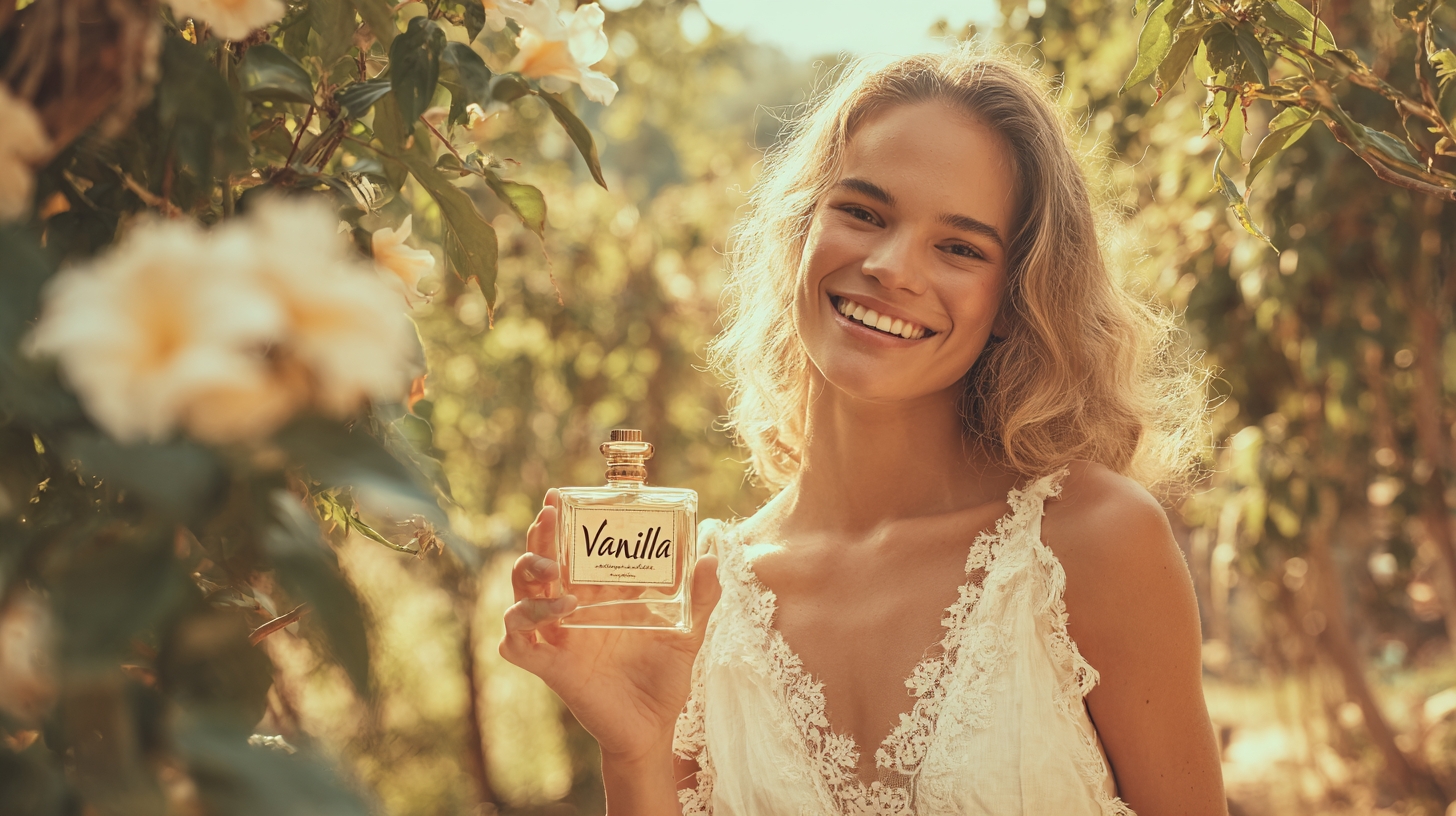
I would never choose a dress from the word silk alone. Silk can be crisp, fluid, almost transparent, or heavy enough to hold a sculptural shape. Vanilla deserves the same attention. It can bring a tender softness to perfume, but it can also sit against dark wood, aromatic herbs, incense, or leather. The interesting question is not simply whether you like vanilla. It is which version of sweetness feels like you.
My starting point is the character of the whole fragrance: its texture, its contrast, and the space it seems to occupy. A beautifully composed vanilla need not smell expensive in an obvious way. It should feel deliberate. You may want the pleasure of a gourmand, the softness of a powdery scent, or a darker composition in which vanilla is only the warm thread holding everything together.
This is a guide to those differences, rather than another ranking of bottles. For a named shopping shortlist, our selection of vanilla perfumes for women has a different purpose. Here, I want to help you recognise the style you are looking for before a beautiful bottle makes the decision for you.
What Does Vanilla Smell Like in Perfume?
Warm and sweet is the beginning of the answer, not the whole answer. Vanilla can suggest cream, a cured pod, a trace of dark wood, or the slightly dry comfort of powder. What surrounds it determines whether a perfume feels edible, floral, luminous, resinous, or smoky.
There is a material basis for this variety. The ingredient maker dsm-firmenich describes its Madagascan vanilla absolute through woody, leathery, and sweet facets. Its Tahitian vanilla extract has a different profile, with floral, creamy, and anisic aspects. These are descriptions of particular raw materials, not promises that every perfume bearing the word vanilla will smell that way.
A fragrance is a composition, not a jar of an ingredient. Even when two bottles list vanilla, the balance around it may be entirely different. One places sugar in the foreground. Another lets flowers lead. A third leaves enough bitterness or dryness to make the sweetness feel almost restrained.
For me, that last distinction matters more than the fashionable label on the box. A scent can be richly sweet and beautifully judged. It can also be restrained and rather dull. Neither sugar nor seriousness is a substitute for character.
Three Questions That Make Vanilla Easier to Choose
How edible do you want it to feel?
Imagine the difference between a vanilla dessert and a vanilla-scented room after the dessert has been cleared away. The first is immediate and delicious; the second is more suggestive. Decide which pleasure you actually want. Almond, caramel, and sugar descriptions can help identify an overtly gourmand direction. They do not tell you whether you will enjoy its sweetness for a whole afternoon.
There is no need to apologise for wanting a confectionery scent. The useful distinction is between sweetness you find pleasurable and sweetness you find tiring. Choose for that difference, not for an imaginary rule that a sophisticated woman must prefer something austere.
What texture attracts you?
Words such as creamy, powdery, airy, and resinous are useful ways of describing an impression. They are not interchangeable. A creamy perfume suggests roundness; a powdery one can feel softer and drier. An airy composition leaves a sense of space. A resinous one suggests greater density.
Try describing the fragrance without naming a food. Does it feel smooth, gauzy, polished, velvety, or dry? This little exercise often makes the choice clearer. You may discover that what you love is not intense vanilla at all, but the soft texture it lends to flowers or musk.
What provides the contrast?
My favourite question at this stage is simple: what interrupts the sweetness? It might be an aromatic lavender note, the lift of citrus, a woody edge, or a suggestion of smoke. The interruption gives you another reason to return to the scent.
Contrast need not be dramatic. A quiet floral detail may be enough. But when several samples seem equally sweet, identifying their differences is far more useful than repeatedly asking which smells nicest.
Six Ways to Read a Vanilla Fragrance
These are stylistic directions, not a league table. I have chosen the examples for their contrasting compositions: each gives you something different to consider. There is no reason that the richest, sweetest, or most expensive one should be your favourite.
Gourmand Vanilla: Enjoying the Sweetness
This is the direction to explore when you want the pleasure to be unmistakable. Think of sweetness as the principal fabric, rather than a decorative detail. The question becomes how that fabric is finished: with almond softness, a caramel accent, or a more powdered edge.
Bon Parfumeur 402 Guilty Vanilla offers a useful example. The house lists almond and icing sugar at the opening, vanilla and caramel with jasmine in the heart, then musk, benzoin, and sandalwood. That description gives a clear reason to investigate it when you want an openly gourmand composition.
I like the idea of setting this kind of sweetness against clean lines: a plain knit, a precise trouser, an uncomplicated dress. That is a suggestion about contrast, not a dress code. The pleasure is in allowing the perfume to supply the softness rather than asking every element of an outfit to make the same statement.
When sampling, ask whether you still welcome the edible quality after the initial delight. A fragrance you admire for a moment and a fragrance you want around you are not necessarily the same purchase.
Airy and Powdery Vanilla: Softness with Space
Here vanilla is less about dessert and more about atmosphere. The appeal lies in a composition that suggests softness without requiring a dense, sugary impression. Powdery and creamy can meet, but they need not become heavy.
In our own collection, IRFĒ Marshmallow Musk illustrates this approach. Its published composition places Earl Grey tea, magnolia petals, and lavender petals above jasmine, marshmallow cotton, and iris nectar. The base brings together fluffy woods, airy vanilla, and powdery musk. It is a gourmand-musk composition, not a single-note vanilla perfume.
The fashion association I would make is with a soft surface and a clear silhouette: a fine knit under a structured coat, or a fluid blouse with very little jewellery. The point is not to make sweetness disappear. It is to give it breathing room.
Look for the distinction between soft and faint when trying this direction. Soft describes an impression; it does not establish how far a perfume projects or how long it lasts on you. Our guide to vanilla and musk pairings explores that particular combination in more detail.
Aromatic Vanilla: Warmth with a Clear Edge
Someone who dislikes sugary perfume may still enjoy vanilla when an aromatic note gives the composition definition. This is a useful direction to consider before deciding that the entire vanilla family is too sweet.
The original Burberry Goddess Eau de Parfum is built around a trio of vanillas with lavender. That pairing supplies a clear point of comparison with a caramel-led gourmand. It does not mean Goddess is unsweetened, or that every version bearing the Goddess name is the same fragrance.
I think of aromatic contrast as the neat cuff on a softer garment. It gives the eye somewhere to stop. In fragrance, the equivalent question is whether you enjoy the herbal dimension as much as the warmth around it.
This also explains why a bright opening should not make the whole decision. Allow the sample to develop. You may love the first contrast but prefer another perfume once the vanilla becomes more prominent. For a specifically citrus-led variation, see our separate guide to vanilla and bergamot.
Floral Vanilla: Letting the Bouquet Lead
Vanilla does not always need the starring role. It may soften the outline of a floral composition while the flowers retain their identity. This is worth considering when you love rose or jasmine but want something warmer than a very crisp floral.
CHANEL ALLURE Eau de Toilette provides one reference: CHANEL describes mandarin, May rose, and vanilla within its floral-fresh-ambery character. That is a different proposition from buying a fragrance intended to make vanilla itself the central attraction.
The choice here is about emphasis. Ask which part of the composition you would miss if it were absent. When the answer is the flowers, a vanilla-led gourmand may not be what you need, however appealing its name.
For a wardrobe, I would place floral vanilla beside an evening blouse or a dress with movement rather than obvious embellishment. But it can be just as convincing with a simple shirt. Romance is a quality of the composition and the person wearing it, not an instruction to wear pink.
Woody and Spicy Vanilla: A Drier Frame
A woody or incense-led setting can make vanilla interesting to someone who wants warmth without an overt confectionery mood. Dryness and sweetness can coexist. Do not expect the word woody to erase vanilla; look instead for the balance between them.
Diptyque Eau Duelle Eau de Parfum names vanilla, pink peppercorn, cypriol, and incense. The house describes the spicy aspect of its Bourbon vanilla. This is a useful composition to study when you want a clearer contrast to sugar-led styles.
I would look for poise rather than force in this direction. A woody vanilla does not have to fill the room to feel complete. On a sample, notice whether the drier elements remain a pleasure once the initial novelty passes, or whether you find yourself wishing for a softer finish.
There is also a naming distinction worth keeping clear. Bourbon vanilla and a bourbon-whiskey impression are not interchangeable ideas. Our Bourbon vanilla guide separates the material description from boozy perfume styles.
Ambery and Smoky Vanilla: Depth Instead of Extra Sugar
For evening, depth interests me more than simply choosing a sweeter perfume. Resinous, woody, leathery, and smoky descriptions can lead you towards that depth, but they suggest different experiences. Decide which of them you genuinely enjoy.
Guerlain Spiritueuse Double Vanille is described by the house as woody-ambery, with vanilla beside jasmine, ylang-ylang, benzoin, cedar, and rum-like accents. It provides a reference for a richer, more layered setting, rather than a promise of straightforward sweetness.
Our IRFĒ Smoldering Pepper takes another route. Black pepper, saffron, and olibanum introduce labdanum, Indonesian patchouli, and cypriol, above a base of Bourbon vanilla, smoked leather, and oud. The house classifies it as Oud Spicy. Calling it simply a vanilla perfume would miss the point of the composition.
The useful comparison is not which is more luxurious. It is whether you want a vanilla-led composition with darker surroundings, or a dark, spicy fragrance with vanilla in its base. Those are two different intentions, and recognising the difference prevents an expensive mismatch.

Natural Vanilla, Vanilla Notes, and What the Label Actually Tells You
A vanilla note is a description of the fragrance experience; it is not a complete manufacturing disclosure. Seeing vanilla in a note list does not tell you the percentage used, the extraction method, or the balance of natural and manufactured materials.
Natural extracts can be complex, but complexity is not confined to a single category of ingredients. Givaudan’s description of Ultravanil, for example, shows that perfumers also work with manufactured materials designed to contribute particular vanillic effects. This is useful context, not a reason to judge a finished perfume by one unfamiliar ingredient name.
My preference is to judge the finished idea before rewarding the vocabulary around it. A beautiful natural-material story does not oblige you to love the fragrance. Nor should the presence of an aroma molecule automatically disqualify a composition that feels wonderfully right.
Keep three distinctions in mind: a botanical variety is not a complete scent profile; a note list is not the ingredient list; and the size of a bottle is not its performance on skin. They answer different questions. Confusing them makes fragrance shopping much harder than it needs to be.
How to Choose Without Bringing Home Five Versions of the Same Sweetness
Choose contrasts before choosing favourites
Begin with a small group that actually differs. I would compare an openly gourmand vanilla, an airy or floral interpretation, and a drier woody composition. Three contrasting samples tell you more about your preference than three nearly identical suggestions from the same list.
Give each a few descriptive words that mean something to you. “Creamy, rounded, too edible” is more useful than “nice.” So is “dry opening, warm finish, wants another wear.” You are building a language for your own taste, not trying to pass a perfume examination.
Separate the opening from the finish
Look at a fragrance at more than one moment. The opening may provide the attraction; the later impression will tell you whether you want a longer acquaintance. Keep the sample rather than buying immediately because the first few minutes were beautiful.
Do not turn this into a competition for the greatest number of hours. When persistence is the main requirement, test the exact fragrance and concentration yourself rather than borrowing a wear-time promise from another formula. A large bottle lasting several months and a fragrance remaining detectable for several hours are entirely different measurements.
Try it in the life you actually lead
A perfume chosen for dinner may spend most of its time beside a laptop. Be honest about where you will wear it. Would you enjoy this sweetness during a commute, in a shared room, or while having a meal? Would you reach for it when nobody else was going to comment?
My suggestion is to give a promising sample an ordinary day. The setting need not be romantic. Sometimes the best decision is made while answering emails in a plain shirt, when the glamour of the counter has disappeared and only the perfume remains.
Our guide to choosing and testing perfume samples provides a fuller method. For this decision, the essential point is simple: choose a fragrance whose character you want to live with, not only one whose opening you want to photograph.
Choose the exact bottle, not only the familiar name
Once you have a direction, check the full product name and concentration before ordering a sample. Eau de Toilette, Eau de Parfum, and an Intense version may belong to the same fragrance family without making the same promise. Read the notes for the version you are actually buying, rather than borrowing a description from another bottle.
CHANEL, for example, describes COCO MADEMOISELLE Eau de Toilette through grapefruit, rose, jasmine, and a fruity lychee note, while its Eau de Parfum Intense emphasises patchouli and a tonka-vanilla accord. The name connects them; it does not make their descriptions interchangeable.
Be equally precise about what you want from the purchase. Is this a daytime signature, a small evening indulgence, or a second fragrance that should feel different from one you already own? A beautifully judged addition fills a real gap. It does not need to be a larger, louder version of your existing favourite.
For a gift, that distinction becomes especially useful. “She likes vanilla” is a beginning, but knowing whether she prefers edible sweetness, powdery florals, or smoky woods is far more revealing. An unfamiliar full-size bottle is a confident gesture; a thoughtfully chosen sample is sometimes the more attentive one.
Wearing Vanilla with Intention
I would not assign vanilla a season or a single kind of woman. What matters is how much emphasis it should have in a particular look. An airy vanilla can supply softness to sharp tailoring. A dark vanilla can give an uncomplicated evening outfit a more intimate centre. A joyful gourmand can be the deliberately playful part of an otherwise restrained wardrobe.
These are invitations, not rules. You do not need suede for a smoky perfume or cashmere for a creamy one. The useful question is whether the fragrance repeats everything the clothes already say, or adds an appealing difference.
The same restraint applies to layering. Before adding another perfume, ask what is missing. More vanilla may simply give you more sweetness. An aromatic or woody contrast may be more interesting, but two appealing fragrances are not obliged to make an appealing pair. A small comparison is more useful than an elaborate ritual.
A signature does not require exclusivity, either. Two well-chosen vanillas with genuinely different characters can make more sense than one bottle expected to cover every mood. I would rather have a clear reason for each fragrance than a shelf full of variations bought because they all promised warmth.
The Vanilla I Would Look For
I am less interested in a vanilla that promises universal approval than one with a clear point of view. It might be tender, exuberant, dry, or dark. What matters is that the sweetness belongs to the composition rather than covering up its lack of distinction.
Before choosing, finish this sentence: “I want vanilla, but I also want…” Flowers, aromatic freshness, powdery softness, a woody edge, or smoke will each take you somewhere different. That second thought is often where your own style begins.
Vanilla is not a shortcut to sensuality or a guarantee of elegance. It is a wonderfully expressive possibility. The right interpretation should leave you feeling more like yourself, not more like everybody else’s idea of an irresistible perfume.
