


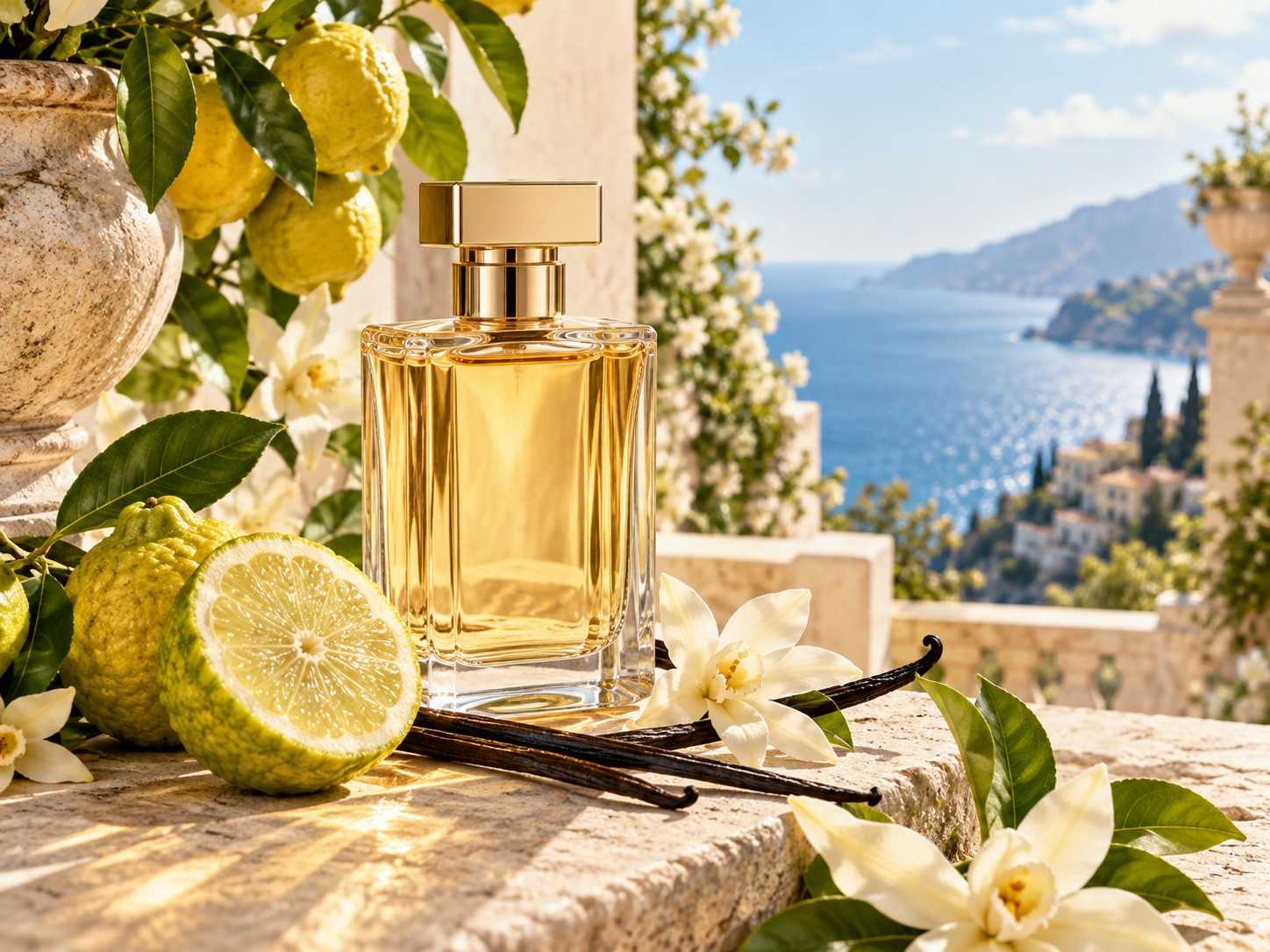
A vanilla and bergamot perfume offers warmth with an open window. Bergamot brings a bright, gently bitter citrus impression; vanilla supplies a softer, more enveloping finish. The pleasure is in the space between them. A fragrance can feel dressed without becoming heavy, sweet without losing its outline.
That contrast is especially useful when a conventional gourmand feels too dense but a crisp citrus cologne leaves you wanting more. Vanilla and bergamot do not have to remain equally prominent throughout the wear. Sometimes the citrus is an entrance, sometimes a recurring brightness, while the vanilla becomes clearer as the composition settles.
The right choice depends on what you want to happen after that opening. This guide compares five distinct directions, from classical floral amber to a citrus gourmand and a darker spicy vanilla. It is a guide to the pairing, not another universal best-vanilla ranking.
Why This Pairing Works as a Style Choice
Bergamot has more character than a simple lemon-like freshness. Its citrus impression can also feel floral, green or gently bitter. Vanilla can be creamy, powdery, balsamic or sweet. Together they can create tension between light and warmth, rather than forcing you to choose one or the other.
The same contrast appears in clothing: a crisp shirt under a soft knit, an open neckline against a structured coat, pale silk beside something dark. Fragrance can hold those oppositions without spelling them out. The citrus does not need to dominate forever for the whole composition to feel more open.
For readers interested in the ingredient itself, our bergamot perfume guide explores its wider role. Here, the question is more specific: what happens when that brightness meets vanilla, and which version makes sense to wear?

Vanilla and Bergamot: Five Different Balances
| Style | What creates the contrast | What to notice when sampling |
|---|---|---|
| Classical floral amber | Citrus above flowers, balsamic warmth and vanilla | Whether you enjoy the transition into a richer base |
| Citrus gourmand | Bergamot or other citrus against caramel and vanilla | How edible the fragrance becomes after the opening |
| Spicy woody vanilla | Bergamot, ginger or pepper above woods and vanilla | Whether the spice supplies welcome tension or too much sharpness |
| Floral vanilla | A bright opening around jasmine and warm vanilla | Whether the flower or the sweetness becomes the main subject |
| Resinous amber with citrus lift | Bergamot above balsams, spice and a vanilla base | Whether the final texture feels luminous or too dense for your taste |
A table can narrow the shortlist, but it cannot substitute for a sample. In particular, a listed bergamot note does not tell you how long the citrus effect will remain. Nor does a vanilla base prove that the perfume will smell like icing. The names establish ingredients in the conversation; balance determines the result.
Five Perfumes That Put the Contrast Into Focus
Each selection below has bergamot and vanilla in the brand’s published account of the fragrance. The styling interpretations are editorial readings of those descriptions, not claims that the Maison independently tested every bottle for a specified number of hours.
Guerlain Shalimar Eau de Parfum: citrus before the depth
Guerlain Shalimar Eau de Parfum places bergamot before a floral heart of iris, jasmine and rose, followed by vanilla, balsamic notes and tonka. It is a reference for understanding that citrus and vanilla can belong to a much larger composition.
The interest is not a static blend of two notes. It is the progression from brightness into something more enveloping. Read the floral heart as the transition that makes the journey feel composed, rather than an abrupt change from cologne to confectionery.
Stylistically, this is the direction for a deliberate silhouette and an appreciation of contrast. It need not be saved for formal clothes, but it does ask you to enjoy the fuller base as much as the opening.
The deciding question: does that evolution feel compelling, or are you really looking for the citrus to remain the principal subject? Shalimar should not be judged as a light bergamot cologne simply because bergamot makes the introduction.
Xerjoff Lira: citrus and caramel with a floral-spiced middle
Xerjoff Lira lists blood orange, lavender and bergamot in the opening; cinnamon, jasmine and rose in the heart; caramel, musk and vanilla in the base. The gourmand direction is explicit, but the opening and heart offer more detail than sweetness alone.
For a wearer drawn to playful warmth, this is the contrast to investigate: a brighter entrance leading toward a more edible finish. The aromatic and floral elements make it worth comparing with a simpler caramel-vanilla fragrance rather than assuming the two will feel the same.
The mood can suit a light-colored coat, an unexpected accessory or a day when restraint in clothing leaves room for a more generous perfume. That is a styling possibility, not a rule that gourmands belong to one age or occasion.
The deciding question: do you want caramel to remain part of the character? Someone seeking a dry, barely sweet bergamot-vanilla should not choose Lira and hope the gourmand base will politely leave.
Nishane ANI: vanilla with a sharper, spiced outline
The original Nishane ANI combines bergamot, green notes, blue ginger and pink pepper with a heart including blackcurrant, rose and cardamom. Vanilla appears in a base with woods, benzoin, musk and other warm notes. This entry concerns ANI, not ANI X.
It is a useful alternative when the attraction to vanilla is warmth rather than dessert. Ginger, pepper and cardamom establish a different line of contrast from Lira’s caramel. The interest lies in whether that sharper framework keeps the vanilla engaging for you as the fragrance develops.
Imagine a more architectural look: clean proportions, a dark jacket, one soft element rather than softness everywhere. The comparison is about texture and tension, not a promise that the scent will be subtle.
The deciding question: does the spiced opening make the vanilla more interesting, or does it distract from the softness you wanted? Judge the complete movement, not one agreeable note singled out from the list.
Valentino Donna Born in Roma Intense: a brighter frame for floral vanilla
Valentino Donna Born in Roma Intense describes vanilla Bourbon lifted by bergamot and blackcurrant, a jasmine heart and benzoin warmth. The exact version matters: the notes of Intense should not be silently substituted for those of the original Donna Born in Roma.
This is a floral-vanilla direction with a more expansive idea of femininity than a minimal skin scent. Jasmine supplies a clear floral subject, while the brighter notes keep the composition from being introduced as vanilla alone.
It is a direction to consider beside evening tailoring, a clean dress or a simple outfit that can carry a more expressive fragrance. The attraction should be the meeting of flower and vanilla, not merely the word Intense on the label.
The deciding question: do you enjoy jasmine taking up space in the composition? A jasmine-vanilla perfume may be exactly right, but it is not interchangeable with a citrus-led vanilla or a quiet musky one.
IRFĒ My St. Moritz Lakeside Bliss: citrus over a textured amber
IRFĒ My St. Moritz Lakeside Bliss opens with bergamot, mandarin and aromatic notes, then moves into rose, cocoa and spice. Its base includes labdanum, frankincense, patchouli, vanilla and balsamic materials. The Maison describes its family as Sensual Luminous Amber.
This is not a two-note vanilla-bergamot perfume. It belongs here because the two notes sit on opposite sides of a more textured composition. The citrus creates an opening; cocoa, flowers and resins give the warmth a different center of gravity from a caramel gourmand.
For an editorial reading, think of the contrast between a cool exterior and a warmer interior. Soft knitwear and polished outerwear offer a useful wardrobe parallel, without turning the perfume into a literal scent of snow, a lake or a particular destination.
The deciding question: are you drawn to the whole amber structure, including cocoa, spices and resins? Readers seeking almost transparent citrus should not choose only from the first line of the note list.
How to Choose Between These Directions
Start with sweetness. There is a difference between warmth that suggests vanilla and an unmistakably gourmand finish. Lira’s caramel gives you one reference point; the resinous or spiced examples give you others. Choose the level of edible character you enjoy rather than treating dryness as automatically more sophisticated.
Then decide what should occupy the middle. A floral heart can keep the transition graceful; ginger and pepper give a more angular effect; cocoa and balsams introduce another kind of warmth. Many disappointing purchases happen because the opening is attractive but the heart is not what the wearer wants.
Finally, decide how much complexity you need. Not every day calls for a dramatic progression. A simpler vanilla and musk composition may be more useful when the goal is softness rather than contrast. A broader vanilla fragrance selection can help you compare that choice with other styles.
Bergamot in the Opening Does Not Mean Citrus All Day
The citrus opening may be what first attracts you, while the eventual base is what accompanies most of the wear. Make room for both in your decision. A fragrance can be successful at this contrast even when bergamot is no longer the most obvious note later.
During sampling, ask whether you still enjoy the scent after the freshness recedes. Does the vanilla feel more elegant, more sugary, more powdery or more resinous than expected? Does the balance improve when you stop looking for the opening to return?
Equally, do not excuse a disappointing drydown simply because the first spray was beautiful. The fragrance you buy is the entire development. A bright entrance is not a contractual promise of a bright afternoon.
Vanilla, Bourbon Vanilla and the Product Name
Vanilla is a broad scent idea; Bourbon vanilla is a more specific material designation used in some fragrance descriptions. Neither automatically means a whiskey-like perfume. Our Bourbon vanilla guide separates the material, product names and deliberately boozy accords.
The same discipline applies to the phrase vanilla bergamot. It describes a relationship, not one standard formula or a single IRFĒ product. Use the complete name when comparing samples and check whether the brand actually lists both notes. A tea accord or a general “citrus” description should not be treated as proof of a separately disclosed bergamot ingredient.
Layering Without Flattening the Fragrance
Layering a citrus-led perfume with vanilla can be enjoyable, but a finished composition and a home combination are not the same thing. The named perfumes above have supporting notes that connect the opening, heart and base. Spraying a very sweet vanilla over a bright cologne does not guarantee a similarly integrated result.
Wear each product alone first. Then try a restrained combination on separate areas of skin and compare it with an unlayered wear. Keep the bottles separate and use finished perfumes as intended; there is no need to add raw citrus oils or kitchen vanilla to them.
Most importantly, identify the problem you are solving. A citrus fragrance that needs a little warmth is one thing. A complex amber that already contains vanilla may need no additional sweetness at all. A successful layering decision leaves the contrast visible instead of filling every gap with another note.
A More Useful Way to Sample
Choose two different structures rather than five versions of the same sweet idea. A citrus gourmand against a spiced vanilla will teach you more about your preferences than two similar bottles sampled in a hurry.
Record a few impressions at the opening, after it settles and later in the day: brightness, sweetness, floral presence, powder, woods and the size of the scent trail. Keep the vocabulary your own. There is no prize for finding every note the brand lists.
Then test the more promising fragrance in the setting where you plan to wear it. Does it remain comfortable in a shared room? Does it suit a day moving between indoors and outdoors? Those answers have more practical value than a stranger’s universal claim that the perfume lasts a specific number of hours.
Frequently Asked Questions
What does vanilla bergamot perfume smell like?
It combines a bright citrus impression with warmer vanilla, but supporting notes determine the style. The result can be floral, gourmand, spicy, woody or resinous rather than simply a sweet citrus scent.
Is the combination always sweet?
No. Vanilla can bring softness while woods, spice, incense or other materials create a drier outline. Conversely, caramel and other gourmand effects can make sweetness central. Read the whole composition.
Is there an IRFĒ vanilla bergamot perfume?
My St. Moritz Lakeside Bliss lists bergamot in the opening and vanilla in an amber base. It is the relevant named IRFĒ example here, rather than a separate product called Vanilla Bergamot.
Can this style be worn in warm weather?
Some interpretations may feel comfortable, while sweeter or more resinous ones may be too enveloping for your taste. The presence of bergamot alone does not make a fragrance a light summer cologne.
Does the vanilla make the bergamot last longer?
A longer-lasting vanilla impression is not evidence that the bergamot itself remains equally prominent. Evaluate the overall development and separate the persistence of the base from the brightness of the opening.
Keep the Light, Choose the Warmth
The beauty of vanilla and bergamot is not a compromise between fresh and sweet. It is the possibility of both having a clear role. Choose the opening that attracts you, then be just as demanding of what follows. The right perfume keeps its sense of proportion even after the first bright gesture has passed.
Editorial disclosure: IRFĒ publishes this guide and sells My St. Moritz Lakeside Bliss. The linked makers’ descriptions support the named notes and product versions. Wardrobe associations and selection advice are editorial interpretations, not independent wear-test results or performance guarantees.
