


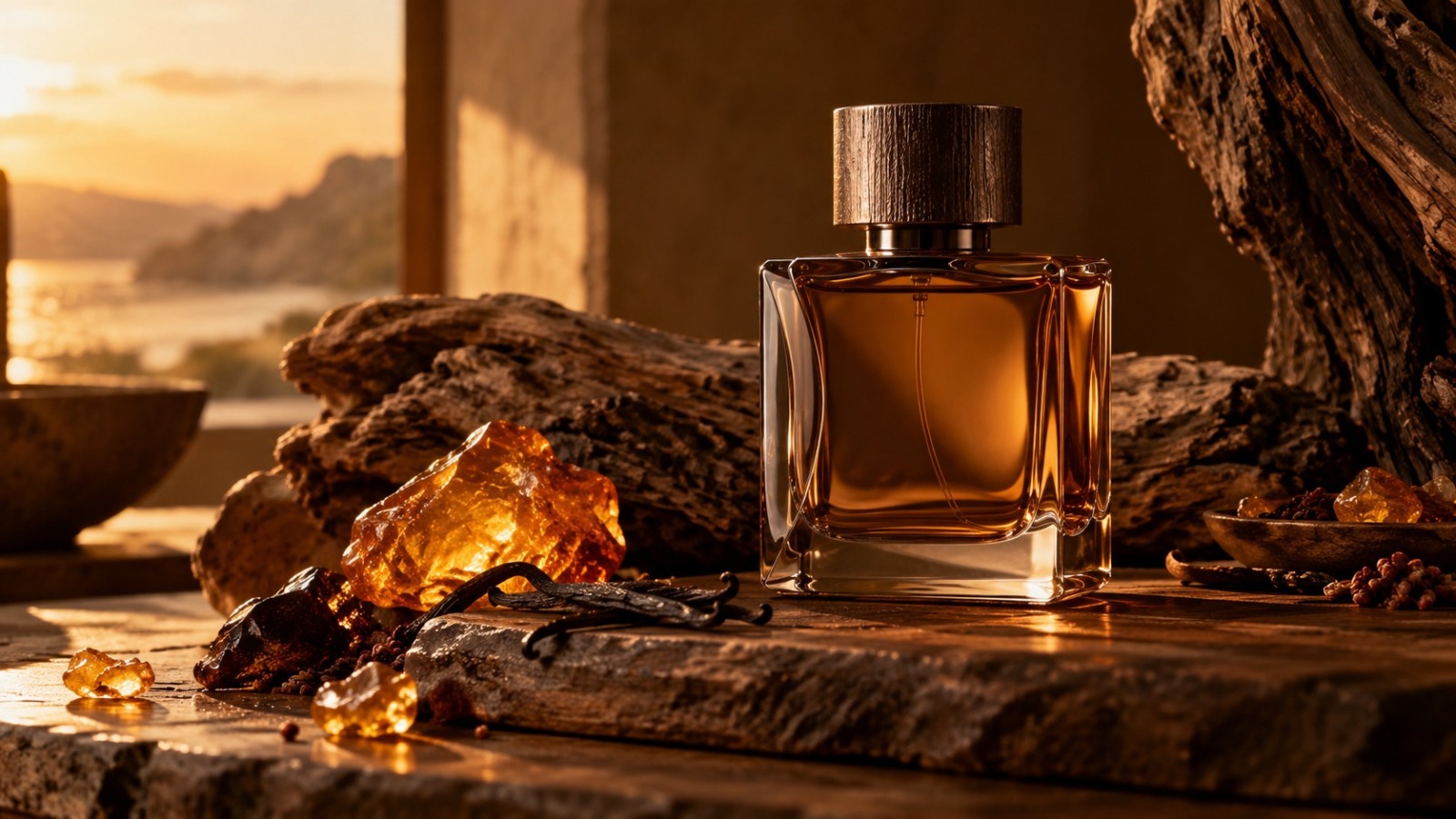
Amber wood perfume combines two ideas that can vary dramatically from one formula to another. “Amber” in modern perfumery is usually an accord rather than the scent of fossilized amber, while “woods” may mean creamy sandalwood, dry cedar, smoky guaiac, earthy vetiver, dark oud, or contemporary woody aroma materials. The result can be soft and polished, sweet and enveloping, or dry, smoky, and architectural.
This guide explains how the amber-wood accord works, how to recognize its main styles, and how to choose one without relying on vague labels such as “warm,” “luxurious,” or “unisex.”
What Does Amber Wood Smell Like?
At its most recognizable, amber wood smells warm, resinous, and woody. But the balance between those elements determines the personality of the perfume.
- Amber brings warmth: vanilla, labdanum, benzoin, resins, musks, and balsamic materials may create sweetness, glow, or depth.
- Wood brings structure: cedar can feel dry and clean; sandalwood creamy; oud dark and resinous; vetiver earthy and crisp.
- Spice adds movement: saffron, pepper, cinnamon, or cardamom can sharpen the accord.
- Musk changes the texture: clean musk makes it smoother and more diffusive; powdery musk makes it softer.
Two bottles labeled “amber wood” may therefore share almost nothing beyond a general sense of warmth and structure.
Amber Is an Accord, Not a Single Raw Material
In a perfume note list, amber generally describes an artistic construction. Traditional amber effects often combine a resinous material such as labdanum with vanilla or vanillic warmth and balsamic notes. Modern amber can also be clean, mineral, woody, musky, or almost transparent.
This matters when shopping. An amber perfume may smell sweet and plush, but it can also be dry and radiant. Read the surrounding notes and test the drydown. Our broader amber perfume guide explores the family in more detail.
How Different Woods Change the Accord
| Wood effect | Typical character | What it does to amber |
|---|---|---|
| Sandalwood | Creamy, smooth, softly milky, warm | Rounds amber and makes it feel tactile |
| Cedarwood | Dry, pencil-like, clean, structured | Reduces sweetness and gives a tailored outline |
| Oud | Dark, resinous, woody, sometimes smoky or leathery | Adds density, drama, and depth |
| Vetiver | Earthy, rooty, grassy, dry | Makes amber feel less plush and more grounded |
| Guaiac or smoky woods | Warm smoke, char, polished wood | Creates a glowing, fireside effect |
| Modern woody ambers | Radiant, dry, diffusive, sometimes mineral | Increases projection and creates a cleaner silhouette |
If you are especially interested in the differences between creamy and dry woods, compare the guides to sandalwood perfume and cedarwood perfume.
Five Main Amber Wood Perfume Styles
1. Creamy amber wood
Sandalwood, vanilla, musk, and soft resins create a smooth, enveloping texture. This style often feels intimate and polished rather than loud. It is a good starting point for people who like warm scents but dislike smoke or sharp spice.
2. Dry polished woods
Cedar, vetiver, pale musk, and restrained amber make the perfume feel tailored. Sweetness stays in the background. These compositions work well in professional settings and across seasons.
3. Spicy amber wood
Pepper, saffron, cinnamon, or cardamom add tension. The perfume may feel warmer and more energetic, especially when paired with leather or patchouli. This style often has a stronger presence.
4. Smoky or leathery amber wood
Oud, incense, cypriol, tobacco, leather, or charred woods create a darker effect. These fragrances can be beautiful in cool weather but should be tested carefully indoors.
5. Transparent woody amber
Modern woody materials and clean musk can produce a dry, radiant scent with very little sweetness. Some people find this sleek and contemporary; others experience it as sharp or abstract. Skin testing is essential.
Amber Wood Versus Similar Fragrance Styles
| Style | Main difference |
|---|---|
| Amber musk | Softer and more skin-like; wood may be secondary. |
| Amber vanilla | Sweeter and more gourmand; the vanilla effect is clearer. |
| Woody oud | Darker and more resinous; amber may serve mainly as warmth. |
| Leather amber | Drier, more tactile, and often more assertive. |
| Woody musk | Cleaner and less balsamic; may feel more transparent. |
Knowing the distinction helps prevent a common mistake: buying “amber wood” expecting a sweet cozy perfume and receiving something dry, mineral, or smoky.
How to Choose an Amber Wood Perfume
- Choose the wood first. Sandalwood usually suggests creaminess; cedar suggests dryness; oud suggests depth.
- Check the source of sweetness. Vanilla and benzoin create a different effect from clean musk or luminous woody amber.
- Look for texture words. Creamy, powdery, smoky, polished, mineral, and leathery are more useful than “luxurious.”
- Consider projection. Some modern woody ambers expand strongly even when the perfume does not smell conventionally heavy.
- Test for at least several hours. The opening may be spicy or bright, while the true amber-wood character appears later.
- Wear it in the intended setting. A dramatic evening scent may feel too dense at a desk; a transparent woody amber may disappear outdoors.
Season, Occasion, and Wardrobe
Amber wood is often associated with autumn and winter, but lighter versions can work year-round. A dry cedar-musky perfume may suit warm weather, while a dense oud-vanilla accord is usually more comfortable in cool air.
| Setting | Best direction |
|---|---|
| Office or daytime | Dry cedar, clean musk, restrained amber |
| Quiet evening | Creamy sandalwood, soft vanilla, skin musk |
| Formal event | Polished woods, saffron, leather, controlled projection |
| Cold-weather statement | Oud, smoke, labdanum, patchouli, dark spice |
| Warm weather | Transparent woods, citrus lift, pale amber |
Amber Wood in Maison IRFĒ Fragrances
Two Maison IRFĒ fragrances demonstrate different sides of the idea.
Saffron Leather uses a bright opening of bergamot, cinnamon, petitgrain, and cassis, followed by saffron, cistus, burnt rose, and violet. Its base of raw leather, sandalwood album, and Atlas cedar creates a dry, tailored amber-wood impression with a leathery edge.
Smoldering Pepper is darker. Black pepper, saffron, and olibanum lead into labdanum, patchouli, and cypriol, with bourbon vanilla, smoked leather, and oud in the base. Here, amber warmth supports spice, smoke, and resinous wood.
The Maison IRFĒ Discovery Set makes it possible to compare these structures on skin alongside softer musky, rose, and patchouli-centered compositions.
Common Problems with Amber Wood Perfumes
- Too sweet: look for cedar, vetiver, pepper, or leather rather than more vanilla.
- Too dry or sharp: choose sandalwood, musk, benzoin, or a floral heart.
- Too smoky: avoid heavy oud, cypriol, tobacco, and incense combinations.
- Too generic: seek a clear contrast, such as citrus against woods or floral notes against leather.
- Too powerful: reduce sprays and test the scent at normal conversational distance.
How to Read an Amber Wood Note List
Begin by separating the opening from the structural base. Citrus and pepper may create the first ten minutes, but sandalwood, cedar, labdanum, musk, leather, patchouli, or oud usually determine the lasting character. Then look for the material that is likely to control sweetness. Vanilla, tonka, and benzoin suggest warmth; cedar, vetiver, leather, and incense suggest dryness.
Marketing names such as “golden woods,” “cashmere amber,” or “velvet oud” are not standardized ingredients. Treat them as descriptions of texture, then verify the impression on skin. A formula can also list many woods while smelling primarily of one powerful modern woody material.
A Simple Two-Wrist Comparison
To learn the category quickly, test one creamy amber wood on one wrist and one dry or smoky version on the other. Use the same number of sprays and compare them after thirty minutes, two hours, and the end of the day. Note four things: sweetness, dryness, projection, and the final wood texture. This controlled comparison is more informative than smelling six bottles rapidly on paper.
When Amber Wood Feels Overwhelming
If the perfume fills the room, do not immediately assume the formula is poor. First reduce application and test away from the neck, where constant exposure can cause nose fatigue. If the scent remains scratchy or tiring at one spray, choose a softer sandalwood-musk structure or a formula with more floral and citrus space.
Frequently Asked Questions
Is amber wood a natural ingredient?
It is usually the name of an accord or fragrance style. Individual natural and synthetic materials may be used to create the amber and woody effects.
Is amber wood perfume sweet?
It can be, but not always. Cedar, vetiver, leather, smoke, and modern woody materials can make it very dry.
Is amber wood masculine or feminine?
The accord is naturally adaptable. Creamy, floral, and musky versions may feel softer; smoky, leathery, or dry versions may feel more severe, but anyone can wear either style.
Does amber wood last a long time?
Many amber-wood compositions use persistent base materials, but longevity still depends on formula, concentration, skin, and climate.
What is the best way to test it?
Use one or two sprays on skin, wait through the opening, and evaluate sweetness, dryness, projection, and the final woody texture after several hours.
When comparing samples, write down the drydown rather than the opening. Amber wood often reveals its true balance only after the brighter notes recede.
Final Takeaway
Amber wood is a framework, not one fixed smell. Identify the wood, the kind of amber warmth, and the level of smoke or sweetness. Once those three variables are clear, the category becomes much easier to navigate and far less dependent on vague marketing language.
