


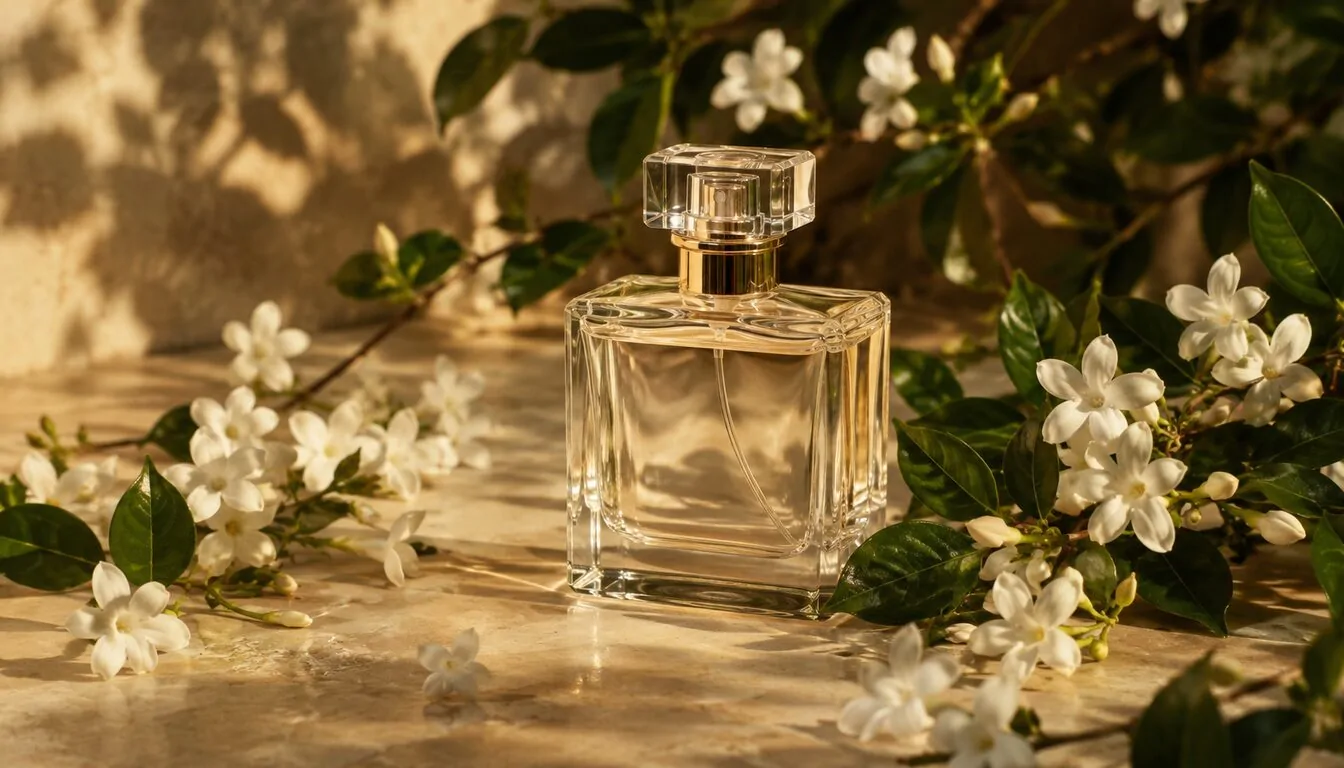
Jasmine is the white flower that refuses to stay in one mood. It can be luminous and almost green, creamy and narcotic, warm as skin, or dark enough to suggest tea, leather, and night-blooming petals. In perfume, jasmine often supplies the body of a composition: the point where a bright opening becomes sensual and a woody or musky base begins to feel alive.
That complexity is why a jasmine perfume can be mistaken for several different things. One may feel polished and clean, another indolic and voluptuous, another airy enough to sit beneath citrus and tea. The flower’s species matters, but so do extraction, dosage, and everything placed around it.
This guide explains what jasmine smells like, how grandiflorum and sambac differ, the main styles jasmine creates, how to read a note list, and how to choose a perfume that feels expressive rather than merely floral.
What Does Jasmine Smell Like in Perfume?
Jasmine belongs to the white-floral vocabulary of perfumery, yet its profile is more complex than “sweet flowers.” Depending on the material and composition, it may suggest:
- Fresh petals: a bright, soft floral impression.
- Green nuances: stems, leaves, or a slightly crisp quality.
- Fruity and orange-blossom-like nuances: facets documented in professional grandiflorum and sambac material profiles.
- Creaminess: a rounded texture that can make a floral accord feel fuller.
- Animalic depth: a warm, skin-like facet that gives some jasmine materials their sensual character.
Not every jasmine fragrance displays all of these facets. In a light formula, jasmine may work as radiance rather than as an obvious flower. In a dense floral composition, it can add volume and richness. With musk, vanilla, or woods, it may feel softer and warmer; with citrus, tea, or aromatic notes, it may read as clearer and more lifted.
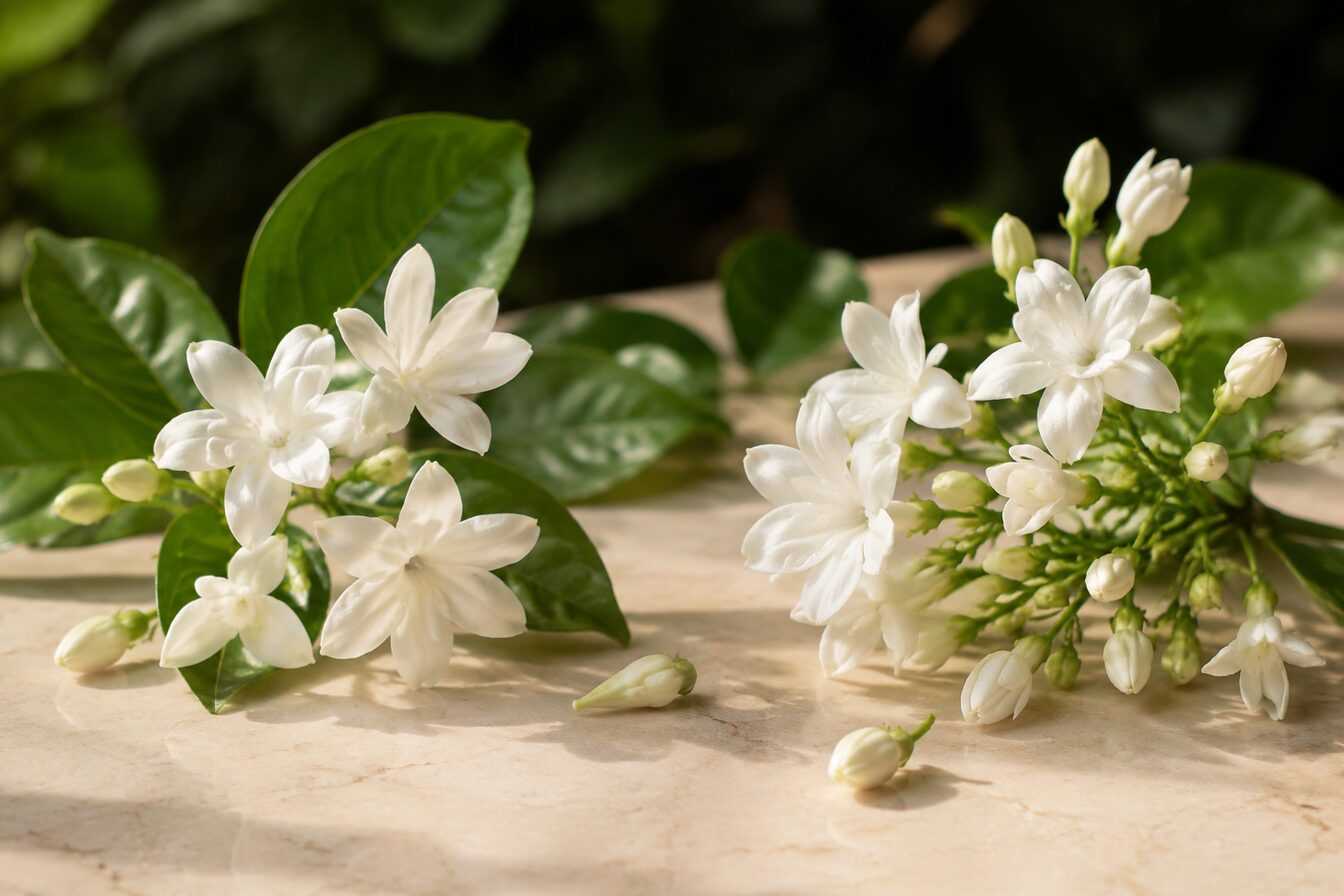
The Two Faces of Jasmine: Light and Shadow
Jasmine’s beauty comes from contradiction. The flower can suggest sunlight, fresh petals, and polished white fabric, yet it also carries warmer, more animalic facets. Perfumers value that tension because it prevents a floral composition from becoming flat. A trace of green or indolic darkness makes the brightness more convincing.
In fashion terms, jasmine is not lace alone. It is lace against skin, white silk under a black coat, or a clean flower placed beside something slightly dangerous. The best jasmine perfumes understand this balance. They may emphasize refinement, sensuality, or freshness, but they rarely erase the flower’s depth completely.
If you dislike “heady white florals,” do not assume jasmine is off-limits. Look for citrus, tea, musk, or pale woods. If you want the full bloom, follow jasmine toward tuberose, orange blossom, ylang-ylang, amber, or spice. The same material can move from a white shirt to an evening gown depending on its company.
Jasmine Grandiflorum and Jasmine Sambac
Two names appear frequently in discussions of fine fragrance: Jasminum grandiflorum and Jasminum sambac. They belong to the same broad olfactory family, but their professional material profiles are not identical.
Jasmine grandiflorum
dsm-firmenich describes its Jasmine Absolute, made from Jasminum grandiflorum, as floral, voluptuous, sweet, fruity, and slightly animalic. The company also notes that the material can enrich floral top and middle notes and help give a perfume a more complex structure. This does not mean every grandiflorum fragrance will smell the same: origin, extraction, dosage, and the rest of the formula still shape what reaches the wearer.
Jasmine sambac
In its Jasmine Sambac Absolute profile, dsm-firmenich emphasizes green, fruity, orange-blossom-like, warm, and animalic facets. It describes the material as rich and diffusive, with a greener and less indolic character than its grandiflorum reference. Sambac can therefore feel brighter or more vivid in one formula and richly sensual in another.
These descriptions are useful guides, not rigid definitions. A perfume name or note list cannot reveal the complete formula, and a jasmine accord may combine natural extracts with other aromatic materials. A practical comparison comes from smelling finished fragrances side by side.
How Jasmine Works in a Fragrance
Perfume note pyramids are a way to describe how a fragrance unfolds; they are not a complete ingredient list. Jasmine is often associated with the floral heart of a composition, but it can influence the opening and remain noticeable later as the surrounding materials change. Its role is determined by the formula rather than by a universal rule.
Natural jasmine absolute is produced through extraction rather than treated as a simple distilled flower oil. dsm-firmenich describes a two-stage process: an initial solvent extraction creates a concrete or resinoid, followed by purification to obtain the absolute. Modern perfumery may also use jasmine-inspired molecules and constructed accords to highlight particular effects, improve consistency, or create a profile that would not come from one natural material alone.
How Other Notes Change Jasmine
The notes around jasmine often matter as much as the flower named on the label. The following combinations can help you anticipate the direction of a fragrance without pretending to predict exactly how it will smell on skin:
- Citrus, tea, and aromatic notes can make jasmine feel brighter, drier, or more transparent.
- Rose, tuberose, magnolia, and other florals can build a fuller bouquet in which jasmine adds volume rather than standing alone.
- Vanilla, soft musk, and creamy woods can emphasize warmth, softness, and a more enveloping texture.
- Dry woods, spices, or resinous notes can give jasmine contrast and a darker outline.
These are tendencies, not guarantees. Two perfumes can list similar notes and still smell very different because the balance, materials, and proportions are different.
Six Jasmine Perfume Styles
1. Green jasmine
Citrus, tea, galbanum, leafy notes, or petitgrain reveal jasmine’s fresher edges. This style can feel almost stem-like, with the flower held in clear light rather than cream. It is an excellent direction for daytime and warm weather, especially for people who find dense white florals oppressive.
2. Clean jasmine musk
White musk, ambrette-style effects, pale woods, and transparent jasmine create a fragrance that sits close to the body. The flower is present, but its edges are softened into skin and fabric. This is jasmine at conversational distance rather than across a ballroom.
3. Creamy white floral
Orange blossom, tuberose, magnolia, ylang-ylang, and sandalwood make jasmine rounder and more opulent. The effect can be radiant and luxurious, but proportion matters. Too much sweetness or indolic density can turn a silk blouse into heavy upholstery.
4. Jasmine tea
Tea accords draw out jasmine’s aromatic and slightly dry qualities. The perfume may feel calm, polished, and quietly intellectual, particularly with bergamot, iris, or soft woods. This style wears beautifully with minimal tailoring and is often easier in shared spaces than a full white-floral bouquet.
5. Spiced or leathery jasmine
Saffron, pepper, leather, tobacco, incense, or patchouli bring jasmine into evening. The flower becomes less conventionally pretty and more magnetic, a bright surface over darker texture. This direction is especially effective when the floral heart remains clear enough to create contrast.
6. Jasmine gourmand
Vanilla, marshmallow, honey, caramel, almond, or fruit can make jasmine feel soft and edible. The most elegant versions keep the flower visible. Jasmine should give sweetness a pulse and a petal-like lift, not disappear beneath frosting.
| You want… | Look for… | Watch for… |
|---|---|---|
| Airy brightness | Bergamot, tea, green notes, musk | Sharpness or a fleeting drydown |
| Classic white floral | Orange blossom, tuberose, ylang-ylang | Excess density indoors |
| Skin-like intimacy | White musk, iris, ambrette, pale woods | Jasmine becoming too faint |
| Dark sensuality | Saffron, leather, incense, patchouli | Overapplication |
| Soft sweetness | Vanilla, marshmallow, fruit, sandalwood | The flower vanishing into sugar |
Three Jasmine Perfumes to Compare
Dior J’adore Eau de Parfum: Grandiflorum and Sambac Together
Dior J’adore Eau de Parfum is useful because Dior explicitly identifies both jasmine grandiflorum and jasmine sambac in the same floral structure, alongside ylang-ylang and Damascus rose. It shows how jasmine can create volume and radiance without needing to smell like a single isolated flower.
Tom Ford Jasmin Rouge: Jasmine with Pepper, Ylang-Ylang and Amber
Tom Ford Jasmin Rouge Eau de Parfum pushes jasmine in a spicier, more saturated direction. Tom Ford lists black and white peppercorn, clary sage, sambac jasmine sepals absolute, ylang-ylang, labdanum resin and amber. Compare it when you want jasmine to feel warmer, bolder and more overtly sensual.
Gucci Bloom Eau de Parfum: Jasmine Bud with Tuberose and Rangoon Creeper
Gucci Bloom Eau de Parfum uses jasmine bud extract with natural tuberose and Rangoon Creeper. Gucci describes the jasmine material as bringing a fresh green and petal effect. It is a useful counterpoint to Jasmin Rouge because the emphasis is a lush garden-like white floral rather than spice and amber.
Together, these three fragrances show why “jasmine perfume” is not one smell: J’adore blends two jasmine species into a balanced bouquet, Jasmin Rouge makes jasmine spicy and saturated, while Gucci Bloom places it inside a green, abundant white-floral garden.
How to Choose a Jasmine Perfume
1. Choose a direction before choosing a bottle
Decide whether you want jasmine to feel green and airy, soft and creamy, sweet and musky, or rich and animalic. This gives you a practical filter for reading descriptions and selecting samples. Broad labels such as “floral” or “jasmine” are rarely specific enough on their own.
2. Read the surrounding notes
Look beyond the featured flower. Tea, citrus, lavender, and green notes may point toward clarity. Vanilla, musk, and woods may suggest a warmer texture. A large white-floral bouquet may make jasmine feel more expansive. Treat the note list as a map of the intended impression, not as a laboratory formula.
3. Test the development
Begin on a blotter if possible, then test promising options on skin. Smell the opening, return after the first transition, and check the drydown later. Skin temperature, application amount, and the full composition can affect projection and perceived longevity. The presence of jasmine—or an Eau de Parfum label—does not by itself predict how long a scent will remain noticeable.
4. Compare, rather than over-spraying
When several fragrances are tested at once, use separate blotters and label them. Limit the number in one session so the differences remain clear. A sample worn on an ordinary day usually provides better information than a quick impression from the bottle.
A Jasmine and Gourmand-Musk Example from IRFĒ
IRFĒ Marshmallow Musk Eau de Parfum places Fresh Jasmine in the heart with Marshmallow Cotton and Iris Nectar. Earl Grey Tea, Magnolia Petals, and Lavender Petals shape the opening, while Fluffy Woods, Airy Vanilla, and Powdery Musk form the base. The structure shows how jasmine can connect an aromatic-floral opening to a soft gourmand-musk drydown without needing to dominate every stage of the fragrance.
Wearing and Storing Jasmine Perfume
Apply fragrance according to the product directions and begin with a moderate amount. If you are evaluating it, avoid layering it with strongly scented body products; that makes the perfume’s own development easier to understand. Clothing and skin can present a scent differently, so check fabric-care guidance before spraying delicate materials.
Store the bottle upright, securely closed, and away from direct sunlight and strong temperature changes. A drawer or shaded cabinet is usually more suitable than a bright windowsill. Consistent storage helps preserve the fragrance more effectively than elaborate rituals.
How Jasmine Dresses a Fragrance
Jasmine is one of the notes most naturally connected to clothing because its impact is largely textural. Green jasmine feels crisp, like organza or freshly pressed cotton. A musky jasmine resembles silk worn close to skin. Creamy jasmine has the volume of satin; a leather-and-jasmine composition introduces the friction of a structured jacket over a fluid dress.
For daytime, choose jasmine with bergamot, tea, neroli, iris, or clean musk. For dinner, rose, sandalwood, vanilla, or soft amber add warmth. For a formal evening, jasmine can carry saffron, leather, patchouli, or incense without losing elegance. The question is not whether the perfume is “feminine.” It is whether the texture matches the presence you want.
Projection matters. Jasmine is naturally diffusive, so a fragrance that seems moderate on the wrist can form a larger cloud in movement. Test it with the clothes and setting where you expect to wear it. A scent that is magnificent outdoors may be too much for a small dining room; a quiet jasmine musk may become nearly invisible in cold air.
How to Judge a Jasmine Perfume Beyond the Opening
Start by noticing whether the flower feels alive or generic. Convincing jasmine usually has contrast: a green edge, a tea-like dryness, a creamy warmth, or a faint animalic shadow. A purely sweet floral blur may be pleasant, but it tells you little about jasmine itself.
Then follow the transition. Citrus should not simply vanish; it should reveal the flower. Vanilla should not smother it; it should soften the edges. Woods should give structure without making the composition feel hollow. The best drydowns keep a trace of jasmine’s character even when musk, amber, or sandalwood becomes dominant.
Finally, compare two styles rather than five nearly identical bottles. Put a green jasmine on one wrist and a creamy or musky jasmine on the other. After two hours, ask which one still has a clear silhouette. That comparison is more useful than reading a long list of flower names.
When Jasmine Feels Too Much
If jasmine turns heavy, first reduce application. White florals expand with warmth and humidity, and one additional spray can change the balance dramatically. If the scent still feels thick, look for tea, bergamot, iris, cedarwood, or musk rather than more vanilla and tuberose.
If jasmine feels too sharp or indolic, a softer grandiflorum-style composition, sandalwood, or powdery musk may be easier. If it feels too clean and anonymous, seek sambac, spice, leather, or a darker woody base. The answer is usually not “less jasmine,” but a different frame around it.
Frequently Asked Questions
What does jasmine smell like in perfume?
Jasmine can smell floral, sweet, green, fruity, creamy, musky, or slightly animalic. The balance depends on the jasmine material and the rest of the composition, so not every jasmine perfume smells dense or strongly floral.
What is the difference between jasmine sambac and grandiflorum?
Grandiflorum is often described as voluptuous, sweet, fruity, and slightly animalic. Sambac may show greener, fruitier, warmer, and orange-blossom-like facets. These are professional reference profiles rather than fixed outcomes for every finished perfume.
Is jasmine perfume always sweet?
No. Jasmine can be presented as airy, green, tea-like, creamy, or animalic as well as sweet. Citrus and aromatic notes may make it feel clearer, while vanilla, musk, and woods may emphasize warmth and softness.
What notes pair well with jasmine?
Jasmine can work with citrus, tea, aromatic herbs, rose, tuberose, magnolia, vanilla, musk, woods, spices, and resins. “Pair well” is a creative judgment, however; the quality of the result depends on the complete formula and its balance.
Where does jasmine appear in a perfume’s development?
Jasmine is commonly presented as a heart note, but its effect can shape the opening and remain noticeable later. The finished formula determines how its floral character develops.
Finding Your Jasmine
Jasmine is not one white-floral effect. It can be green, tea-like, creamy, musky, leathery, or softly gourmand. The most useful choice begins with texture: do you want crisp petals, warm skin, polished satin, or a darker evening flower?
Use species and note descriptions to narrow the field, but let the drydown decide. A successful jasmine perfume keeps its identity after the first brightness fades. It should feel integrated with your style rather than perched on top of it, the way the right fabric follows movement instead of merely catching the light.
