


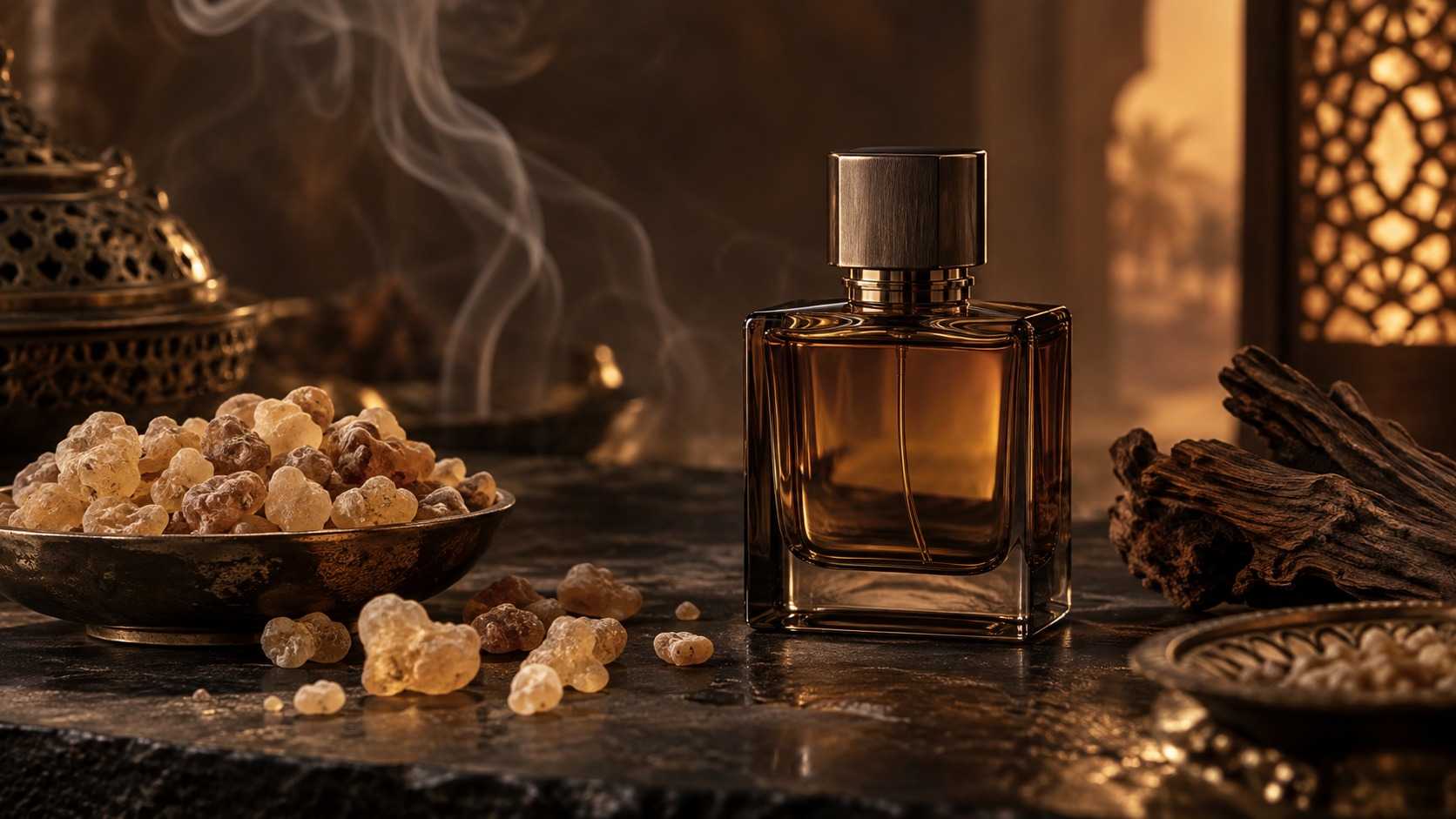
Frankincense perfume is built around one of perfumery’s oldest aromatic materials, yet it can smell surprisingly modern. In a fragrance, frankincense can feel cool and mineral, warm and balsamic, peppery, citrus-bright, smoky, or almost leathery. The final effect depends less on the word frankincense on the note list than on what the perfumer places around it.
This guide explains what frankincense smells like, how it differs from myrrh and a general “incense” accord, which pairings make it easier to wear, and how to choose a style that suits your taste.
What Does Frankincense Smell Like in Perfume?
Frankincense, also called olibanum, is an aromatic gum resin obtained from trees in the Boswellia genus. Its natural profile is not simply “smoke.” Depending on the material and treatment, it can show several facets at once:
- Resinous and balsamic: smooth, warm, slightly sweet, and polished.
- Citrusy and terpenic: a bright, almost lemon-peel lift that can make the opening feel airy.
- Peppery and dry: a crisp vibration that works well with spices and woods.
- Mineral or cool: an austere, spacious effect often associated with modern incense fragrances.
- Smoky or leathery: darker treatments can suggest glowing embers, charred wood, or supple leather.
A well-balanced frankincense perfume often moves between these impressions. It may open with a clear, sparkling resinous note, become warmer in the heart, and settle into woods, amber, musk, or oud.

Frankincense, Incense, and Myrrh: What Is the Difference?
The terms are often blurred together, but they are not interchangeable.
| Term | What it usually means in perfumery | Typical impression |
|---|---|---|
| Frankincense / olibanum | A specific resinous material or an accord inspired by it | Bright resin, pepper, citrus peel, balsamic warmth, smoke |
| Myrrh | A different resin, traditionally obtained from Commiphora species | Darker, denser, bittersweet, medicinal, earthy, licorice-like |
| Incense accord | A broader artistic construction that may include resins, woods, smoke, spices, and musks | Anything from clean mineral smoke to cathedral-like darkness |
If you want a luminous resin with lift, look for frankincense or olibanum near citrus, pepper, or aromatic herbs. If you want a dense ceremonial effect, look for combinations with myrrh, labdanum, smoke, oud, or leather.
How Frankincense Is Used in a Fragrance
Frankincense can play several roles. It may be the main subject, a bridge between bright top notes and a woody base, or a background material that adds air and texture. This flexibility is why it appears in fresh, spicy, woody, ambery, floral, and oud compositions.
As a bright resinous note
Paired with bergamot, lemon-like facets, herbs, or pink pepper, frankincense can feel almost transparent. This style is useful for people who like incense but do not want a heavy or solemn perfume.
As a smoky heart
With woods, patchouli, leather, or cypriol, the resin becomes darker and more tactile. The smoke may read as dry and architectural rather than sweet. These perfumes often feel especially effective in cool weather or evening settings.
As part of an amber accord
Frankincense can sharpen the sweetness of vanilla, labdanum, or benzoin. Instead of adding more sugar, it gives an amber perfume a drier outline and a faintly mineral glow.
As a link between florals and woods
Rose, jasmine, iris, and violet can all benefit from frankincense. The resin gives flowers depth without necessarily turning them into a dense bouquet. For related materials, explore the Maison IRFĒ fragrance ingredients guide.
Four Common Frankincense Perfume Styles
| Style | Look for | Best for | Possible drawback |
|---|---|---|---|
| Luminous resin | Citrus, aromatic herbs, pepper, clean woods | Daytime, warm weather, incense beginners | May feel too brisk if you want deep smoke |
| Warm ambery incense | Labdanum, vanilla, benzoin, soft musk | Evening, cool weather, enveloping scents | Can become sweet or dense |
| Smoky woods | Cedar, vetiver, patchouli, cypriol, leather | Dry, dramatic, gender-neutral wear | May feel austere on dry skin |
| Oud and spice | Oud, saffron, black pepper, tobacco | Statement fragrances and strong presence | Needs careful application |
What Notes Pair Well with Frankincense?
The best pairing depends on which side of frankincense you want to emphasize.
- Bergamot and other citrus notes reveal its bright, almost sparkling edge. Read more about the difference between resinous warmth and citrus lift in the bergamot perfume guide.
- Rose and jasmine soften the dryness and create a more rounded floral-resinous effect.
- Saffron and black pepper amplify its dry, spicy electricity.
- Patchouli and cedarwood make the composition more grounded and woody.
- Oud and leather build a darker, more commanding style. The broader oud perfume guide explains how that material changes a composition.
- Vanilla and amber materials create warmth while frankincense keeps the result from feeling flat.
A Maison IRFĒ Example: Smoldering Pepper
Smoldering Pepper Eau de Parfum uses olibanum in the opening with black pepper and saffron. Labdanum, Indonesian patchouli, and cypriol deepen the heart, while bourbon vanilla, smoked leather, and oud form the base. The result illustrates a particularly dark and spicy use of frankincense: the resin is not isolated as church incense, but woven into a peppery oud-leather structure.
For readers who want to compare that style with softer floral, musky, and patchouli-centered fragrances, the Maison IRFĒ Discovery Set offers all five scents in the collection for side-by-side wear.
Does Frankincense Make Perfume Last Longer?
Frankincense often contributes to the heart or base of a fragrance, but the presence of the note does not guarantee exceptional longevity. Performance depends on concentration, formula, skin, climate, and the balance of volatile and persistent materials.
A citrus-frankincense composition may feel radiant but relatively light. A formula built with labdanum, woods, patchouli, musk, leather, or oud is more likely to leave a longer trail. Judge the complete perfume, not the reputation of one ingredient.
How to Choose a Frankincense Perfume
- Decide how much smoke you actually want. “Incense” can mean transparent resin, glowing wood, or dense ceremonial smoke.
- Check the supporting notes. Citrus and herbs usually make it brighter; amber and vanilla make it warmer; oud and leather make it darker.
- Test on skin, not only paper. Resinous perfumes often change noticeably as they warm.
- Wait through the drydown. The first peppery or terpenic minutes may soften into a very different woody or balsamic base.
- Start with one or two sprays. Dark incense compositions can expand more than expected indoors.
- Notice texture, not just strength. A quiet mineral incense may feel more distinctive than a loud sweet one.
Who Will Enjoy Frankincense Perfume?
Frankincense is a strong choice for people who enjoy dry woods, amber, pepper, smoke, leather, or contemplative scents. It can also work for floral lovers who want more structure and depth.
It may be less appealing if you strongly dislike resin, incense smoke, medicinal facets, or very dry compositions. In that case, look for a brighter treatment with citrus and florals, or a softer ambery style rather than a dark oud-incense perfume.
What a Note List Cannot Tell You
A note pyramid is a map, not a formula. It does not reveal the amount or quality of frankincense, whether the effect comes from an essential oil, resinoid, specialty fraction, or constructed accord, or how strongly the material will project. Two perfumes may list olibanum in the same position and still feel unrelated.
Descriptions such as “sacred,” “mystical,” and “ancient” also say little about wearability. More useful questions are concrete: Is the opening citrus-bright or smoky? Does the drydown become sweet? Is the leather effect smooth or harsh? Does the incense remain close to skin or fill a room? A sample answers these questions more reliably than mythology.
Fragrance Is Not Medical Treatment
Frankincense has long cultural and ritual histories, but a perfume should not be treated as medicine or promised to reduce anxiety, inflammation, or disease. Scent can contribute to atmosphere and personal mood, yet therapeutic claims require evidence specific to the product and use. Choose a fragrance for its smell, comfort, and artistic effect.
Frequently Asked Questions
Is frankincense perfume always smoky?
No. Frankincense can be citrus-bright, peppery, balsamic, mineral, woody, or smoky. The surrounding notes determine which facet is most noticeable.
Is olibanum the same as frankincense?
In perfume descriptions, the two terms usually refer to the same family of aromatic Boswellia resins.
Is frankincense masculine or feminine?
Neither by nature. It appears in fragrances marketed across genders and adapts easily to floral, ambery, woody, spicy, and musky structures.
Can frankincense be worn in warm weather?
Yes, especially in formulas built around citrus, herbs, pepper, or transparent woods. Dense amber-oud versions may feel more comfortable in cooler conditions.
What is the safest way to buy an incense perfume online?
Read the complete note structure, look for a sample size, and test the drydown before committing to a full bottle. The word “incense” alone does not tell you whether the perfume will be bright, sweet, smoky, or austere.
Final Takeaway
The most useful question is not simply whether a perfume contains frankincense. Ask what role the resin plays. It can illuminate citrus, sharpen amber, deepen flowers, or turn woods and oud into a smoky architecture. Once you identify the style, choosing a frankincense perfume becomes far easier than the note’s ancient reputation might suggest.
