


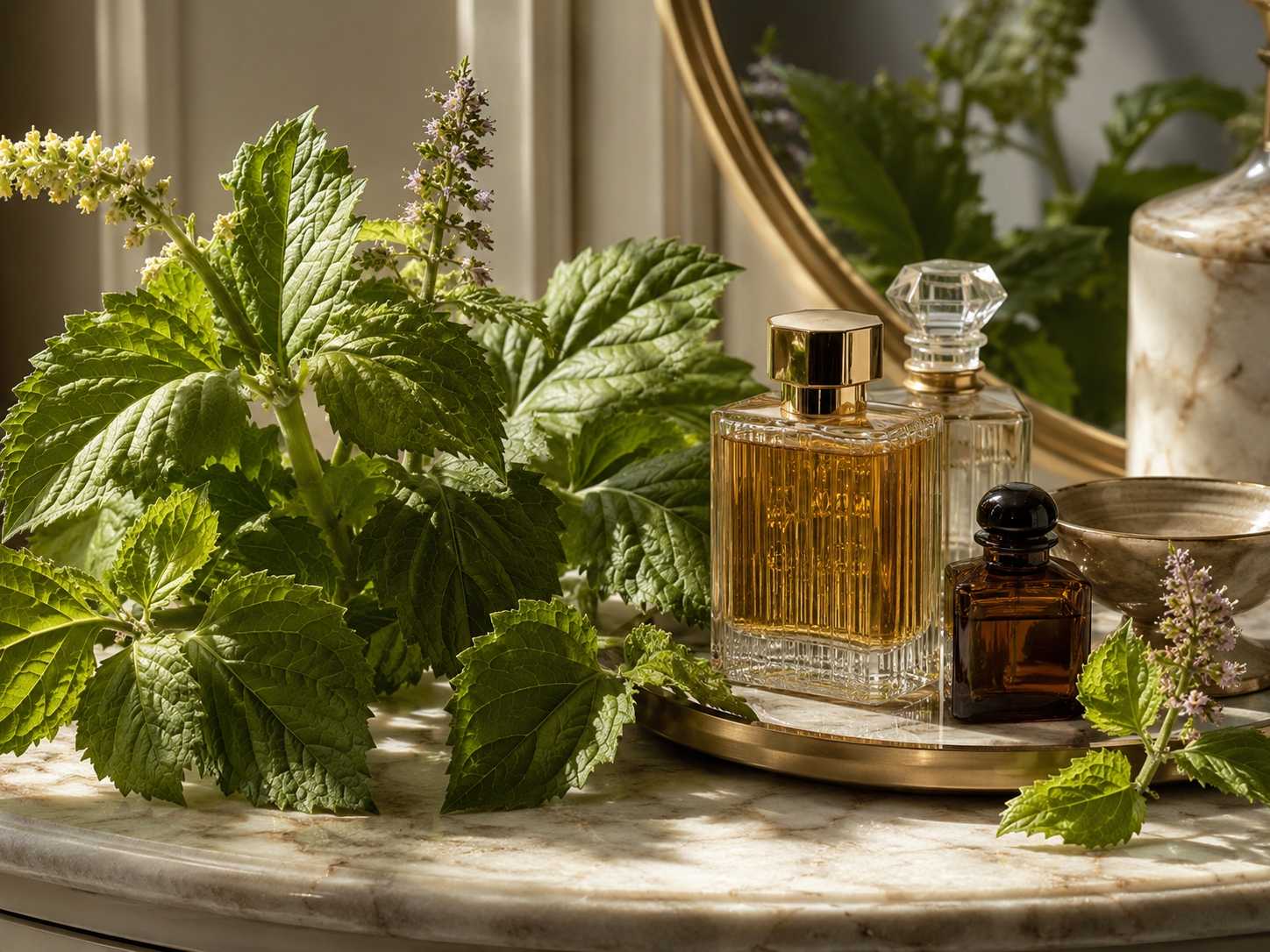
Patchouli perfume is often described with a handful of familiar words: earthy, woody, dark, smoky. All of them are true, and none of them are enough. Patchouli can also feel clean, green, balsamic, chocolate-like, musky, leathery, ambered, or surprisingly luminous. In one fragrance it resembles damp soil after rain; in another, it becomes the dark line that gives rose, vanilla, pear, or iris a more elegant shape.
As Creative Director of IRFĒ, I am drawn to materials that can change character without losing identity. Patchouli has that rare quality. It carries history, but it does not have to smell historical. It can belong to velvet and incense, certainly, but also to white tailoring, clean skin, city light, and a very modern fragrance wardrobe.
This guide explains what patchouli really smells like, where it comes from, how patchouli oil differs from refined patchouli materials and modern accords, why the note can feel so different from one perfume to another, and how to choose a style you will genuinely wear. For specific bottles, see our editorial selection of patchouli perfumes for women.
Patchouli Perfume at a Glance
| Patchouli style | Notes often paired with it | The effect |
|---|---|---|
| Earthy and woody | Vetiver, cedar, moss, sandalwood | Grounded, dry, elegant |
| Clean and modern | White musk, iris, aldehydes, soft woods | Polished, subtle, contemporary |
| Floral patchouli | Rose, jasmine, peony, orange blossom | Rich, feminine, structured |
| Sweet and gourmand | Vanilla, honey, chocolate, caramel | Warm, creamy, indulgent |
| Smoky and leathery | Birch, incense, tobacco, leather | Dark, dramatic, evening-ready |
| Fresh and fruity | Bergamot, pear, citrus, blackcurrant | Bright, wearable, less earthy |
| Amber patchouli | Labdanum, benzoin, resins, musk | Balsamic, warm, enveloping |
| Minimal patchouli | Transparent woods, Iso E Super-style notes | Skin-like, abstract, quietly woody |
What Does Patchouli Really Smell Like?
Patchouli comes from the dried leaves of Pogostemon cablin, a tropical plant in the mint family. The plant looks delicate, but its oil has extraordinary presence. The classic profile is woody, earthy, balsamic, and slightly camphoraceous, with green, smoky, spicy, and sometimes chocolate-like facets.
Those descriptions depend on quality, origin, extraction, age, and the way the material is used. A raw, powerful patchouli oil may feel humid and almost medicinal at first. A refined patchouli heart can emphasize cleaner woods and softer balsamic warmth. A modern biotechnology-derived ingredient can suggest patchouli while feeling smoother, brighter, and less rough around the edges.
This is why patchouli is difficult to understand from a note list alone. The word may refer to a clearly recognizable earthy material, a highly refined fraction, a constructed accord, or simply a supporting base that gives another note depth. Two perfumes can both contain patchouli and smell as unrelated as a dark wooden library and a pear-colored silk dress.
Where Patchouli Comes From
Patchouli is cultivated primarily in tropical parts of Asia, with Indonesia remaining the most important source. The leaves are harvested, dried, and distilled to obtain the essential oil used in perfumery. The dried leaf matters: the deep characteristic odor is not fully expressed by a fresh green leaf in the field.
For centuries, patchouli also travelled with textiles. Dried leaves were placed among valuable fabrics during transport, both to protect them and to scent the cloth. In Europe, the smell became associated with imported shawls and luxury materials long before it became shorthand for bohemian rebellion.
That history explains something essential about patchouli. It has always belonged to both nature and fashion. It smells of leaf, soil, wood, and humidity, yet it also carries the memory of silk, trunks, travel, and distant trade. The tension between raw material and cultivated elegance still gives the note much of its fascination.
Patchouli Oil, Patchouli Heart, Fractions and Modern Accords
Patchouli Essential Oil
Traditional patchouli essential oil is obtained by steam distillation of dried leaves. It is usually strong, tenacious, woody, earthy, balsamic, and camphoraceous. The oil can add depth, warmth, and persistence to a composition, but its character must be handled carefully. Too much can dominate delicate florals or turn a clean fragrance unexpectedly dark.
Natural patchouli oil also changes as it ages. Like certain woods, resins, and spirits, it may become smoother and rounder over time. Perfumers often value this evolution because the rougher green or camphoraceous edges can soften into richer woods and balsamic warmth.
Patchouli Heart and Refined Fractions
A patchouli heart is a refined portion of the natural material. By removing or reducing certain heavier or more camphoraceous facets, the perfumer can work with a cleaner, smoother, woodier profile while retaining recognizable patchouli identity.
This is one reason a contemporary perfume may contain a substantial patchouli effect without smelling like raw oil. Refinement gives the note more flexibility. It can support white flowers, fruit, musk, or iris without immediately pulling the entire composition toward damp earth.
Supercritical CO₂ Extraction
Some modern patchouli materials are produced through supercritical fluid extraction using carbon dioxide at relatively low temperatures. This method can preserve facets of the dried leaf that might be changed or lost during conventional high-temperature processing. The result may feel especially natural, rich, and detailed.
For the wearer, the technical term matters less than the effect. A CO₂ or SFE patchouli may contribute a fuller sense of leaf, earth, balsam, and wood without needing to smell harsh.
Modern Patchouli-Like Molecules
Perfumers also use biotechnology and aroma molecules to create cleaner or more controlled patchouli profiles. Clearwood, for example, offers a soft, clean, dark woody effect reminiscent of patchouli, with creamy amber warmth. It can be used alone or beside natural oil to lighten the texture and improve consistency.
This does not make the perfume less authentic. Perfumery has always been an art of construction. A modern ingredient may reveal a side of patchouli that natural oil alone cannot express so precisely: pale wood, clean amber, smooth skin, or a transparent shadow beneath a floral heart.
Why Patchouli Is So Important in Perfumery
Patchouli is one of perfumery’s great structural materials. It can be clearly smelled, but it can also work almost invisibly. In the base of a fragrance, it supports lighter notes, adds depth, and helps the composition keep a recognizable shape as citrus and delicate florals fade.
Its tenacity makes it particularly useful in chypre, amber, woody, floral, and gourmand fragrances. Patchouli can connect rose to incense, pear to freesia, iris to vanilla, or leather to honey. It creates transitions. Without it, some perfumes would feel like beautiful pieces placed beside one another; patchouli helps turn them into a complete silhouette.
I think of it as the internal tailoring of a fragrance. You may admire the color and fabric first, but the structure determines how the whole composition moves.
Why Modern Patchouli Does Not Have to Smell Like the 1970s
The association with the 1960s and 1970s is real. Patchouli oil became part of counterculture style, music festivals, natural living, and a rejection of polished conventional perfume. Its rawness made it expressive and easy to recognize.
But one era does not own an ingredient. Modern perfumers refine patchouli, pair it with luminous fruit, soften it with white musk, dress it in iris, or place it beneath transparent woods. The result may be clean enough for an office, floral enough for a wedding, or minimal enough for someone who usually avoids heavy perfume.
Even when patchouli is dark, the darkness can now feel deliberate rather than accidental. Rose and patchouli can become grand and architectural. Vanilla and patchouli can feel smooth rather than sticky. Leather and patchouli can create a sharp evening silhouette. The old bohemian scarf is still in the wardrobe, but it is no longer the only option.
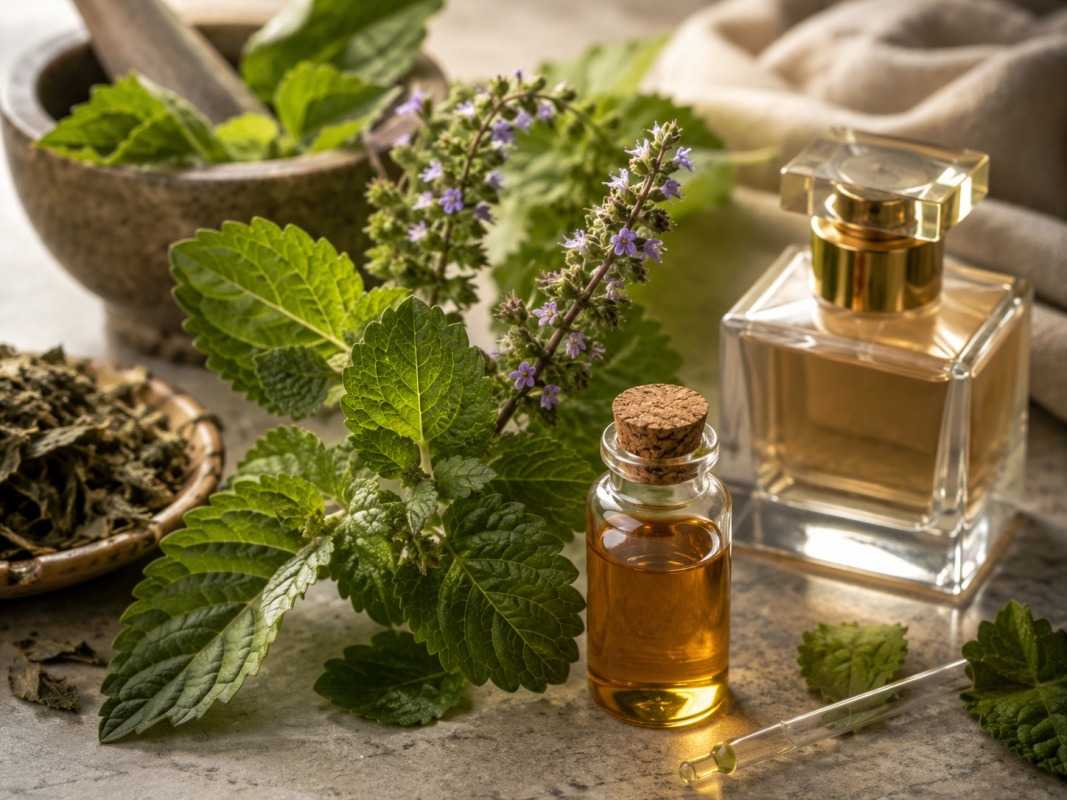
Patchouli perfume begins with dried aromatic leaves, whose oil can smell earthy, woody, balsamic and unexpectedly soft after refinement.
The Main Styles of Patchouli Perfume
Earthy and Woody Patchouli
This is the closest style to the natural identity of the material. Vetiver, cedarwood, sandalwood, moss, and guaiac wood emphasize dryness, roots, bark, and forest-floor depth. The effect can be grounding, meditative, elegant, or distinctly unisex.
Earthy patchouli suits people who enjoy woody fragrance and do not need sweetness to make a perfume feel luxurious. It often wears beautifully in autumn, but a cleaner woody version can work year-round. Explore related structures in our guides to vetiver perfume and sandalwood perfume.
Clean and Modern Patchouli
Clean patchouli removes the image of raw oil and emphasizes smooth woods, amber, musk, and polished texture. Iris, aldehydes, soft florals, and transparent woody materials can make the note feel tailored rather than rustic.
This style is excellent for someone who is curious about patchouli but nervous about earthiness. It can feel like warm skin beneath crisp clothing, with the note providing depth rather than an obvious “patchouli smell.”
Rose and Floral Patchouli
Rose and patchouli is one of perfumery’s most enduring pairings. Rose gives patchouli color and radiance; patchouli gives rose depth, darkness, and longevity. Depending on proportion, the result may be romantic, severe, opulent, or almost gothic.
Jasmine, peony, orange blossom, and tuberose can also benefit from patchouli’s structure. It keeps a floral composition from becoming too airy or decorative. For more on the relationship between flowers and deep base notes, see our rose perfume guide.
Sweet and Gourmand Patchouli
Vanilla, honey, chocolate, caramel, coffee, and tonka bean bring out patchouli’s warm, dark, slightly cocoa-like side. The result can be comforting and sensual, though balance is essential. Without enough wood, spice, or bitterness, the composition may become heavy.
Patchouli is especially useful in gourmands because it gives sweetness an adult foundation. Vanilla becomes darker; chocolate becomes earthier; honey becomes more textured. The perfume feels dressed rather than merely delicious.
Smoky, Leathery and Tobacco Patchouli
Birch, smoke, incense, leather, tobacco, saffron, and labdanum turn patchouli toward evening. These compositions often feel tactile: worn leather, dark wood, warm fabric, incense in a quiet room.
This style has presence and should usually be applied with restraint. It works particularly well in cool weather, when the smoke and woods can open slowly rather than pressing heavily against warm skin. Our leather perfume guide explores that darker family in more detail.
Fresh and Fruity Patchouli
Bergamot, orange, pear, blackcurrant, apple, and aromatic green notes can make patchouli feel unexpectedly bright. Fruit gives the opening motion, while patchouli prevents it from becoming fleeting or juvenile.
Fresh patchouli is often the easiest daytime style. It may not announce itself as patchouli at all. Instead, the note appears later, giving a fruity floral or citrus composition a warm, slightly earthy drydown.
Amber and Balsamic Patchouli
Benzoin, labdanum, vanilla, amber woods, resins, and musk amplify patchouli’s balsamic warmth. These fragrances can feel enveloping and elegant, with a soft glow rather than sharp smoke.
Amber patchouli works beautifully for evening and winter, but modern transparent amber materials can also make it wearable in milder weather. See our guide to amber wood perfume for related combinations.
Minimal and Skin-Like Patchouli
Minimalist patchouli strips away the familiar decoration of flowers, spices, and fruit. Transparent woods, musks, and patchouli-like molecules create something abstract: clean skin, pale cedar, a warm scarf, or a quiet earthy aura that seems to disappear and return.
This is the style for people who dislike conventional perfume but still want character. It layers easily and often feels more personal than performative.
How Other Notes Change Patchouli
- Patchouli + rose: Darker, richer, more dramatic.
- Patchouli + citrus: Brighter, cleaner, more energetic.
- Patchouli + pear or blackcurrant: Juicier and more modern.
- Patchouli + iris: Powdery, smooth, and polished.
- Patchouli + musk: Softer, warmer, and closer to skin.
- Patchouli + vanilla: Creamier, sweeter, and more comforting.
- Patchouli + honey: Golden, textured, sometimes tobacco-like.
- Patchouli + leather: Sharper, darker, and more structured.
- Patchouli + incense: Smoky, distant, and contemplative.
- Patchouli + sandalwood: Smoother, creamier, and woodier.
The same pairing can still produce very different perfumes. Rose and patchouli may become a grand formal fragrance or a fresh modern floral. Vanilla and patchouli may feel gourmand, smoky, or barely sweet. Proportion, concentration, and supporting notes decide the final character.
Does Patchouli Make Perfume Last Longer?
Patchouli is naturally tenacious and is commonly used in the heart and base of a fragrance. It can help give a composition depth and persistence, especially when paired with woods, resins, amber, musk, leather, or vanilla.
That does not mean every perfume containing patchouli lasts all day. Longevity depends on the full formula, concentration, skin, climate, and application. A perfume may list patchouli but use it lightly, while another may build the entire drydown around it.
Think of patchouli as one strong structural advantage, not a guarantee printed on the note pyramid.
How Patchouli Changes on Skin
Patchouli often changes more dramatically than expected. On a paper strip it may feel dry, woody, or medicinal. On skin, warmth can reveal sweetness, chocolate-like depth, musk, or balsamic softness.
Wait at least thirty minutes before deciding. A bright floral may become earthy later. A smoky opening may soften into vanilla and woods. A perfume that seems very clean in the first minutes may reveal a darker patchouli base after an hour.
It is also worth testing in ordinary life. Wear the sample through work, lunch, changing temperature, and several hours of movement. Patchouli can be beautiful in a quiet boutique and overwhelming in a warm room. The right version should still feel like your own choice after the first impression has faded.
How to Choose a Patchouli Perfume
I Want Patchouli Without Heavy Earthiness
Look for pear, citrus, rose, freesia, iris, white musk, aldehydes, or transparent woods. These materials keep the composition polished and move attention away from the rawest earthy facets.
I Want a True Patchouli Signature
Choose a fragrance that names patchouli clearly and builds the structure around it. Look for patchouli oil, patchouli heart, Clearwood, woods, tobacco, honey, amber, or incense in the composition.
I Want Something Feminine and Floral
Rose, jasmine, peony, orange blossom, or iris can make patchouli feel elegant and visibly floral. Rose-patchouli perfumes tend to be the richest; pear-and-floral combinations are usually lighter.
I Want Something Sweet
Vanilla, honey, coffee, chocolate, caramel, tonka, or amber can create a gourmand or balsamic patchouli. Test carefully if sweetness tends to grow on your skin.
I Want Something Dark and Unisex
Leather, smoke, birch, oud, tobacco, vetiver, cedar, incense, and saffron are strong clues. These perfumes often feel most natural in cool weather and evening settings.
I Want Something Quiet for Work
Choose a clean, musky, lightly floral, or minimalist patchouli with controlled projection. The note can still add sophistication without filling the office.
Patchouli Perfume by Season and Occasion
Spring
Green, floral, citrus, and lightly fruity patchouli works beautifully as the weather changes. Rose, pear, bergamot, freesia, and clean woods keep the note open.
Summer
Choose transparent patchouli with citrus, fruit, herbs, white musk, or pale woods. Apply lightly. Dense amber, tobacco, smoke, and vanilla can become heavy in heat.
Autumn
Patchouli feels almost made for autumn. Woods, honey, leather, tobacco, rose, spice, and amber echo heavier fabrics and cooler air without requiring a fully winter-weight perfume.
Winter
Smoky, leathery, gourmand, incense, and amber patchouli can unfold beautifully in cold weather. This is the season for depth, but measured application still keeps richness elegant.
Office and Daytime
Look for clean woods, pear, freesia, iris, musk, or citrus. A quiet drydown is more useful than dramatic projection.
Evening
Rose, leather, incense, tobacco, honey, vanilla, and amber give patchouli a more sensual, dressed-up character. Evening allows the material to show its shadows.
How to Layer Patchouli Perfume
Patchouli is an excellent layering base because it adds depth and helps lighter styles feel more grounded. Begin with one clear intention rather than combining several complex perfumes at once.
- Patchouli + citrus: Freshens and lifts.
- Patchouli + rose: Creates a richer floral.
- Patchouli + musk: Softens the earthiness.
- Patchouli + vanilla: Adds warmth and creaminess.
- Patchouli + woods: Creates a drier, more unisex effect.
- Patchouli + saffron: Adds spice and a leathery glow.
Apply the stronger fragrance lightly and allow space between the two scents, either by using different pulse points or by waiting between applications. Layering should create a new line, not blur every detail into one heavy cloud.
IRFĒ Patchouli Forever Worn: A Modern Patchouli Case Study
IRFĒ Patchouli Forever Worn Eau de Parfum, created by Frank Voelkl, shows how patchouli can be treated as a complete fashion character rather than a generic earthy base.
The composition opens with honey, tobacco, and davana. Honey gives light and texture; tobacco adds warmth and a slightly dry richness; davana introduces a fruity, aromatic, almost boozy nuance. The heart combines lavandin, amber, Clearwood, and patchouli materials, allowing natural depth and cleaner modern woods to work together.
In the base, patchouli heart meets sandalwood and cedarwood. The drydown is warm, woody, ambered, and composed. The fragrance does not erase patchouli’s identity, but it smooths the material into something wearable with tailoring, suede, cashmere, or an evening coat.
I think of it as patchouli carried in a beautiful travel case. The earthiness remains, but it has acquired line, fabric, and a sense of destination. It stands beside established patchouli perfumes because its honey-tobacco construction offers a distinct modern interpretation, not because an IRFĒ guide needs to crown its own bottle.
The fragrance can also be explored in the IRFĒ Discovery Set before choosing a full bottle.
Ready to Compare Actual Patchouli Perfumes?
Once you know whether you prefer fresh, floral, musky, sweet, smoky, woody, or amber patchouli, choosing a bottle becomes much easier. Explore our editorial selection of patchouli perfumes for women for specific fragrances across those styles.
Final Thoughts
Patchouli has survived every change in fragrance fashion because it is useful, expressive, and difficult to reduce to one mood. It can smell raw and elemental, but it can also disappear into the architecture of a polished floral. It can belong to a music festival, a couture salon, a dark library, or clean skin under a white shirt.
Choose the character rather than the reputation. Let the opening introduce the perfume, then wait for the woods, musk, amber, smoke, or sweetness to appear. The right patchouli should not make you feel as though you borrowed someone else’s decade. It should feel like a material already waiting in your own wardrobe.
FAQs
1. What does patchouli perfume smell like?
Patchouli can smell earthy, woody, balsamic, green, smoky, musky, leathery, camphoraceous, or slightly chocolate-like. Refined patchouli materials may feel cleaner, softer, and more ambered.
2. Is patchouli perfume always strong?
No. Raw patchouli oil is powerful, but patchouli may be used in small amounts or in refined forms that feel clean, transparent, and subtle. It can support a fragrance without being immediately recognizable.
3. Is patchouli perfume old-fashioned?
No. The note has strong associations with the 1960s and 1970s, but modern perfumers use it in clean musks, fruity florals, rose perfumes, gourmands, transparent woods, and minimalist fragrances.
4. What is the difference between patchouli oil and patchouli heart?
Patchouli oil is the full essential oil distilled from dried leaves. Patchouli heart is a refined portion designed to emphasize smoother, cleaner, woodier facets while reducing some rough or camphoraceous aspects.
5. What is Clearwood?
Clearwood is a biotechnology-derived woody ingredient with a soft, clean patchouli-like profile and creamy amber warmth. It can complement natural patchouli oil or create a modern patchouli effect on its own.
6. Does patchouli make perfume last longer?
Patchouli is tenacious and commonly used in heart and base notes, so it can support depth and persistence. Final longevity still depends on the full formula, concentration, skin, climate, and application.
7. Can patchouli perfume smell fresh?
Yes. Bergamot, orange, pear, freesia, herbs, aldehydes, white musk, and transparent woods can make patchouli feel bright, clean, and suitable for daytime or warm weather.
8. Is patchouli perfume unisex?
Patchouli works easily across gender categories. Florals, fruit, and vanilla may make it feel more traditionally feminine, while woods, leather, smoke, vetiver, and incense create a drier or more traditionally masculine effect.
9. How should I test patchouli perfume?
Test on skin and wait at least thirty minutes. Continue checking the fragrance over several hours because patchouli often becomes more noticeable in the drydown. Notice how earthy, sweet, smoky, musky, or woody it becomes on you.
Editorial note: This guide distinguishes traditional patchouli oil, refined natural extracts, and modern patchouli-like materials. Technical descriptions were checked against official ingredient information from dsm-firmenich, while the styling and selection advice reflects IRFĒ’s editorial perspective.
