


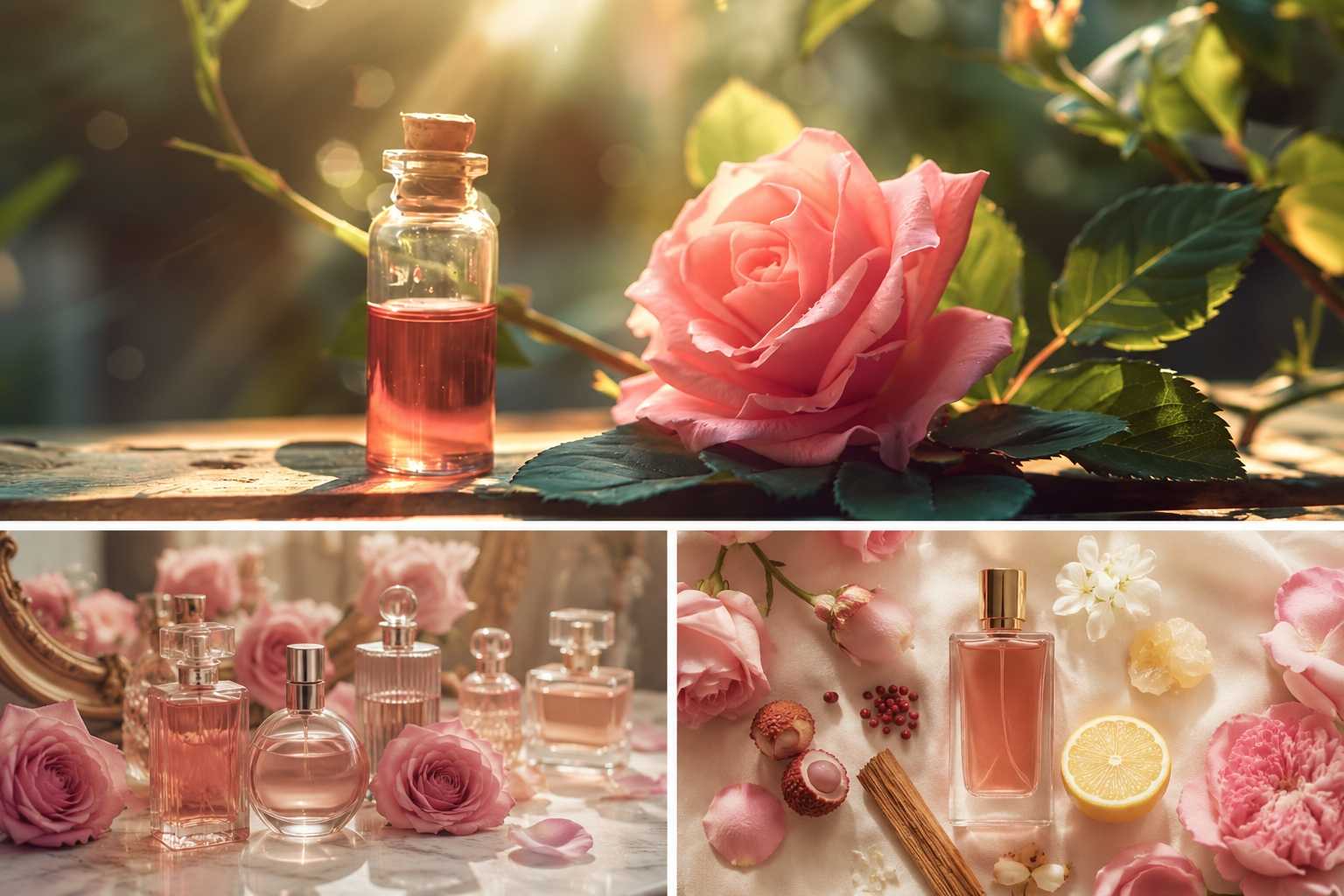
Rose perfume is never just one scent. It can be green and cool as a stem snapped between your fingers, honeyed and velvety, bright with pear or lychee, softened by musk, darkened by patchouli, or sharpened until it feels almost metallic. That range is exactly why rose remains so enduring in perfumery: it carries history beautifully, but it never has to smell historical.
As Creative Director of IRFĒ, I have always been drawn to materials that can hold more than one character. Rose does that instinctively. It can be romantic without being fragile, feminine without becoming predictable, and luxurious without needing to announce the price of the bottle. In one composition it resembles a silk blouse in morning light; in another, a red dress entering a dark room.
This guide is about understanding those differences. We will look at the principal roses used in perfumery, how rose oil differs from rose absolute, why a perfume may not smell like a living flower, how musk, fruit, spice, woods, leather, and vanilla transform the note, and how to choose a rose fragrance you will genuinely wear. For a ranked shopping guide with specific bottles, see our editorial selection of the best rose perfumes for women.
Rose Perfume at a Glance
| Rose style | Notes often used around it | The effect |
|---|---|---|
| Fresh and green | Bergamot, leaves, herbs, watery notes | Crisp, botanical, airy |
| Fruity and jammy | Lychee, pear, raspberry, plum, blackcurrant | Juicy, luminous, often sweeter |
| Musky and skin-like | White musk, ambrette, soft woods | Intimate, clean, warm |
| Powdery and polished | Orris, violet, heliotrope, vanilla | Cosmetic, elegant, softly vintage |
| Woody and earthy | Patchouli, cedar, vetiver, moss | Dry, grounded, sophisticated |
| Spicy and leathery | Pink pepper, saffron, clove, leather | Sharper, darker, more structured |
| Salty or metallic | Mineral notes, rose oxides, salt air | Cool, modern, unexpected |
| Gourmand | Vanilla, honey, chocolate, marshmallow | Creamy, sweet, comforting |
What Does Rose Smell Like in Perfume?
A living rose is already a small universe. Depending on the variety, weather, soil, and moment of bloom, it may suggest citrus peel, crushed leaves, red fruit, honey, spice, tea, wax, or damp earth. Perfume does not simply place “rose” in a bottle. It selects, amplifies, edits, and frames certain facets of the flower.
This is why two rose perfumes may have almost nothing in common. One can smell like a glass vase filled with freshly cut stems. Another may resemble raspberry jam on dark velvet. A third may feel like warm skin dusted with petals, while a fourth uses rose almost architecturally, building it against leather, incense, or oud.
The word rose on a note list tells you the subject, but not the style. To understand the style, look at the surrounding notes and wait for the drydown. The opening may be citrus-bright, the heart floral, and the final hours woody or musky. The rose you live with is often not the rose you meet in the first minute.
Why Rose Perfume May Not Smell Like a Rose in the Garden
People often expect rose perfume to reproduce the exact scent of a flower held close to the face. Perfumery is more interpretive than that. Natural extraction captures only part of the living flower’s volatile profile, and the perfumer may deliberately emphasize a particular aspect rather than pursue a photographic copy.
A natural rose material can also change according to how it is produced. Distilled rose oil tends to feel more immediate, bright, and diffusive, while a rose absolute may feel richer, warmer, more petal-like, and honeyed. The same botanical species can therefore offer different textures before the perfumer adds a single supporting note.
Then comes the accord. Perfumers may combine natural rose materials with aroma molecules that add radiance, volume, fruit, greenness, or metallic lift. A rose accord can be designed to feel transparent, cold, salty, leathery, or larger than nature. It may smell less like one specific garden rose and more like an imagined rose created for a particular character.
That is not a failure of realism. It is the art. Fashion does not have to copy the body literally to reveal it beautifully, and perfume does not have to copy a flower molecule by molecule to express the idea of rose.
The Main Roses Used in Perfumery
Damask Rose
Damask rose, or Rosa damascena, is one of the most important rose species in fine fragrance. It is cultivated notably in Bulgaria, Türkiye, Morocco, and Iran, with flowers traditionally harvested early in the morning while their aromatic material is at its freshest.
Its character is complex rather than fixed. Rose oil can feel fresh, powerful, green, and distinctly floral. Rose absolute may be richer and warmer, with fruity, honeyed, petal-like, and sometimes slightly animalic facets. This is why Damask rose can appear in very different perfumes: a luminous floral, a plush chypre, a dark patchouli rose, or a composition with incense and woods.
In practical terms, Damask rose often gives a fragrance recognizable rose identity and depth. It is the kind of material that can remain elegant under pressure. Add fruit, and it becomes radiant; add patchouli, and it becomes dramatic; add musk, and it softens against the skin.
Centifolia Rose, or Rose de Mai
Rosa centifolia, often associated with Grasse and sometimes called Rose de Mai, is prized for a profile that can feel floral, green, spicy, fruity, sweet, and honeyed. Compared with Damask rose, Centifolia absolute is often described as softer, sweeter, and more honey-like, though extraction and composition always shape the final impression.
Centifolia has a plush beauty that suits fine fragrance especially well. It can add volume without shouting, and it carries a sensuous, almost tactile quality. I think of it as a rose with fabric: not merely a flower in the air, but petals translated into silk, velvet, or powder-soft suede.
This rose is particularly effective when a perfumer wants femininity with depth. It can feel luxurious without becoming heavy, especially when balanced by citrus, pepper, neroli, woods, or clean musk.
Tea Rose
Tea rose is best understood as an olfactory style rather than one single standard extract used across perfumery. The effect is usually lighter, fresher, more transparent, and sometimes subtly lemony or green. It suggests a rose viewed through air rather than draped in velvet.
Tea-rose styling is useful for people who enjoy floral fragrance but dislike dense sweetness. It can feel graceful, breezy, and easy to wear, especially in daytime compositions. Paired with citrus, green leaves, or sheer musk, it becomes one of the cleanest ways to wear rose.
Other Rose Effects You May Encounter
Labels such as Turkish rose, Bulgarian rose, Taif rose, wild rose, and rose water usually point to origin, tradition, or a desired olfactory effect. Turkish and Bulgarian materials are often forms of Damask rose, but their extraction, crop, and use in formula influence the result. Taif-style rose is frequently associated with a more vivid, spicy, high-impact floral profile. Rose-water effects are usually lighter, fresher, and more translucent.
It helps to treat these terms as clues, not guarantees. The complete formula decides how the rose behaves.
Rose Oil, Rose Absolute, and Rose Accord
Rose Oil, or Rose Otto
Rose oil is produced by distillation. The flower is processed with water or steam, and the aromatic oil is separated from the aqueous phase. The result is highly concentrated and requires a remarkable quantity of flowers. This scarcity helps explain why true rose oil is among perfumery’s precious natural materials.
Olfactively, rose oil can feel bright, diffusive, fresh, green, citrusy, or slightly metallic. It often contributes lift and clarity near the top and heart of a composition. Because it is powerful, a small amount can shape the entire floral impression.
Rose Absolute
Rose absolute is produced through solvent extraction. Fresh flowers first yield a waxy aromatic material called a concrete; that material is then purified to create the absolute. Compared with distilled oil, absolute is often fuller, warmer, more petal-like, fruity, honeyed, and textural.
The absolute is especially beautiful in the heart of a perfume, where it can create depth and a more enveloping floral body. Perfumers sometimes use rose oil and rose absolute together: one brings brightness and diffusion, the other brings richness and warmth.
Rose Accord
A rose accord is a constructed impression of rose. It may contain natural rose materials, aroma molecules, or both. Far from being a lesser substitute, a well-built accord gives the perfumer freedom. It can recreate parts of the living flower that extraction misses, increase radiance, control consistency, or invent a rose that nature never produced.
Modern fragrance chemistry can make rose feel transparent and juicy, green and metallic, velvety and dark, or almost weightless. Molecules with rosy, geranium-like, fruity, and metallic facets help create the cold contemporary rose seen in some niche compositions. Others provide a natural petal effect, honeyed warmth, or expansive diffusion.
For the wearer, the useful lesson is simple: “natural” does not automatically mean more realistic, and “accord” does not mean flat or artificial. Judge the result on skin.
The Main Styles of Rose Perfume
Fresh and Green Rose
Fresh rose perfumes use citrus, green leaves, herbs, stems, watery notes, or light musks to keep the flower open and airy. They often smell closer to the whole plant than to a cosmetic rose accord. This is the style for spring mornings, white shirts, clean tailoring, and anyone who wants rose without heaviness.
Bergamot can add sparkling lift. Violet leaf gives a cool green edge. Herbal notes can make rose feel botanical and modern. When the composition is done well, you notice petals and stems at the same time.
Fruity and Jammy Rose
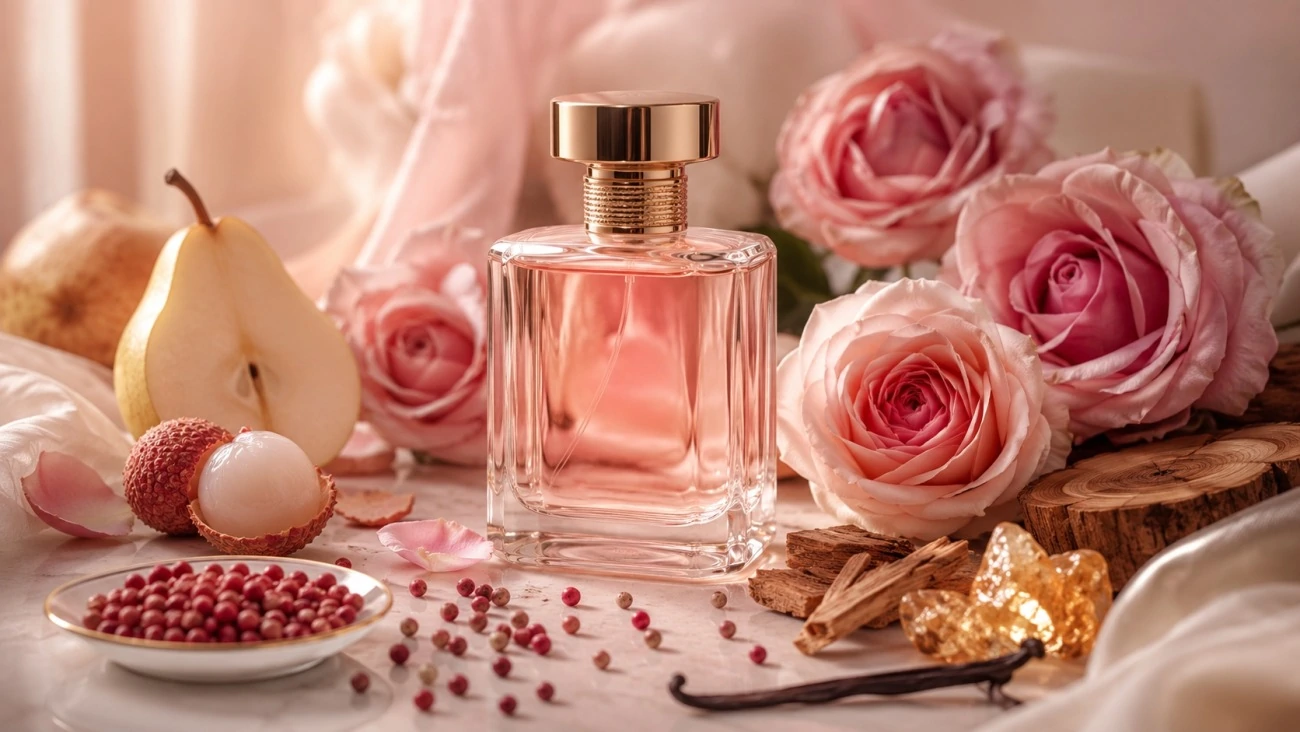
Lychee, pear, raspberry, strawberry, plum, and blackcurrant can make rose feel more vivid and immediately approachable. Some of these fruits echo facets already present in the flower, so the combination can feel surprisingly natural.
Lychee tends to give a luminous, almost translucent sweetness. Raspberry creates richer red color. Pear adds juicy freshness. Blackcurrant can bring tartness and a slightly green bite. The danger is excess: too much sugar can flatten the flower. The best fruity roses keep enough musk, woods, spice, or acidity to preserve shape.
Musky, Skin-Like Rose
White musk and ambrette pull rose closer to the body. The perfume may feel like petals warmed by skin, a clean scarf carrying a trace of fragrance, or the softest part of a floral bouquet after the room has gone quiet.
This style is intimate rather than theatrical. It works beautifully for everyday wear, close conversation, travel, and situations where a large scent trail would feel intrusive. Musky rose is also a useful entry point for people who find traditional florals too formal.
Powdery, Cosmetic Rose
Orris, violet, heliotrope, vanilla, and aldehydic effects can give rose a powdery or cosmetic character. At its best, this style feels like a beautifully arranged vanity: lipstick, pressed powder, a silk robe, and a mirrored tray. At its worst, it can feel dated or overly sweet to someone who prefers freshness.
Powder is not automatically old-fashioned. In contemporary perfumery, orris can make rose feel smooth, architectural, and expensive. The balance matters. Woods and pepper sharpen it; musk softens it; fruit brightens it.
Woody and Earthy Rose
Cedar, sandalwood, vetiver, patchouli, moss, and guaiac wood ground rose and reduce obvious sweetness. Patchouli is especially important because it can turn rose from a bouquet into a full structure, adding darkness, earth, and a slightly wine-like richness.
This is one of the best directions for someone who wants a sophisticated or unisex rose. The flower remains present, but it no longer behaves as decoration. It becomes part of the architecture.
For a deeper look at that transformation, explore our guides to perfumes with patchouli and sandalwood perfume.
Spicy Rose
Pink pepper, black pepper, saffron, clove, cardamom, and cinnamon give rose energy. Pink pepper brings brightness and a rosy sparkle. Saffron can feel dry, leathery, metallic, or warm. Clove deepens the flower and can amplify its naturally spicy side.
Spicy rose feels dressed. It has posture. This style moves easily from day into evening and pairs particularly well with tailoring, rich color, and cooler weather.
Dark Rose with Leather, Oud, or Incense
Leather, oud, incense, labdanum, and dense patchouli turn rose toward shadow. These compositions can feel smoky, resinous, formal, or sensual. They are often less about smelling like a flower and more about creating atmosphere.
Rose and oud is one of perfumery’s grand pairings: the floral note softens the wood’s darkness, while oud gives rose depth and authority. Leather creates a sharper silhouette. Incense introduces distance and mystery. Explore the pairing further in our guide to rose and oud perfume.
Salty and Aquatic Rose
Salt air, mineral notes, dune grass, transparent musk, and watery accords can make rose feel windswept rather than romantic. This is a particularly modern way to handle the flower because it removes the expected sweetness and places rose in a landscape.
The effect may recall wild roses growing near a coast, petals touched by sea air, or clean skin after swimming. It is one of the easiest rose styles for summer and for people who usually prefer fresh fragrance families.
Cold and Metallic Rose
Some contemporary perfumes push rose toward a cool, almost electric register. Green and metallic rosy molecules, sharp lychee-like fruit, mineral accords, and transparent woods can make the note feel futuristic.
This rose is not candlelit. It belongs to glass, chrome, city rain, and silver jewelry. It is a compelling option for someone who likes the idea of rose but rejects softness as the only interpretation of femininity.
Gourmand Rose
Vanilla, honey, chocolate, pistachio, marshmallow, praline, or sweet fruit can turn rose into a gourmand composition. The result may feel creamy, candied, or dessert-like, though the most elegant versions keep a clear floral center.
Rose and vanilla is especially popular because vanilla softens the flower and gives the base warmth. Honey amplifies rose’s natural golden facets. Marshmallow can make the fragrance feel airy and playful rather than dense. Learn more in our guide to rose vanilla perfume.
How Other Notes Change Rose
- Rose + citrus: Brighter, cleaner, and more transparent.
- Rose + lychee or pear: Juicier, sweeter, and distinctly modern.
- Rose + musk: Softer, warmer, and closer to skin.
- Rose + orris: Powdery, polished, and textural.
- Rose + patchouli: Darker, earthier, and more dramatic.
- Rose + oud: Smoky, resinous, and opulent.
- Rose + saffron: Spicy, dry, radiant, sometimes leathery.
- Rose + leather: Sharper, more structured, and evening-ready.
- Rose + vanilla: Creamier, sweeter, and more comforting.
- Rose + salt or mineral notes: Cooler, airier, and less conventional.
These combinations are not rigid formulas. A perfumer can use the same pairing to create very different moods. Rose and vanilla may become plush and seductive or sheer and musky. Rose and patchouli may feel grand and baroque or dry and minimalist. Concentration, proportion, and supporting materials decide the final character.
How Rose Perfume Changes on Skin
A paper blotter is useful for comparison, but it cannot tell the whole story. Skin adds warmth, texture, and movement. It changes how quickly materials evaporate and which facets become prominent over time.
Begin by noticing the opening, but do not decide there. Wait at least thirty minutes. A bright fruity rose may lose sweetness and become woody. A green rose may soften into musk. A perfume that appears powdery at first may become elegant once the base settles, while another may grow sweeter than expected.
Pay attention to projection as well as longevity. A perfume can last for many hours while remaining close to skin. Another can project strongly for two hours and then become quiet. Neither is automatically better. The question is whether the behavior suits your life.
I also recommend wearing a sample through an ordinary day. Perfume should survive reality, not only the flattering light of a boutique. Notice how it feels at lunch, on fabric, in warmer air, and after the initial excitement has passed.
How to Choose a Rose Perfume You Will Actually Wear
I want fresh, realistic rose
Look for bergamot, lemon, violet leaf, herbs, green accords, rose water effects, and transparent musk. Avoid very dense vanilla, heavy patchouli, and large gourmand bases.
I dislike powder
Choose green, fruity, salty, or woody rose. Citrus, pear, lychee, vetiver, salt, and clean woods usually move the flower away from a cosmetic effect. Be cautious with heavy orris, violet, heliotrope, and dense vanilla.
I want something sweet and feminine
Look for lychee, pear, raspberry, vanilla, cashmeran, or soft musk. These notes create brightness and rounded sweetness while keeping the rose visible.
I want rose without obvious sweetness
Search for shiso, vetiver, cedar, guaiac wood, mineral notes, papyrus, moss, or salt. A woody or salty rose can feel floral without reading as sugary.
I want a dark evening rose
Patchouli, incense, oud, leather, labdanum, saffron, clove, and blackcurrant are strong clues. These materials give rose depth, drama, and a longer shadow.
I want something subtle for work
Choose musky, airy, or lightly green rose with controlled projection. Apply lightly and judge the perfume in a small room before committing to it as an office scent.
I want a rose that feels unisex
Woody, spicy, green, leather, and incense-based roses often sit comfortably across gender categories. Rose itself has no gender; styling gives it context.
I want rose that lasts
Look beyond the word “rose” and examine the base. Woods, patchouli, resins, musk, amber, leather, and vanilla can support longer wear. Eau de parfum and parfum concentrations may offer more depth, but formula matters more than the label alone.
Rose Perfume by Season and Occasion
Spring and Summer
Fresh, green, citrus, aquatic, and transparent musky roses feel most natural in warmer weather. They move with air and sunlight rather than sitting heavily on skin.
Autumn and Winter
Patchouli, oud, leather, amber, vanilla, incense, and spice give rose warmth and depth. These compositions bloom beautifully in cool air and can support evening dressing.
Office and Daytime
Choose controlled projection and a clean drydown. Green, musky, tea-rose, and lightly fruity compositions tend to be easier than dense oud or gourmand roses.
Evening
Dark woods, pepper, saffron, leather, patchouli, and incense create presence. Evening rose can be dramatic, but elegance usually improves when application remains measured.
A Signature Scent
The best signature is not necessarily the perfume with the most spectacular opening. It is the one whose drydown you still want near you after several hours. A signature should feel recognizably yours without making every room submit to it.
How to Layer Rose Perfume Without Making It Muddy
Layering works best when you begin with a clear intention. Do you want the rose brighter, softer, sweeter, darker, or woodier? Choose one direction rather than combining everything you admire at once.
- Rose + musk: Softens and brings the fragrance closer to skin.
- Rose + citrus: Adds freshness and lift.
- Rose + vanilla: Creates warmth and creaminess.
- Rose + woods: Adds dryness, structure, and elegance.
- Rose + saffron: Adds spice, radiance, and a leathery edge.
Apply the stronger fragrance first and the lighter one more sparingly, or place them on different areas of skin so they mingle in the air rather than becoming a dense patch in one spot. Avoid layering two highly complex oud, amber, or gourmand perfumes until you understand each one alone.
Most importantly, test the combination at home. Layering should feel like styling an outfit, not emptying the jewelry box onto one dress.
IRFĒ Centifolia Rose: A Modern Rose Case Study
IRFĒ Centifolia Rose Eau de Parfum is a useful example of how a modern rose composition builds character through contrast. The opening combines bergamot, pink pepper, and pear. Bergamot gives light; pear adds a juicy contour; pink pepper introduces sparkle and a subtle rosy spice before the floral heart fully appears.
At the center, Damascena rose is paired with orris and neroli. The rose gives identity, orris adds polish and texture, and neroli keeps the floral structure lifted. The base of cedarwood, sandalwood spicatum, and white musk gives the fragrance a smoother, more lasting silhouette.
The result does not treat rose as a nostalgic decoration. It gives the flower posture. There is brightness at the entrance, softness through the heart, and enough wood and musk in the drydown to keep the perfume composed. I think of it as rose translated through fashion: feminine, certainly, but with line, movement, and intention.
That balance is also why it works as part of a broader fragrance wardrobe. It can be worn alone as a polished floral signature or explored alongside the other characters in the IRFĒ Discovery Set.
Ready to Compare Actual Rose Perfumes?
Once you know whether you prefer fresh, musky, fruity, woody, spicy, dark, or gourmand rose, choosing a bottle becomes much easier. Our editors compare specific fragrances by style, wearability, and drydown in the guide to the best rose perfumes for women.
Final Thoughts
Rose has survived every change in fashion because it is not one fixed symbol. It can be romantic, but it can also be severe. It can feel delicate, or it can carry leather and incense without losing itself. It can belong to a woman in silk, a man in a dark suit, or anyone who simply enjoys the strange beauty of a flower made more abstract on skin.
Choose by character, not by reputation. Let the opening introduce the perfume, but let the drydown make the decision. The right rose should not feel like a costume inherited from someone else. It should feel like a part of your own wardrobe, invisible but unmistakably chosen.
FAQs
1. What does rose perfume smell like?
Rose perfume can smell fresh, green, fruity, honeyed, musky, powdery, spicy, woody, leathery, salty, or gourmand. The type of rose material and the surrounding notes determine the final effect.
2. Why does rose perfume sometimes smell powdery?
Rose becomes powdery when it is paired with materials such as orris, violet, heliotrope, soft musk, aldehydic effects, or vanilla. Choose citrus, green, fruity, salty, or woody rose if you prefer less powder.
3. What is the difference between Damask and Centifolia rose?
Both are important perfumery roses. Damask rose can feel fresh, powerful, fruity, honeyed, spicy, and rich depending on the extract. Centifolia is often softer, sweeter, and more honey-like, with a plush floral quality. The finished perfume may emphasize very different facets of either material.
4. What is the difference between rose oil and rose absolute?
Rose oil is produced by distillation and often feels brighter, fresher, and more diffusive. Rose absolute is produced through solvent extraction and is generally warmer, richer, more petal-like, fruity, and honeyed.
5. What is a rose accord?
A rose accord is a perfumer’s constructed impression of rose, made with natural materials, aroma molecules, or both. It can recreate natural facets, improve consistency, or create an entirely new style such as metallic, salty, leathery, or transparent rose.
6. Can rose perfume smell modern or unisex?
Yes. Green notes, woods, vetiver, pepper, saffron, leather, incense, salt, mineral effects, and clean musk can make rose feel contemporary and comfortably unisex.
7. Which notes make rose perfume sweeter?
Lychee, pear, raspberry, strawberry, vanilla, honey, marshmallow, praline, and soft amber can increase sweetness. Woods, spice, citrus, and musk can keep that sweetness balanced.
8. Which notes make rose perfume darker?
Patchouli, oud, leather, incense, labdanum, clove, saffron, blackcurrant, and dense woods can give rose a darker, more dramatic character.
9. How should I test a rose perfume?
Test it on skin, not only on a paper strip. Smell the opening, then wait at least thirty minutes and continue checking the drydown over several hours. Notice sweetness, projection, texture, and whether you still enjoy the perfume once the first impression has passed.
Editorial note: This guide distinguishes natural rose materials, constructed rose accords, and common rose styles in modern perfumery. Technical descriptions were checked against official ingredient information from major fragrance houses, while the styling and selection advice reflects IRFĒ’s editorial perspective.
