


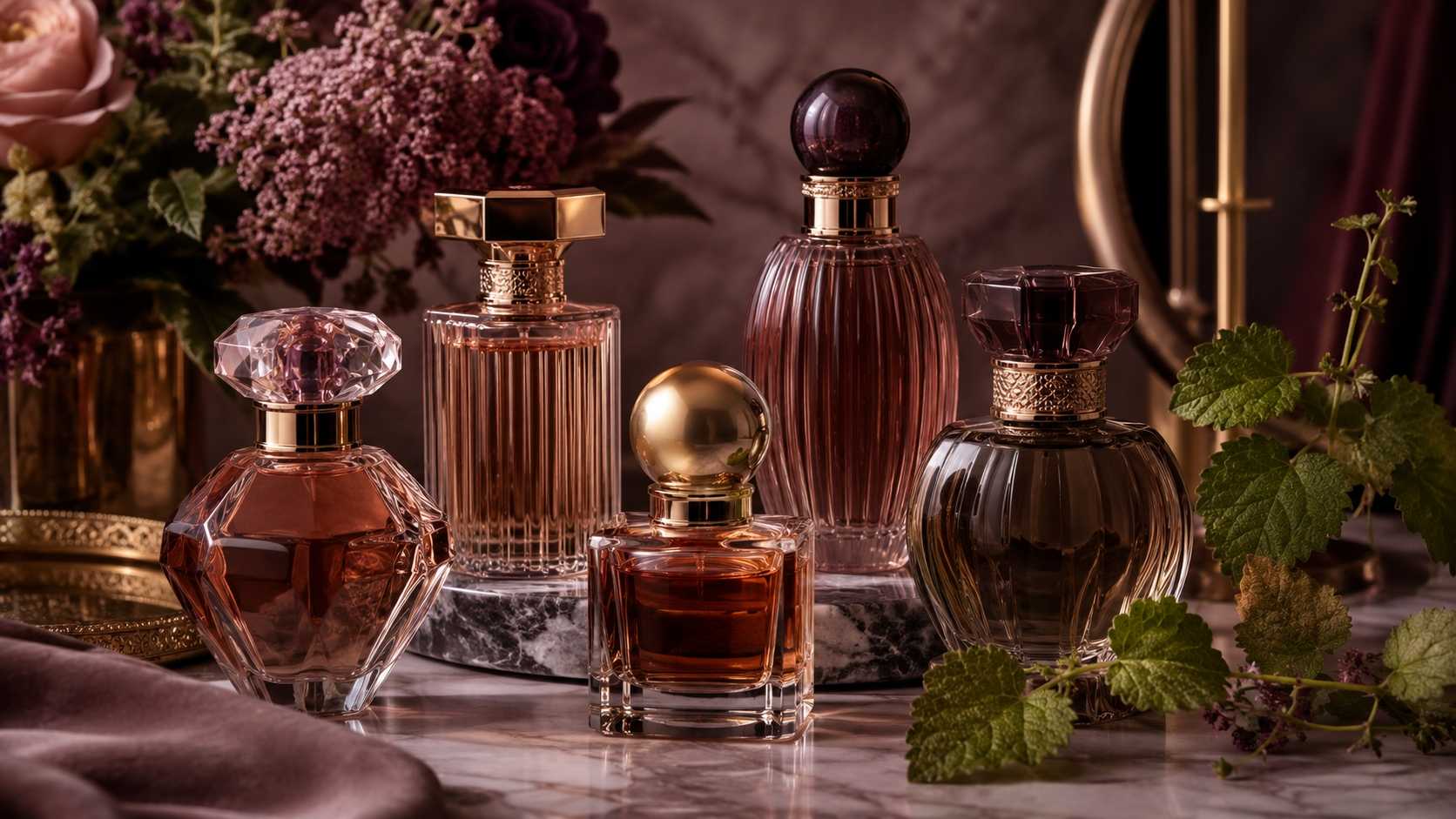
The best patchouli perfumes for women are not necessarily the ones that smell most strongly of patchouli. Some give the leaf a starring role; others use its earthy, woody warmth to deepen rose, iris, pear, vanilla or musk. Aesop Rōzu is green and floral, Guerlain Patchouli Paris places the material beside powdery iris, Diptyque Tempo studies patchouli itself, and IRFĒ Patchouli Forever Worn gives it a honey-and-tobacco character. They answer different questions.
Patchouli perfume has moved beyond one familiar image. It can still smell earthy, smoky and wonderfully untamed, but it can also feel clean, fruity, musky, gently ambery or nearly transparent. What matters in choosing a bottle is the relationship between the note and everything around it. A fragrance with patchouli in the base is not always a patchouli-forward perfume; the distinction is central to this selection.
That range is what makes patchouli interesting to me. It has the depth of velvet, but it does not have to be heavy. It can sharpen a silk blouse, warm a pale floral, or turn a sweet perfume into something more adult. The best patchouli perfumes for women use the note with intention rather than simply adding “earthiness” to the base.
Fourteen compositions follow, chosen to show actual contrasts rather than to crown a single winner. Some are unquestionably patchouli-led, while others demonstrate how effectively a small supporting note can alter the impression of a finished fragrance. The selection uses the named fragrance editions and their published compositions, with the differences in character and style guiding each comparison.
For the plant, its extraction and the difference between natural oil and a refined accord, read the general patchouli perfume guide. For a ready-to-wear roll-on, attar or fragrance oil rather than a spray, see the separate patchouli perfume oils guide. Here the question is which finished perfume you would actually enjoy wearing.
Editor’s Picks: Where to Start
| Best for | Perfume | Patchouli style |
|---|---|---|
| Best Modern Patchouli | Aesop Rōzu Eau de Parfum | Rose, spice, green woods |
| Best Honey-Tobacco Patchouli | IRFĒ Patchouli Forever Worn | Honey, tobacco, amber, woods |
| Best Amber Patchouli | Guerlain Patchouli Paris | Iris, vanilla, musks, warm woods |
| Best Fresh Patchouli | Jo Malone English Pear & Freesia | Pear, freesia, rose, soft patchouli |
| Best Timeless Patchouli | Chanel Coco Mademoiselle | Citrus, rose, jasmine, patchouli |
| Best Statement Patchouli | Frédéric Malle Portrait of a Lady | Rose, incense, sandalwood, patchouli |
| Best Subtle Patchouli | Escentric Molecules Molecule 01 + Patchouli | Minimal cedar warmth and patchouli |
| Best Green Patchouli | Diptyque Tempo Eau de Parfum | Herbal, green, violet and patchouli extracts |
| Best Affordable Patchouli | Zara Fleur de Patchouli | Fresh floral woods |
What Does Patchouli Smell Like in Women’s Perfume?
Patchouli comes from the leaves of Pogostemon cablin, a plant in the mint family. Its natural scent can suggest damp earth, dry wood, sweet spice, smoke, camphor, dark chocolate, moss, or worn leather. That description sounds intense, yet patchouli is one of perfumery’s great shape-shifters.
Used generously, it can dominate a composition with an earthy, woody, almost humid richness. Used in smaller amounts, it behaves like structure beneath clothing: invisible at first glance, but responsible for the way everything falls. It can deepen rose, hold citrus in place, add darkness to vanilla, or make a clean musk feel warmer and more sensual.
Modern patchouli materials may be refined or fractionated to emphasize cleaner, softer, woodier facets and reduce the rougher camphoraceous edge. This allows perfumers to use patchouli in fragrances that feel airy, polished, and contemporary. The note associated with dark rooms and vintage scarves can now live comfortably beside pear, freesia, aldehydes, iris, saffron, or transparent musk.
Why Modern Patchouli Does Not Have to Smell Like the 1970s
Patchouli became culturally inseparable from the 1960s and 1970s, when its raw, recognizable oil was worn as a statement of freedom and rebellion. That history still gives the note charisma, but it has also trapped patchouli inside a costume it no longer needs to wear.
Today, patchouli may appear as a polished woody base beneath a bright floral, a clean mineral shadow behind musk, or a smooth amber texture under vanilla. Jo Malone uses it quietly to give pear and freesia depth. Chanel pairs it with citrus, rose, and jasmine. Guerlain frames it with aldehydes, iris, vanilla, ambergris effects, and musk. The note has not lost its earthiness; it has learned tailoring.
This is why reading only the word “patchouli” on a note list tells you very little. The perfume may be fresh enough for a white shirt, dark enough for evening velvet, or sweet enough to resemble a dessert table. The surrounding materials decide whether patchouli feels bohemian, elegant, minimal, sensual, or severe.
The 14 Best Patchouli Perfumes for Women
These are fourteen different design decisions, not fourteen rankings of the same odor. Begin with the type of fragrance you actually want and read each description as a comparison, not a promise of identical performance on every skin.
1. Aesop Rōzu: patchouli beneath a rose with sharp edges
Aesop Rōzu Eau de Parfum is a useful place to begin because it dismantles the assumption that rose and patchouli must be opulent. Aesop names rose, pink pepper and shiso at the top; rose, guaiacwood and jasmine in the heart; vetiver, patchouli and myrrh underneath. The finished idea is green, aromatic and slightly rough, more concerned with the texture of a flower than with the sweetness of its petals.
Shiso brings a crisp botanical accent, while the woods and patchouli prevent the fragrance from feeling delicate. I find this approach more interesting than a conventional ‘rose for women’ label. The rose can remain recognizably beautiful while another part of the perfume unsettles it. Patchouli here is a structural shadow, not a spectacularly earthy solo.
Choose Rōzu for its green floral tension. If you want patchouli itself to be unmistakable, Diptyque Tempo gives the leaf more room. If you want something larger and more formal, Portrait of a Lady uses rose and patchouli on a completely different scale. These are useful contrasts because they change what the flower means, not merely the imagined occasion for wearing it.
2. IRFĒ Patchouli Forever Worn: honey and tobacco rather than a floral disguise
IRFĒ Patchouli Forever Worn Eau de Parfum takes the warm route. Created by Frank Voelkl, the composition opens with honey, tobacco and davana; the heart contains lavandin, Clearwood and amber; the base brings patchouli heart SFE, sandalwood and cedarwood. It is a more involved proposal than attaching a token patchouli base to a sweet perfume. The note is allowed to develop through several textures, from aromatic brightness to a softer woody finish.
Honey can seem simple until it meets tobacco. The combination has a golden richness but also dryness, with davana giving the warmth a distinctly aromatic edge. Patchouli heart matters here because it can connect that opening to clean modern woods. The ingredients do not have to fight for attention; the design lets them hand the story from one material to the next.
I am particularly interested in the difference between this and Guerlain Patchouli Paris. Both are grown-up interpretations of the same leaf, but Guerlain presents it with iris, aldehydes and a different sort of amber light; IRFĒ gives its warmth to honey and tobacco. One is more powdery and atmospheric, the other more tactile. Neither needs to be declared the universal best to explain why it deserves a place in the selection.
For a first encounter with the house, the IRFĒ Discovery Set offers a way to explore several distinct compositions before choosing a larger bottle. The honey-and-tobacco composition is best understood alongside the house’s other scents, before choosing a larger bottle.
3. Guerlain Patchouli Paris: iris changes the temperature
Guerlain’s Patchouli Paris Eau de Parfum places patchouli where it can be seen: at the heart of the fragrance. The house describes aldehydes at the opening, powdery and woody iris beside patchouli, then vanilla, an ambergris accord and musk in the deeper structure. It is a full, sophisticated design, yet I am drawn most to the contrast between the almost cool brightness at the beginning and the warmer finish.
Iris has an extraordinary way of changing the mood of patchouli. An earthy material begins to feel polished and faintly powdery without losing its depth. Vanilla and musk allow the darker facets to soften, but they do not turn the composition into a straightforward dessert. There is a very deliberate sense of contrast, one that seems closer to a complex evening wardrobe than a single color.
It belongs in this selection for someone who wants a patchouli perfume that feels composed, not merely bold. Compare it with the herbaceous openness of Tempo or the more transparent pair of materials in Molecule 01 + Patchouli. The differences make the meaning of ‘woody’ more precise than any numerical rating could.
4. Jo Malone English Pear & Freesia: patchouli almost out of sight
English Pear & Freesia Cologne is a wonderfully clear example of the supporting role. Jo Malone names ripe pear, white freesia and rose, with patchouli furnishing the deeper woody note. A person wearing it for the luminous fruit and flowers may never think of patchouli at all. That is part of its intelligence. The base gives the lighter notes a place to settle without dragging them into obvious earthiness.
For someone wary of vintage-style patchouli, this is an accessible starting point. It is not a compromise for a person who cannot manage stronger perfume; it is a different design. Patchouli need not declare itself to be useful. The soft woody undertone changes the character of the pear and freesia, as the color of a lining can change the impression of a coat without being visible from across the room.
Choose this for pear and freesia first. For unmistakable patchouli, move toward Tempo. For a brighter yet more assertive citrus-floral structure, Coco Mademoiselle takes the material into a recognizable ambery signature. These alternatives explain more than an arbitrary ‘beginner’ rating.
5. Chanel Coco Mademoiselle: a luminous floral with real structure
Coco Mademoiselle Eau de Parfum is so familiar that it can be easy to stop listening to its architecture. Chanel describes vibrant orange, a transparent heart of jasmine and May rose, and refined patchouli and vetiver in the base. The formula makes its freshness and its depth belong to the same composition. It begins with brightness but refuses to remain weightless.
Patchouli here is not a rustic accent. It gives an ambery-woody seriousness to a fragrance that otherwise feels energetic and open. I appreciate that contrast: citrus may announce the perfume, yet the deeper notes give it an identity that survives the opening. Its popularity is understandable, but its value to this guide is architectural rather than social. It shows what patchouli can do in a polished, enduring floral design.
If you want a quiet pear-and-freesia scent, Jo Malone makes a gentler invitation. If you want something more concentrated on the patchouli leaf, choose Tempo. Coco Mademoiselle occupies a different place: patchouli is crucial to the shape, while the character remains unmistakably citrus and flowers. Check the original Eau de Parfum when comparing it with other versions carrying the Coco Mademoiselle name.
6. Frédéric Malle Portrait of a Lady: the scale of a rose changes everything
Perfumer Dominique Ropion’s Portrait of a Lady does not hide its ambition. Frédéric Malle describes a powerful rose composition with patchouli, labdanum and incense, along with raspberry, pepper and other darker touches. Rose is undeniably the center, yet patchouli gives it depth and dimension that a lighter bouquet might never have acquired.
The attraction is not merely that this perfume is intense. It is the way a single flower becomes almost architectural. The patchouli and incense create shadow; fruit and spice change the temperature of the petals. I would put it beside Aesop Rōzu for a revealing comparison. Both contain rose and patchouli, but Rōzu is interested in a living green edge, while Portrait of a Lady makes the flower monumental.
It is a very different choice from the easy intimacy of a musky scent or the fresh pear of Jo Malone. Someone who loves a dark chypre may enjoy the structure here, but the rose remains extravagant. In that sense patchouli serves an artistic decision: it allows opulence to gain gravity rather than merely volume.
7. Escentric Molecules Molecule 01 + Patchouli: a study in restraint
Geza Schoen’s Molecule 01 + Patchouli reduces a complex perfume family to a surprisingly precise idea. The maker builds it from Iso E Super and two different patchouli qualities: a clean Patchouli Coeur with the rougher camphor-like opening reduced, plus an Indonesian oil for another facet of the natural character. The combination is presented as a warm, soft woody composition.
Here the absence of a crowded floral heart is the point. Iso E Super has a cedar-like warmth, while the patchouli lends a darker, earthier shade. There is very little decoration to distract from how the two materials affect one another. You can be interested in patchouli without wanting a rose, a peach or an amber syrup, and this fragrance gives that preference a clear place in the selection.
It has more in common with the cleaner materials described in our patchouli ingredient guide than with a traditional grand floral. In comparison, Coco Mademoiselle is an arrangement of bright and dark layers; Molecule 01 + Patchouli is a focused examination of a few textures. They are different experiences, not a hierarchy of minimalist versus luxurious.
8. Le Labo Patchouli 24: when the name hides the plot
Le Labo Patchouli 24 is one of the most useful cautionary examples in this guide. The maker itself says that patchouli is difficult to detect at first because the smoky and leathery character of birch dominates. Vanilla eventually softens that darker impression. Anyone buying it on the assumption that the name promises a straightforward earthy patchouli may be surprised.
That surprise is not necessarily a disappointment. It can be a deliberate aesthetic choice: smoke, leather and dry woods become the dramatic surface while patchouli supports the whole. What interests me is the way the perfume challenges the automatic reading of a note name. A smoky fragrance and a patchouli-rich fragrance are not synonyms, even when the same bottle may be described as both.
Compare it with Diptyque Tempo, whose official story begins with different extracts of patchouli, and with Guerlain Patchouli Paris, whose iris puts the material into a more polished light. Le Labo does something harsher and stranger. It deserves its place for that distinct treatment, not because it must satisfy every person searching for the ingredient.
9. Byredo Bibliothèque: patchouli at the back of a dark room
Bibliothèque Eau de Parfum takes its name and atmosphere from a room full of books. Byredo lists plum and cinnamon, then a leather accord and violet, with birch woods, patchouli and vanilla in the base. The combination is unusually specific. Fruit supplies color, leather and violet give the air a soft textured quality, and the deeper notes make the whole composition more than a fruity opening.
I am interested in the fact that patchouli is not the central spectacle here. It makes the imagined library feel lived-in, offering wood and earth beneath the plum. Vanilla rounds the edges. The result moves between several materials without turning them into a conventional sugary gourmand. That is a different form of richness from the honey and tobacco of Patchouli Forever Worn.
Bibliothèque may attract someone who wants a woody perfume with atmosphere rather than unmistakably herbal patchouli. It is more concerned with a complete scene than with the leaf itself. If the idea of books, plum and leather is more appealing than a literal forest floor, this may be a useful direction to sample.
10. KAYALI Vanilla Royale Sugared Patchouli | 64: sweetness without pretending to be delicate
Vanilla Royale Sugared Patchouli | 64 is quite explicit about the sort of pleasure it offers. KAYALI’s published key notes include vanilla infusion, vanilla surabsolute, vanilla orchid, creamy jasmine, golden rum, crème brûlée, smoky leather and a spicy rose bouquet. The name foregrounds sugared patchouli; the house’s note presentation makes clear that the vanilla-and-rum gourmand character is a major part of the intended impression.
This is not the bottle for someone who says they like patchouli because it keeps things dry. Here the dark note is meant to lend structure to a perfume whose warmth is lavish. That difference matters. An ambered sweetness can be beautiful in its own right, provided the person choosing it genuinely enjoys the sweet accord rather than hoping for an earthy signature hidden somewhere behind it. Our vanilla perfumes guide explores that sweeter family on its own terms.
For a more restrained contrast, Guerlain Patchouli Paris places patchouli with iris and aldehydes; Molecule 01 + Patchouli is even more pared down. The comparison is not about which fragrance is better made. It reveals how little the words ‘warm patchouli’ tell us until the supporting materials are named.
11. Tom Ford Café Rose: coffee darkens the flower
Tom Ford Café Rose Eau de Parfum treats rose as something rather more complex than a fresh bouquet. The maker names rose essences, ylang-ylang, dark coffee CO₂ extraction, coriander, cardamom, Indonesian patchouli and sandalwood accords. This is a useful counterpoint to both Rōzu and Portrait of a Lady: rose still leads the composition, but coffee introduces a roasted, bitter accent into its darker foundation.
Patchouli is the connecting material. It can share the floral side of rose while making room for roasted warmth and spice. I like the possibility of a flower becoming less innocent without simply being made louder. The earthy and aromatic materials deepen its character instead of smothering it under sweetness.
Café Rose belongs to someone curious about the intersection of florals and darker notes. If the coffee idea interests you more than the patchouli itself, our Black Opium discussion approaches a very different coffee-floral balance, with vanilla playing a larger role. Two fragrances can share coffee and flowers while telling entirely separate stories.
12. Lancôme La Vie Est Belle: iris, patchouli and a generous gourmand
La Vie Est Belle Eau de Parfum uses a combination that explains a great deal about modern feminine perfumery: iris, patchouli, warm vanilla and a spun-sugar accord. Lancôme explicitly highlights the patchouli in its current description, so its place in this selection does not rest on a vague association with sweet perfumes.
The iris brings a powdery floral identity, while patchouli gives the gourmand warmth a darker base. There is a certain confidence in a formula that does not disguise its sweetness. It asks to be enjoyed on those terms. The pleasure is different from Guerlain Patchouli Paris, where iris creates a more restrained and nuanced setting, and from KAYALI’s rum-and-vanilla exuberance.
For someone who likes a recognizable sweet floral, La Vie Est Belle offers another patchouli role worth understanding. The leaf need not taste of soil, metaphorically speaking, to be doing meaningful work. It can make the sweetness feel substantial, grounded and less fleeting in its overall character, although the actual staying power of any perfume still depends on the finished formula and the individual wearer.
13. Diptyque Tempo: a clear view of the leaf itself
With Tempo Eau de Parfum, Diptyque makes patchouli the subject rather than a hidden helper. The house describes three extracts of the same essence, placed beside maté, clary sage and violet leaf. That is a revealing combination: herbal and violet nuances can give an ingredient known for dark earthiness a cooler, greener character.
Tempo draws on the cultural memory of the 1960s, but its interest is not in reconstructing a period costume. I like the way it lets the source material retain identity while changing the atmosphere around it. The result may appeal to people who want a clear patchouli impression without the massive amber or gourmand sweetness that sometimes accompanies it.
In this list it is a particularly useful comparison with Escentric Molecules. Molecule 01 + Patchouli offers a stripped-down marriage of a modern woody molecule and two patchouli grades. Tempo is more visibly aromatic and botanical. Both demonstrate that patchouli can be modern without being concealed, yet they approach that modernity from different directions.
Try this direction if you want to recognize patchouli itself. If your preference is for sweet rose, coffee or pear, another bottle on this page will make that relationship more explicit. Tempo’s value is that it allows the leaf to speak clearly.
14. Zara Fleur de Patchouli: a cleaner, brighter way in
Fleur de Patchouli Eau de Parfum is a lighter interpretation of the material. Zara’s current description names bergamot for the bright opening, a refined quality called Prism Patchouli for earthy depth, and white musk for the softened finish. That is a concise and intelligible idea: citrus, a modern patchouli effect and a clean musky base.
The fragrance is particularly interesting beside Diptyque Tempo because neither relies on an enormous floral or vanilla heart. Yet Tempo is devoted to the aromatic dimensions of several patchouli extracts, while Zara gives the note a more polished supporting role within a woody-floral composition. A person discovering patchouli through this bottle may be surprised by how refined it can feel.
The current U.S. listing has shown changing or limited availability, so it would be unhelpful to promise a particular price or immediate delivery. Treat it as a reference for an accessible clean-patchouli style and check the exact edition before ordering. When it is not available, the lesson about bergamot, patchouli and musk remains useful for finding an alternative.
There is no obligation to finish this selection with the most expensive bottle. Sometimes the quietest example makes an ingredient easiest to understand. The real choice lies between the kind of patchouli you want to smell and the kind you want to feel supporting everything else.
How to Choose Your Patchouli Style
Fresh and Floral
Choose Jo Malone English Pear & Freesia, Aesop Rōzu, Chanel Coco Mademoiselle, or Zara Fleur de Patchouli. In these perfumes, patchouli supports brightness, flowers, and clean structure rather than creating a dark earthy cloud.
Soft and Musky
Escentric Molecules Molecule 01 + Patchouli is the clearest minimalist example here, combining Iso E Super with two patchouli qualities without a crowded floral heart. For a softer daytime direction, Jo Malone English Pear & Freesia and Zara Fleur de Patchouli place the note beneath brighter, cleaner accords.
Sweet and Gourmand
Kayali Vanilla Royale Sugared Patchouli and Lancôme La Vie Est Belle make patchouli warm, sweet, and full. Bibliothèque also has vanilla and fruit, though its leather and woods create a moodier result.
Dark and Smoky
Le Labo Patchouli 24 is the most uncompromising smoky choice. Portrait of a Lady uses patchouli with rose and incense, while Café Rose adds coffee and spice. These fragrances suit evening, cold weather, and women who enjoy perfume with visible drama.
Woody and Unisex
Aesop Rōzu, Molecule 01 + Patchouli, IRFĒ Patchouli Forever Worn, and Le Labo Patchouli 24 all move comfortably beyond conventional feminine floral styling. They emphasize woods, earth, spice, smoke, or tobacco.
Patchouli-Forward or Patchouli in the Base?
If you want to smell patchouli clearly, begin with IRFĒ Patchouli Forever Worn, Guerlain Patchouli Paris, Molecule 01 + Patchouli, or Patchouli 24. If you want patchouli to improve another style, choose Jo Malone, Chanel, La Vie Est Belle, or Bibliothèque.
Patchouli Perfume by Occasion
For Work and Daytime
English Pear & Freesia, Coco Mademoiselle, Molecule 01 + Patchouli, and Fleur de Patchouli are the easiest to place in a daytime wardrobe. Apply with restraint and pay attention to projection in small rooms.
For Date Night
Café Rose, Patchouli Forever Worn, Portrait of a Lady, Bibliothèque, and Kayali Vanilla Royale create warmer, more intimate atmospheres. Choose according to whether you prefer rose, honey-tobacco, leather, or vanilla.
For Autumn and Winter
Patchouli naturally suits cooler weather because woods, amber, tobacco, vanilla, and incense develop beautifully in cold air. Guerlain Patchouli Paris, Le Labo Patchouli 24, Portrait of a Lady, and IRFĒ Patchouli Forever Worn are especially convincing.
For Warm Weather
Patchouli can work in summer when the formula includes citrus, green notes, fresh florals, or clean musk. Aesop Rōzu, Jo Malone English Pear & Freesia, Molecule 01 + Patchouli, and Zara Fleur de Patchouli are the safer directions.
How to Test Patchouli on Skin
If you are comparing an alcohol spray with a roll-on or attar, our patchouli perfume oil guide explains how the format changes application and the wearing experience. Raw essential oil and a finished perfume oil are different products.
Patchouli changes significantly through the drydown, so a paper strip gives only part of the story. Spray on skin and wait at least thirty minutes. Notice whether the earthy facet grows stronger, whether sweetness increases, and whether the perfume becomes smoky, musky, woody, or softer than expected.
Wear the sample for several hours before deciding. A fragrance may begin with fruit or flowers and reveal patchouli much later. Another may open dark and become unexpectedly smooth. Pay attention to how it behaves in your real environment, not only under flattering boutique lighting.
Sample especially carefully when the fragrance contains smoke, oud, leather, dense vanilla, or a large amount of patchouli. These styles can be beautiful, but they are not neutral. The right perfume should feel like a chosen part of your wardrobe, not a costume that wears you.
FAQs
1. What does patchouli perfume smell like on a woman?
Patchouli can smell earthy, woody, sweet, smoky, musky, chocolate-like, green, or leathery. In women’s perfume it may lead the fragrance or sit in the base beneath rose, pear, iris, vanilla, amber, or musk.
2. Which patchouli perfume is best for beginners?
Jo Malone English Pear & Freesia is one of the easiest introductions because patchouli supports a fresh fruity-floral composition. Chanel Coco Mademoiselle and Zara Fleur de Patchouli are also accessible, polished choices.
3. Can patchouli perfume smell fresh?
Yes. Citrus, pear, freesia, green herbs, shiso, aldehydes, and clean musk can make patchouli feel fresh and modern. Jo Malone English Pear & Freesia and Aesop Rōzu are good examples.
4. Is patchouli perfume old-fashioned?
No. Raw patchouli oil still carries associations with the 1960s and 1970s, but modern perfumery uses refined patchouli materials in fresh florals, clean musks, gourmands, rose perfumes, and minimalist woody scents.
5. Does patchouli make perfume last longer?
Patchouli is commonly used as a base note and can add depth and persistence to a formula, but longevity depends on the full composition, concentration, skin, weather, and application.
6. Which notes pair best with patchouli?
Rose, iris, vanilla, pear, citrus, musk, amber, tobacco, leather, sandalwood, cedar, coffee, saffron, and incense all pair beautifully with patchouli. The choice determines whether the fragrance feels fresh, sweet, floral, smoky, or dark.
7. Can patchouli perfume be worn in summer?
Yes, especially when patchouli is paired with citrus, green notes, fresh flowers, fruit, or clean musk. Apply lightly and avoid very dense amber, smoke, or vanilla compositions in extreme heat.
The Patchouli I Keep Coming Back To
For modern floral patchouli, begin with Aesop Rōzu. IRFĒ Patchouli Forever Worn is the honey-tobacco choice with a distinctive woody signature. Guerlain Patchouli Paris gives the note a polished amber evening, while Jo Malone English Pear & Freesia shows how fresh and discreet patchouli can be.
Chanel Coco Mademoiselle remains the timeless structured option. Portrait of a Lady is the dramatic rose-patchouli statement. Molecule 01 + Patchouli is the subtle minimalist, Le Labo Patchouli 24 is the smoky radical, and Zara Fleur de Patchouli offers the easiest affordable entry.
Patchouli is not one smell and not one era. It can be velvet, clean wood, damp earth, warm skin, dark rose, honeyed tobacco, or the quiet line that keeps a floral perfume beautifully in place. Choose the version that feels like your own style rather than the version history told you to expect.
