


Orris perfume is known for a powdery, violet-like scent with cool floral, green and woody facets. It can feel soft as face powder, smooth as suede or earthy enough to recall the plant material from which it comes. That contrast is what makes orris distinctive: it brings both refinement and depth without behaving like a conventional fresh flower.
The name can be confusing because perfume descriptions often use iris and orris almost interchangeably. In perfumery, however, orris refers to material derived from the underground rhizomes of certain iris plants—not to an extract of the petals. This guide explains what orris smells like, how it is produced, how it differs from iris and violet, and how to recognize it in a finished fragrance.
What Is Orris in Perfume?
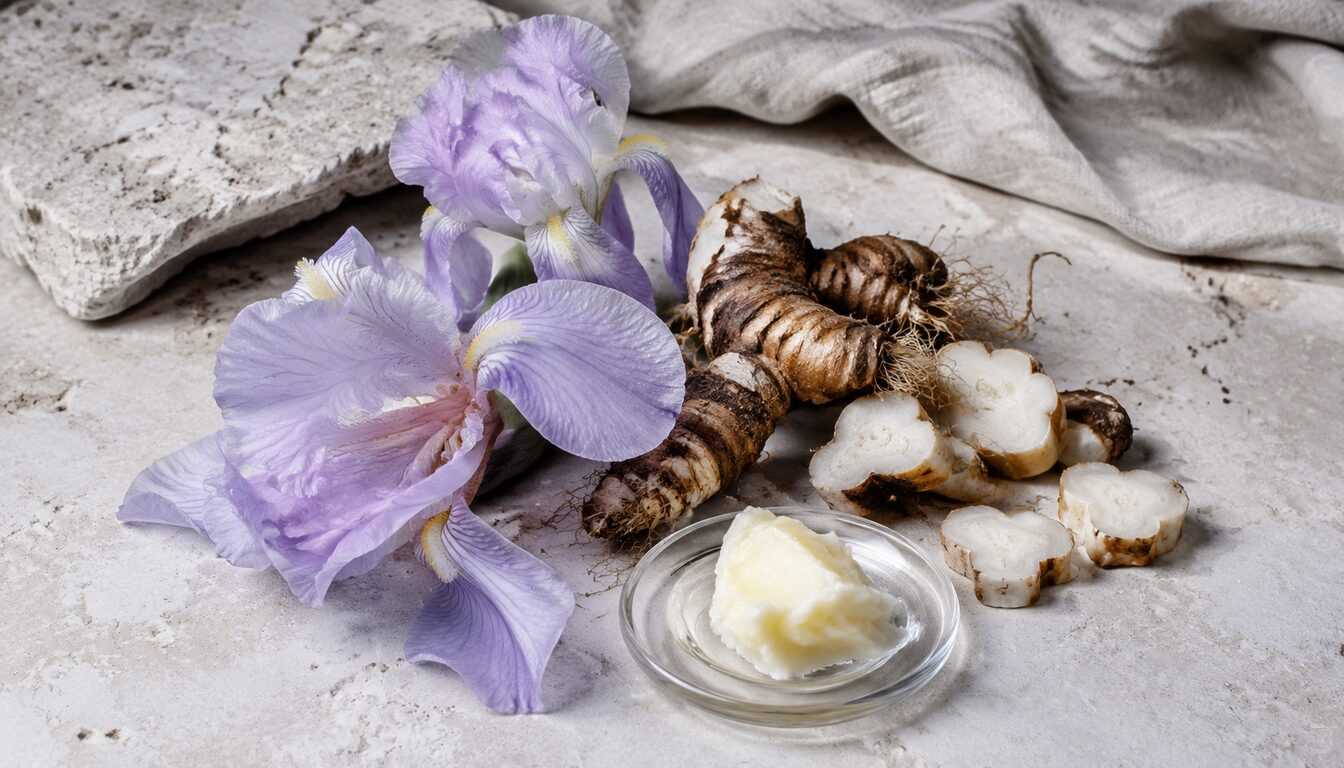
Orris is the perfumery name for aromatic material prepared from iris rhizomes. Although they are commonly called “orris roots,” rhizomes are underground stems that store nutrients for the plant. Two species widely used for fragrance are Iris pallida and Iris germanica.
The distinction matters because the elegant iris effect found in perfume does not simply come from pressing or distilling the flower. The valuable scent develops in the harvested rhizomes as they dry and mature. Traditional natural extracts are one way to create the effect; perfumers can also work with isolated or synthesized aroma molecules and modern orris bases. A note list that says “iris” therefore describes an olfactory idea, but it does not by itself reveal the exact material or combination of materials used in the formula.
What Does Orris Smell Like?
The clearest description of orris is powdery, floral and woody, with a violet-like facet. Yet good orris rarely smells like only one thing. Its character shifts with the quality of the material, its concentration and the notes around it.
- Powdery: soft, matte and cosmetic rather than sugary.
- Violet-like: a cool floral impression, even though orris and violet are different materials.
- Woody and earthy: a quiet root-like depth that keeps the powder from feeling weightless.
- Green: a restrained freshness that can make the note feel natural and slightly austere.
- Buttery or waxy: a smooth richness associated with some concentrated natural orris materials.
This range explains why one orris perfume may suggest clean powder and pale flowers, while another feels darker, drier or almost suede-like. Orris is often described through texture because its effect can be easier to imagine as matte, velvety or polished than as a single recognizable blossom.
What Creates the Orris Scent?
A group of aroma compounds called irones is central to the characteristic smell of natural orris extract. Different irones contribute different balances of floral, powdery, violet-like and earthy facets. Their development during the maturation of the rhizomes is one reason traditional orris production takes time.
Natural orris is not the only route to an iris effect. Contemporary perfumery may use individual aroma molecules, including synthesized irones, as well as ionones, methyl ionones and composed bases. These materials can emphasize a particular side of the note, improve consistency or make an orris idea practical within a larger formula. “Natural” and “synthetic” are not scent styles in themselves: either approach can be used with precision, and many fragrances rely on a considered combination.
How Is Orris Made?
Traditional production begins after the iris rhizomes are lifted from the soil. They are cleaned, and depending on the process, may be peeled or sliced before drying. The dried material is then matured so that the compounds responsible for the recognizable orris profile can develop. dsm-firmenich describes a maturation period of two to three years for its traditional orris materials.
The prepared rhizomes can then be ground and distilled. The resulting essential oil may become solid at room temperature, which is why a concentrated material is commonly called orris butter. Other extraction and refinement methods produce materials with different strengths and olfactory profiles.
This is a resource-intensive ingredient. For one Italian orris absolute, IFF reports that approximately 2,000 kilograms of plant material are used to produce one kilogram of extract. That figure applies to a specific material and process, not to every product sold as orris, but it illustrates why formulas may use the natural extract selectively and why modern alternatives are important to perfumers.
Iris vs. Orris vs. Violet: What Is the Difference?
Iris is the plant and also the broad note name consumers most often see on a fragrance pyramid. Orris more specifically refers to the aromatic material derived from iris rhizomes or to an accord designed around that material’s profile. In everyday fragrance language, brands sometimes use “iris” for the smoother floral idea and “orris” when they want to emphasize powder, root, wood or texture, but naming conventions are not universal.
Violet is a separate floral note. The confusion comes from resemblance: orris can have a distinctly violet-like facet. A perfume can therefore smell reminiscent of violet even when its note list highlights iris or orris. Conversely, a violet accord can be built without natural orris.
A useful way to understand a perfume is to read the full pyramid and smell how the composition develops. The name of one note says less than the complete structure surrounding it.
How Orris Changes a Fragrance
Orris rarely needs to dominate a composition to make a difference. It can smooth transitions between floral, woody and musky notes, give a fragrance a more matte texture or add coolness to an otherwise warm structure.
- With rose: orris can soften the brightness of the petals and add a more tailored, powdery finish.
- With neroli or citrus: it can temper sparkle with a cool, composed heart. Learn more about what neroli smells like in perfume.
- With musk: the result can feel clean, quiet and skin-like.
- With cedarwood or sandalwood: its dry and woody facets become more apparent.
- With leather: the powder can turn smoother and more suede-like.
- With vanilla or amber: orris may feel warmer and creamier without necessarily becoming a gourmand.
These pairings are also why orris cannot be reduced to “a powdery women’s note.” It appears comfortably in floral, woody, leather, musky and ambery compositions, including fragrances marketed across gender categories.
Orris in IRFĒ Centifolia Rose
In IRFĒ Centifolia Rose Eau de Parfum, the published fragrance pyramid places orris in the heart beside Rose Damascena and neroli. The opening combines bergamot, pink pepper and pear; cedarwood, Sandalwood Spicatum and white musk form the base.
One way to read that structure is as a set of contrasts that orris may help connect. Its floral-powdery character can sit naturally beside rose, its cooler facet can bridge the bright opening and neroli, and its woody side can lead toward cedarwood and sandalwood. It is not presented as a solo orris perfume. Instead, the note may contribute texture and shape to a larger floral composition created by perfumer Honorine Blanc of dsm-firmenich.
Because note lists cannot show how prominent an ingredient will feel on an individual wearer, sampling is the most useful test. The IRFĒ Discovery Set includes Centifolia Rose with four other fragrances from the Maison’s collection.
How to Choose an Orris Perfume
Begin with the side of orris you want to emphasize rather than searching for one supposedly definitive version.
Choose rose, violet or airy florals if you want a polished powder effect. Look for musk and pale woods when softness and a skin-like finish are the goal. Leather, cedar, incense or patchouli will usually pull orris in a drier and darker direction. If you prefer warmth, seek compositions that pair it with amber, vanilla or sandalwood.
Test beyond the opening. In some compositions, orris becomes easier to recognize after the brighter top notes recede and the heart settles on skin. Compare the fragrance on a blotter and on skin, then return to it later rather than judging from the first spray. Performance varies with the complete formula, concentration, application and wearer, so the presence of orris alone does not guarantee a particular projection or number of hours.
Frequently Asked Questions
Is orris the same as iris?
They are closely related but not identical terms. Iris is the plant and the broad fragrance-note name. Orris refers more specifically to aromatic material made from iris rhizomes, or to an accord that recreates its powdery, violet-like and woody character.
Does orris perfume smell like baby powder?
Some compositions can suggest cosmetic powder, but orris is more complex than that comparison. Natural and reconstructed orris effects may also smell floral, green, woody, earthy, waxy or suede-like.
Is orris the same as violet?
No. Natural orris material comes from iris rhizomes, while violet is a different plant and fragrance note. They can smell related because natural orris and reconstructed orris accords often have a violet-like facet.
Is every iris perfume made with natural orris?
No. An iris note may use natural orris extract, isolated or synthesized aroma molecules, a composed base or a combination of materials. A public note list normally describes the intended scent rather than disclosing the full formula.
Is orris sweet?
Its sweetness varies. Orris can feel dry, cool and earthy, but some materials and compositions also show softly sweet or gourmand facets. Vanilla, amber, fruit or musk may make an orris fragrance seem sweeter or creamier, while woods and leather emphasize its drier side.
Is orris a feminine or masculine note?
Orris is used across fragrance styles and gender categories. Its effect depends on the composition around it: rose and soft musk may make it feel more floral, while woods, leather and incense can give it a darker profile.
Final Thoughts
Orris is one of perfumery’s most textural ideas. Natural orris material begins with iris rhizomes, not petals, while reconstructed accords can recreate selected parts of its profile. Across those interpretations, orris can move between powder, violet, wood, earth and soft waxy richness. Understanding that range makes iris-heavy note lists easier to read and helps explain why two orris perfumes can feel entirely different.
A practical way to choose one is to decide which facet you want—bright floral, clean musk, smooth suede or warm wood—and then give the fragrance time to reach its heart. Depending on the formula, the orris character may become clearer as the composition settles and its texture comes into focus.
